










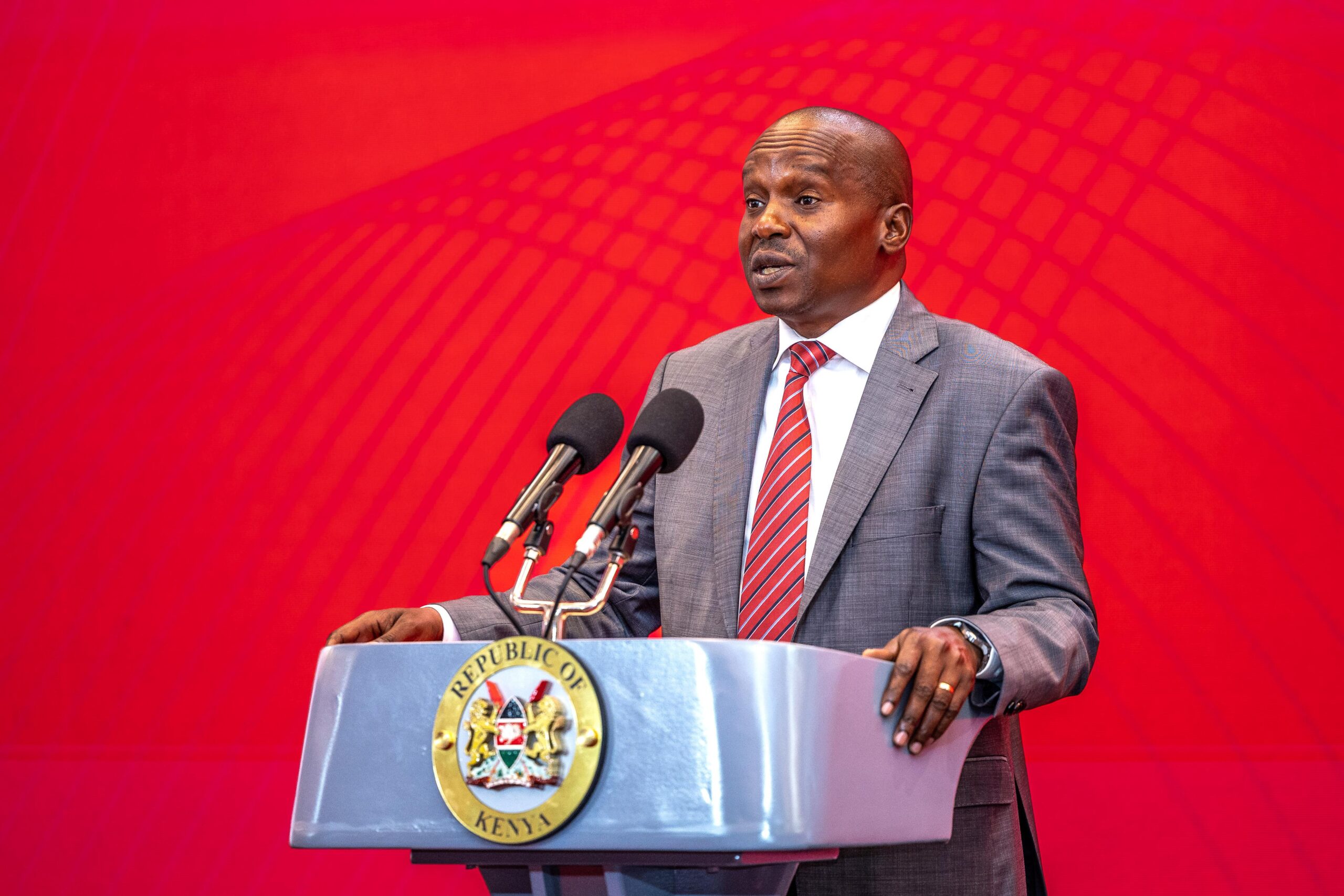
Deputy President Kithure Kindiki has issued a clarion call for African nations to aggressively adopt emerging technologies and strengthen private sector ties to accelerate the continent’s socio-economic transformation.
Speaking during the Africa Green Industrialization Initiative (AGII) Forum in Nairobi, Prof. Kindiki argued that the era defined solely by globalization has passed. Instead, he posited that the next four decades will be shaped by “people-centered transformation” fueled by innovation and strategic capital.
A central theme of the Deputy President’s address was the urgent need for a green industrial revolution. Despite Africa’s vast natural resources, Kindiki highlighted a significant disparity between current output and industrial requirements where the current capacity is 56 gigawatts of renewable energy whereas target capacity is 300 gigawatts required to power large-scale manufacturing.
“Public sector reforms alone will not be tenable in the future,” Kindiki stated. “We must tap into the private sector’s ideas and capital to blend efforts and push the world forward.”
The Deputy President positioned Kenya as a global blueprint for renewable energy adoption. He noted that 93% of Kenya’s electricity is currently generated from clean sources, including geothermal, wind, hydro, and solar power.
This green energy profile, he argued, makes Kenya a “compelling proposition” for international investors looking to establish low-carbon manufacturing hubs.
Beyond industrial power, the Forum focused on the domestic energy crisis affecting millions. Kindiki underscored a sobering reality: nearly one billion Africans lack access to clean cooking solutions, while 600 million remain without electricity.
In response, the Deputy President officially launched three landmark initiatives which included, The Institutional Clean Cooking Investment Sector Pack, Kenya’s National Cooking Transition Strategy and The Burn Manufacturing Electric Cookstove
Kindiki emphasized that Kenya is pivoting its approach to domestic energy, viewing clean cooking not as a “philanthropic intervention,” but as a strategic green investment opportunity that can drive economic growth while protecting the environment.
The AGII Forum serves as a critical platform for moving beyond policy discussions toward “bankable opportunities.” By facilitating real transactions in sustainable industries and green value chains, the initiative aims to bridge the gap between Africa’s potential and its industrial reality.