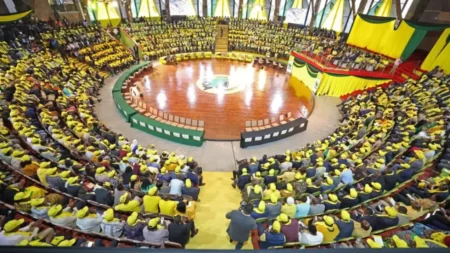





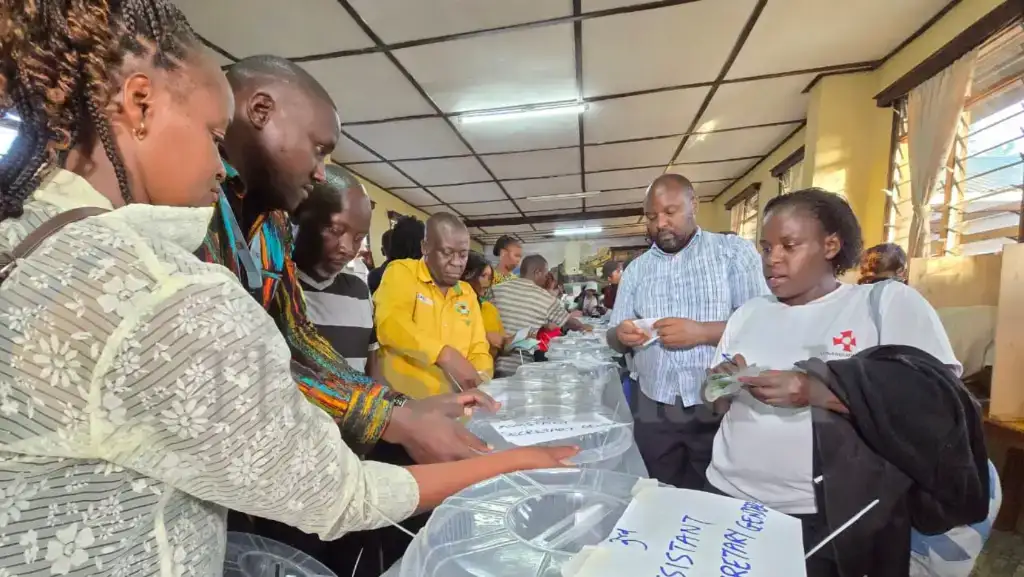
Elections to select new officials for the Kenya Union of Post Primary Education Teachers (KUPPET) in Kiambu County faced significant delays and widespread confusion on Saturday. The protracted exercise left many educators agitated, with some ultimately choosing to leave the polling stations before casting their ballots.
Scheduled to commence at 7:30 a.m. according to an earlier circular, the voting process instead began around 11:00 a.m., with election officials providing minimal explanation for the four-hour delay. This initial setback immediately sparked frustration among teachers who had arrived early, eager to participate in the democratic process.
Robert Kimani, an aspirant for the KUPPET Kiambu County chairperson’s position, indicated that officials again halted the elections at approximately noon. He attributed this further disruption to the substantial voter turnout and the remarkably slow pace of the voting process.
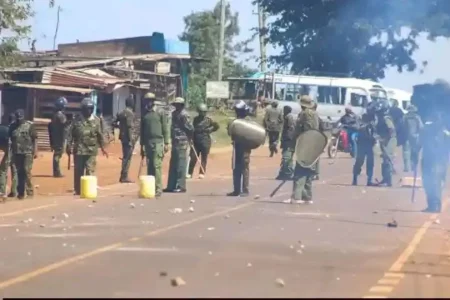
At the Kolping Vocational Center in Kilimambogo, Thika East, where the elections took place, police intervention became necessary to restore order. Law enforcement officers facilitated the resumption of voting, allowing the process to proceed with greater efficiency.
Despite the resumption, discontent lingered among several candidates. Beth Njigigua, competing for the First Assistant Secretary (Gender) role, voiced strong concerns regarding the overall poor organization of the electoral exercise. Njigigua, a teacher at Komothai Girls’ High School, criticized the delays, stating that candidates and voters waited for hours despite arriving early, and emphasized the need for better planning in future elections. She also urged organizers to select more centrally located venues within Kiambu County, highlighting the inconvenience of the current site for many teachers.
Maddy Ndung’u, a first-time voter, expressed shock at how officials treated teachers during the process. She advocated for improved logistical planning and suggested that both the teachers’ union and the Labour Office consider enlisting an independent body, such as the Independent Electoral and Boundaries Commission (IEBC), to manage future elections with greater professionalism and capacity. Ndung’u observed that many teachers, having waited for hours, grew tired, potentially reducing voter participation due to persistent long queues.
Despite the considerable challenges and frustrations, voting eventually continued late into the evening. At around 10:00 p.m., long queues persisted at the polling center, with police officers struggling to manage exhausted and increasingly angry teachers who had been waiting since early morning. Teachers widely called for organizers to learn from these events to ensure future union elections are smoother and more transparent.