







Alarm over alcohol and substance abuse in Kiambu County has intensified, with prevention experts warning that young people are being exposed to addictive substances at increasingly early ages amid the spread of illicit alcohol and emerging psychoactive drugs.
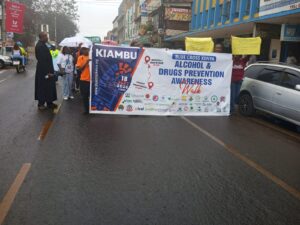
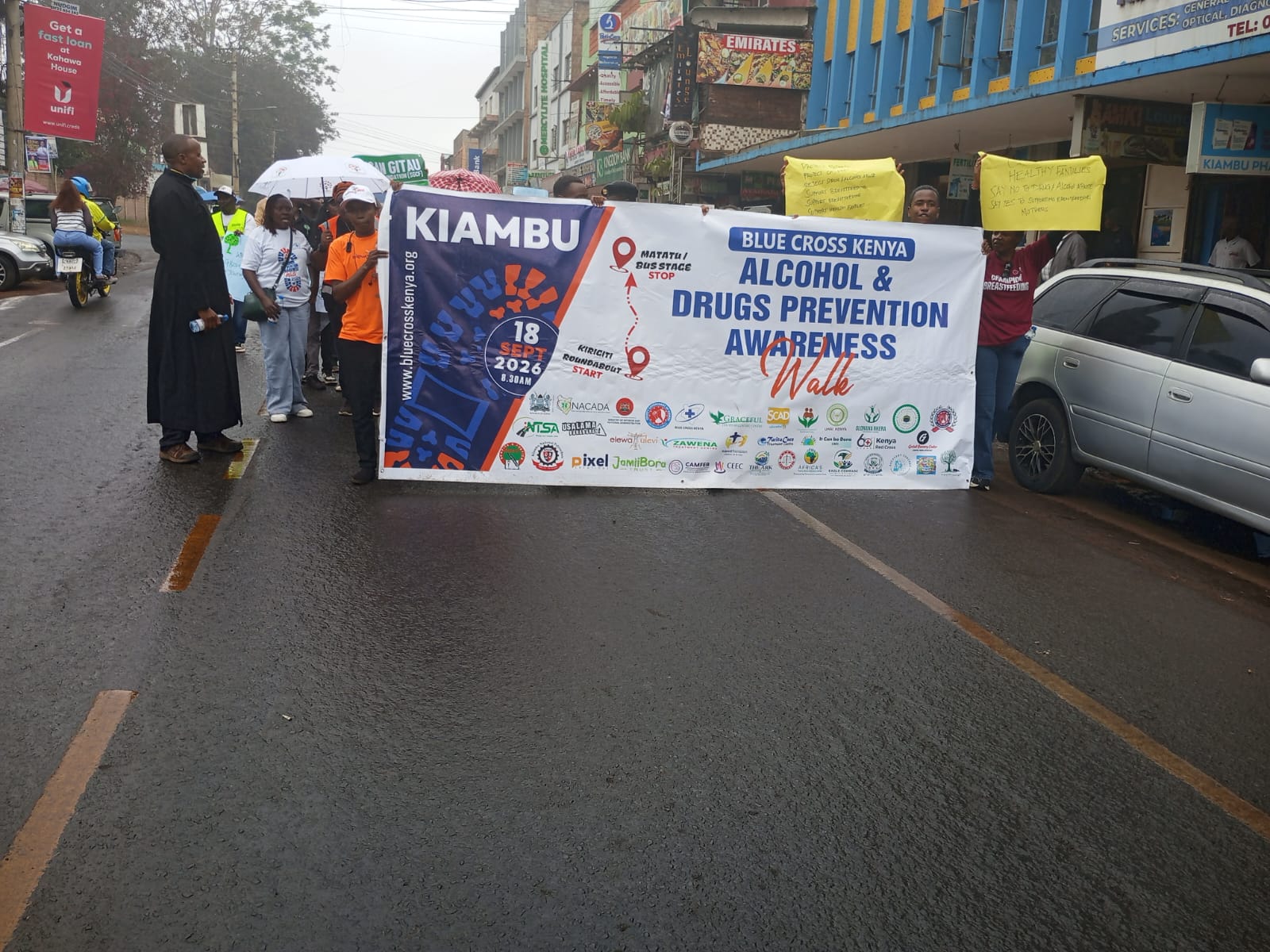
The warning came on Friday during an Alcohol and Drugs Prevention Awareness Walk organised by Blue Cross Kenya in partnership with the Kiambu County Community Working Group on Alcohol and Drug Abuse.


The walk, which started at the Kirigiti Roundabout and ended at the Kiambu matatu and bus stage, brought together community organisations, recovery practitioners, government representatives, religious leaders and young people in a campaign aimed at increasing public awareness of the dangers of alcohol and substance abuse.
Blue Cross Kenya manager Brian Magwaro said prevention must remain at the centre of efforts to address alcohol abuse, arguing that communities need information that enables individuals, particularly children and young people, to make informed decisions.
“We want to educate community members so that young children and youth can make healthy choices when it comes to alcohol and substance use,” Mr Magwaro said.
He said the campaign was also intended to strengthen cooperation between communities, civil society organisations, the county government and national agencies in protecting families and young people from substance abuse.

Mr Magwaro said Blue Cross Kenya had established self help groups in partnership with churches to assist people battling alcohol dependence who cannot afford residential rehabilitation.
The groups provide free support sessions, including Alcoholics Anonymous (AA) and 12 step programmes, with participants meeting twice a month.
“We have a support group here in Kiambu of about 40 people every year. They attend two sessions every month and learn about their triggers and how to deal with them,” he said.
He added that the groups also identify people requiring specialised treatment and refer them to rehabilitation centres.
But the high cost of rehabilitation remains a major barrier, prompting calls for affordable or publicly supported treatment facilities within the county.
Mr Magwaro challenged the county government to consider establishing or strengthening rehabilitation services accessible to residents who cannot meet the cost of private facilities.
The campaign came against the backdrop of worrying statistics presented by organisers showing high levels of alcohol consumption among residents.
According to data cited by Blue Cross Kenya, 35.6 per cent of men aged 15 to 49 in Kiambu had consumed alcohol in the previous month, compared with 11.3 per cent of women.
Among young people aged 15 to 24, the reported prevalence was 28.9 per cent, compared with a national estimate of 11.2 per cent.
The figures, organisers said, point to a heightened vulnerability among young people and underline the need to combine enforcement with prevention, education, early intervention and rehabilitation.
Graceful Youth Recovery Centre founder and Kiambu County Community Working Group convener Nkatha Mwenda said young people aged between 15 and 35 were particularly vulnerable to alcohol and drug abuse.
She said prevention programmes were being used to equip young people with information and life skills to resist peer pressure and other forms of exposure to drugs.
“We try as much as possible to share information so that people can make informed choices and do not get initiated early,” Ms Mwenda said.
She said the programme also links substance abuse with mental health challenges and provides recovery skills.
One initiative involves trained lay providers taking participants through a 17 week programme covering substance use, coping mechanisms and recovery.
The programme, she said, also addresses a critical challenge faced by recovering addicts what happens after they stop using drugs.
“We ensure they are skilled and get opportunities where they can learn something. Some of them were experts before substance use affected them,” she said.
The objective is to help recovering users regain the ability to support themselves and become productive members of society.
Ms Mwenda said similar awareness activities were being undertaken in other parts of the country, including Homa Bay, Kakamega and Kisumu, as stakeholders seek to build a wider national prevention campaign.
National Authority for the Campaign Against Alcohol and Drug Abuse (NACADA) Kiambu County Coordinator Caroline Arimi said the awareness walk was designed to turn participants into ambassadors against alcohol and drug abuse.
She said NACADA uses a multi sectoral approach involving national government agencies, the Kenya Revenue Authority, community organisations, religious leaders and other stakeholders.
Ms Arimi said NACADA had trained 15 members of the community working group in each sub county and was seeking to increase the number to 30 to strengthen the campaign at grassroots level.
Religious leaders are also being enlisted because of their influence and close relationship with communities.
“They are now creating prevention awareness during sermons in their churches,” Ms Arimi said.
She said the authority was also engaging the county government on the licensing and inspection of alcohol outlets, amid concerns over the mushrooming of bars, wines and spirits outlets witnessed in some areas.
According to Ms Arimi, three multi agency meetings had been held this year to coordinate action against alcohol and drug abuse.
She said stakeholders had agreed that licensing and inspection should involve different government agencies as well as communities.
“We know last year we had a lot of mushrooming bars, wines and spirits, but after sitting down with the county, this year they have tried to scale it down,” she said.
Ms Arimi also attributed the continued availability of counterfeit and illicit alcohol partly to individuals who knowingly sell prohibited products for profit.
She described such activity as criminal and said enforcement must therefore remain part of the broader prevention strategy.
Dr Susan Gitau, a practising clinician and addiction professional, said alcohol remains the most commonly abused substance among her clients in Kiambu, including both illicit and legally produced alcohol.
She said tobacco products were the second most abused, followed by marijuana.
The tobacco category, she said, includes conventional products as well as newer products such as vapes and smokeless tobacco.
She also raised concern over emerging synthetic substances, including what she described as synthetic marijuana products, as well as the abuse of inhalants and over the counter medicines.
“These are things we have ignored. People are inhaling things and getting high, from petrol to paint thinners and other products,” Dr Gitau said.
She said pre-teens and teenagers were among those exposed to inhalants and warned that the growing variety of new psychoactive substances made treatment and diagnosis increasingly complicated.
Some substances, she said, contain mixtures of pharmaceutical and other psychoactive compounds, making toxicology testing necessary to establish what an individual has consumed.
Dr Gitau, who heads Elewa Ulevi Consultancy and chairs the Association of Rehabilitation Owners in Kenya, said drug dealers were increasingly targeting young people because of the size and vulnerability of the market.
She said children as young as nine could be exposed either as users or intermediaries in drug distribution.
“Families are the ones that, if we stabilise them, then we will be able to win the fight against alcohol and substance use,” she said.
The discussions highlighted the growing recognition among stakeholders that enforcement alone may not resolve Kiambu’s alcohol and drug problem.
While authorities continue to target illicit manufacturers, suppliers and unlicensed outlets, community organisations are pushing for greater investment in prevention, treatment and reintegration.
Stakeholders argue that families, schools, religious institutions, government agencies and community organisations must work together to prevent early initiation while ensuring those already affected can access affordable treatment.
The campaign also sought to shift the conversation from punishment alone to early intervention, with recovery practitioners stressing that people battling addiction require support to regain livelihoods after treatment.
For Kiambu, the challenge is therefore increasingly being framed as both a public health and social issue one requiring stronger regulation of alcohol outlets, action against illicit products, accessible rehabilitation, youth focused prevention programmes and sustained community involvement.
The awareness walk was intended to give residents a role in that response, with NACADA urging every participant to carry the prevention message back to their homes, schools, churches and neighbourhoods.