

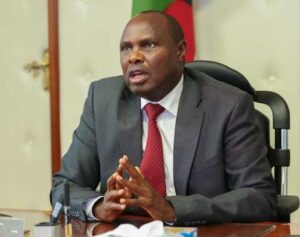







Deputy President Kithure Kindiki has outlined an ambitious plan to accelerate Kenya’s transition into a modern, industrialized economy, anchored on infrastructure expansion, private capital investment, and sweeping health sector reforms.
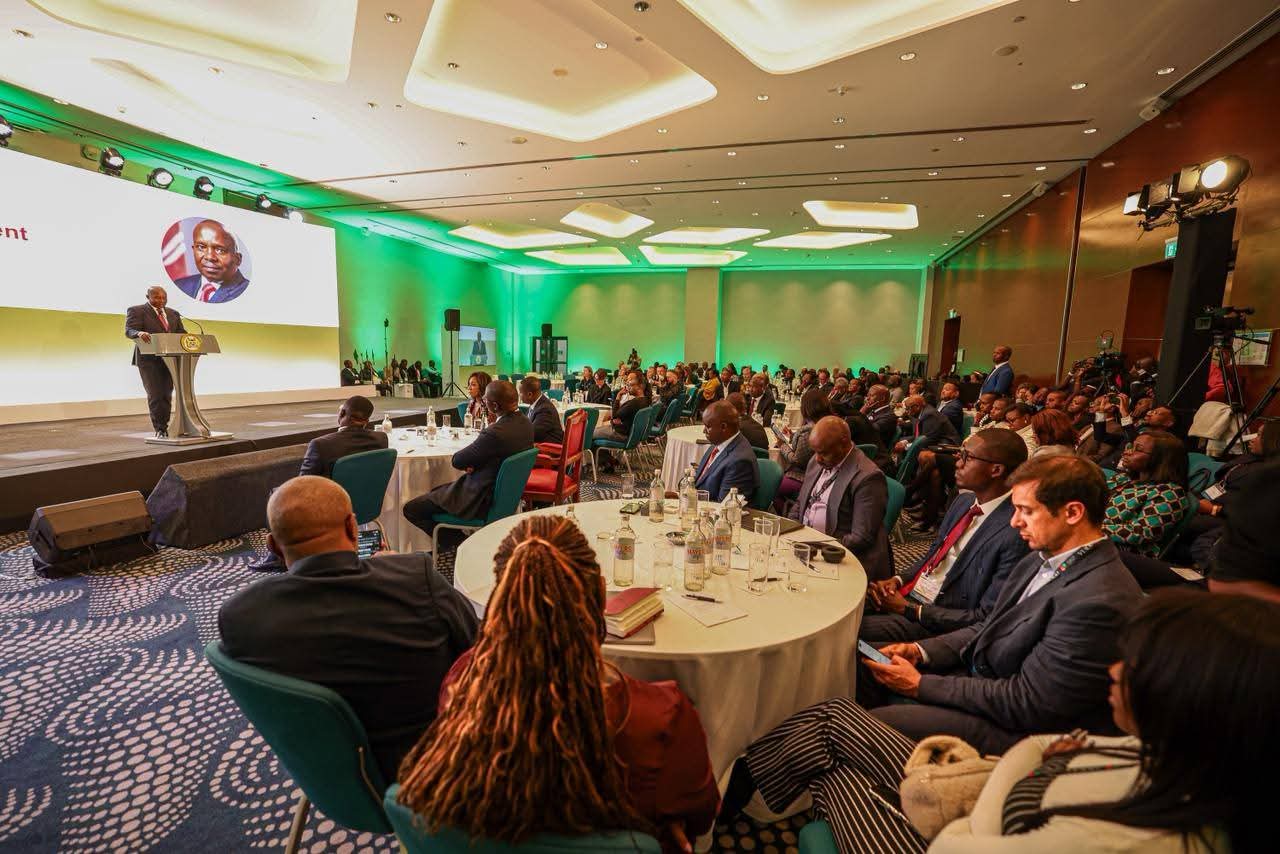
Speaking during the 22nd Annual African Private Capital, Private Equity and Venture Capital Conference held in Nairobi City County, Kindiki revealed that the newly established National Infrastructure Fund will play a central role in transforming the country’s economic landscape. The fund is expected to modernize and expand critical infrastructure, including roads, railways, airports, and seaports, positioning Kenya to achieve first-world economic status within a generation.

Kindiki said the fund will also support the scaling up of electricity generation from the current 3,300 megawatts to 10,000 megawatts, a move aimed at powering industrial growth and supporting key sectors such as manufacturing, agro-processing, water supply, and irrigation. He noted that the fund will provide seed capital for large-scale projects, with the intention of attracting private sector participation to complement public investment.
The Deputy President emphasized that private equity and venture capital will be instrumental in sustaining this vision, pointing to the need for long-term political and economic stability, clear regulatory frameworks, and competitive tax incentives to attract and retain investors. He described the conference as a critical platform for fostering partnerships between governments and private capital players in driving Africa’s development agenda.
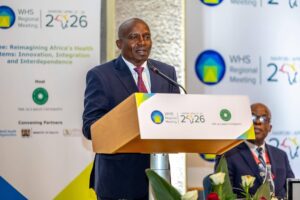
In a separate engagement, Kindiki attended the closing plenary of the 2026 World Health Summit Regional Meeting at the United Nations Office at Nairobi, where he called for a fundamental shift in Africa’s approach to healthcare.
He urged African nations to move from being passive recipients of global health solutions to becoming architects of their own healthcare systems. This, he said, will require reducing dependence on external supply chains for medical commodities by strengthening local manufacturing, enhancing sustainable health financing, and building resilient policy and institutional frameworks.
Kindiki stressed that effective health systems must be people-centered, inclusive, and affordable. He highlighted Kenya’s progress under Taifa Care, the country’s Universal Healthcare Programme, which has enrolled 30.7 million citizens—significantly surpassing coverage under the defunct National Health Insurance Fund.
The government, he added, is undertaking comprehensive reforms to improve healthcare delivery, including upgrading medical equipment, streamlining the supply chain for essential commodities, addressing human resource challenges, and strengthening actuarial systems to expand access to affordable care.
At the summit, which brought together health ministers from across Africa and beyond, alongside leadership from the United Nations, World Health Organization, and Centers for Disease Control and Prevention, Kindiki called for stronger and more credible partnerships.
He emphasized the importance of collaboration through co-investment, technology transfer, skills development, and improved market access, particularly in supporting African-led solutions to the continent’s health challenges.
The Deputy President’s remarks underscored Kenya’s dual strategy of leveraging infrastructure development and healthcare reform as key pillars in its broader agenda for sustainable economic growth and improved quality of life for its citizens.