










Young people should know that social change does not happen if they rely only on employment opportunities created by others. They, too, ought to create opportunities for themselves and for others.
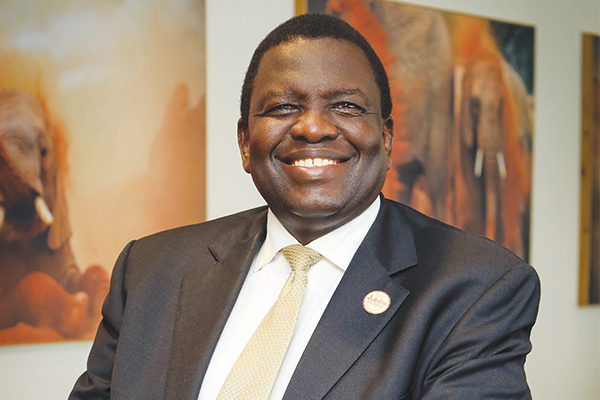
That is the challenge Dr Julius Kipng’etich, the Group CEO of Jubilee Holdings Ltd, posed to Mount Kenya University (MKU) graduands last Friday during the institution’s 29th Graduation Ceremony.
The event’s theme was: ‘Youth as Architects of Social Change, Ethical Governance and Inclusivity.’
Dr Kipng’etich said the multiplier effect of one graduate opening a restaurant and employing a cook, buying produce from farmers, paying boda riders for transport, illustrates his argument.
He said this is an example on how an individual can contribute to the overall employment ecosystem and hence the social change all desire while eking out a living.
Dr Kipng’etich reminded the graduands that their degree is but a foundation they can use to build careers and businesses, pointing out that a commerce graduate can build a successful private health clinic, just as an engineer “can walk away from a building site and establish a potato farm.”
He informed them that their “certificate has no limit as to where your usefulness can take you.”
Young people, the corporate leader said, can learn about success from the Fifa World Cup. “You have seen how young players from humble backgrounds beat extraordinary odds of being immigrants to being globally celebrated soccer icons. You too can craft your own destiny from today or continue the destiny you have moulded for the last four or so years into a celebrated life.”
He further advised them to look beyond the border, pointing out: “MKU alumni found opportunities in Germany, Austria and many other countries. Be ambitious and try your opportunity outside the box.”
Noting the political consciousness among the current generation of Kenyan youth, Dr Kipng’etich urged those who want to pursue political offices not to inherit the old political strategies. “Be a different kind of leader, one who debates ideas rather than identities; one who builds coalitions rather than personalities.”
He advised young people who want a better life to pursue lifelong learning – reskilling and upskilling continuously in digital literacy, data and emerging tools such as artificial intelligence. He said this is because “the jobs of 2030 will demand competencies that we are yet to see.”
Dr Kipng’etich further advised the youth to conduct themselves ethically. “In the political arena, whether as a candidate or a citizen, it means refusing to trade your vote, your voice or your silence, for a handout,” he said. “The world will not always be watching you. Be ethical anyway.”
He added: “Whether you rise to manage a company, run a farm, or sit in public office, ensure the people around you, your colleagues, your community, your constituents, feel the benefit of your success too. Mentor someone. Make room for someone. Build systems that do not only serve you.”