








The Government has stepped up its multi agency crackdown on illicit alcohol and drug abuse, with Deputy President Kithure Kindiki directing security and regulatory agencies to intensify inspections of alcohol manufacturers and tighten controls on the wider alcohol trade.
The latest measures are aimed at dismantling criminal networks involved in the manufacture and distribution of illicit alcoholic drinks, disrupting supply chains and curbing the devastating social, economic and public health consequences of addiction.
Dr Kindiki said the fight against alcohol and drug abuse must be treated as a national security, public health and economic priority rather than a political issue.
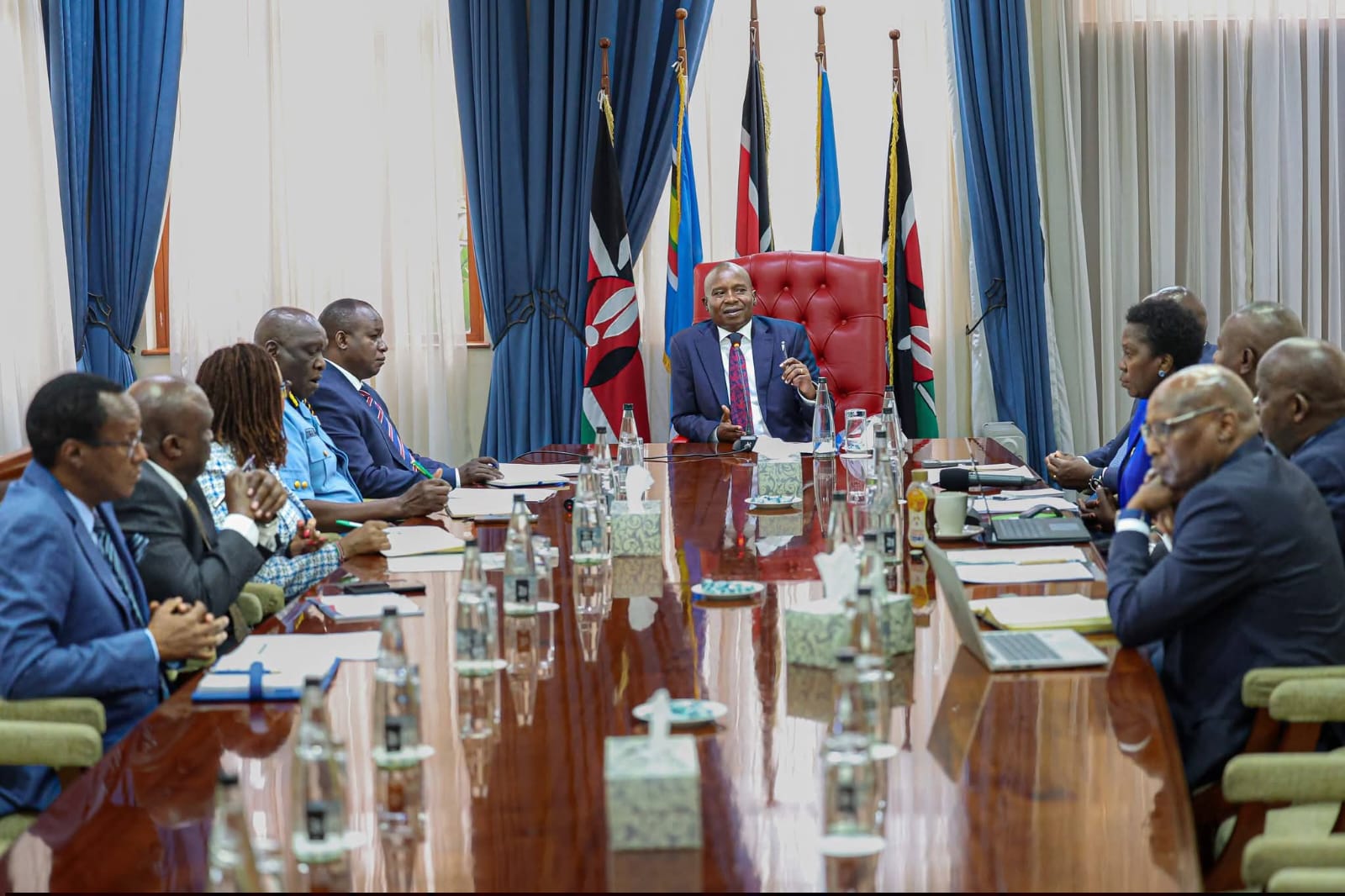
“This is not a political matter. Security cannot be a political matter,” the Deputy President said on Tuesday during a consultative meeting with senior security and regulatory officials at his Karen residence in Nairobi.
He said progress in dealing with major security challenges, including terrorism, banditry, illicit alcohol and drug abuse, had been achieved by keeping politics away from enforcement operations.
The meeting brought together Interior Cabinet Secretary Kipchumba Murkomen, Inspector General of Police Douglas Kanja and heads of regulatory and enforcement agencies to assess measures undertaken over the past year and agree on additional interventions.
The Government said intelligence led multi agency operations had made significant progress in disrupting illicit alcohol cartels, closing illegal manufacturing establishments and interrupting distribution networks.
The strengthening of the National Government Administration Unit (NGAU), coupled with the motivation of village elders through monthly stipends, has also been identified as a key component of the Government’s efforts to improve intelligence gathering and enforcement at community level.
The Government is now preparing to provide additional resources and equipment to security and regulatory agencies to enable them to sustain and expand the crackdown.
Dr Kindiki directed enforcement and regulatory agencies to re inspect alcohol manufacturing premises to establish their current level of compliance with applicable laws, standards and regulations.
The fresh inspections are expected to determine whether manufacturers operating under legitimate licences continue to meet the required standards and whether facilities previously found to be non compliant have corrected the identified breaches.
But the Government is also turning its attention to the regulation of legitimate alcohol, with the Deputy President calling for a review of licensing, the number of drinking establishments and their operating hours.
He said the consequences of alcohol consumption extend beyond illicit products and that legitimate alcohol also required effective controls.
“Alcohol is about control,” Dr Kindiki said, arguing that unrestricted consumption could have wider implications for communities and the economy.
He proposed discussions on the number of bars permitted in different areas, licensing requirements and operating hours, noting that some counties had already introduced measures that could provide lessons for other devolved units.
The initiative will bring the national and county governments closer together in dealing with alcohol licensing, enforcement and rehabilitation.
The Interior Cabinet Secretary has been directed to convene, within 14 days, a sector forum with the relevant committee of the Council of Governors to deliberate on licensing and control of alcohol trade and consumption.
The forum will also consider a framework for cooperation between the two levels of government in establishing and operating rehabilitation facilities.
The Government plans to partner with counties to establish and operate at least one public rehabilitation centre in every county within the next year.
Each facility is estimated to cost about Sh60 million, signalling a major expansion of public investment in treatment and rehabilitation services for people affected by alcohol and drug addiction.
Dr Kindiki said the rehabilitation programme would require the active participation and ownership of county governments, given their constitutional responsibilities and their proximity to communities affected by addiction.
He called for the development of a common framework and formal intergovernmental agreements to ensure counties participate in the programme.
“We need to plan, sign IPAs, encourage and whip all the governors to be on board,” he said.
The Deputy President also directed that the proposed Cabinet memorandum on rehabilitation should incorporate the views of county governments before being presented to Cabinet.
He said early consultation would ensure that the policy reflects the realities on the ground and secures ownership by both levels of government.
The Government also plans to escalate the matter to the Intergovernmental Budget and Economic Council (IBEC), with Dr Kindiki directing that a special IBEC meeting be convened next month to consider the economic impact of alcohol and drug abuse.
He said the ordinary IBEC meeting expected early in December would provide another opportunity to strengthen collaboration between the national and county governments.
The proposed special IBEC meeting is expected to examine the economic costs associated with addiction, including its impact on productivity, household incomes, healthcare, security and social welfare.
Dr Kindiki said the scale of the problem demanded a coordinated response involving security agencies, regulators, counties, communities and other stakeholders.
He further called for stronger cooperation between the national administration and devolved governments, particularly on enforcement, licensing and rehabilitation.
The Government’s latest strategy therefore combines enforcement against illicit manufacturers and distributors with tighter regulation of legitimate alcohol, increased investment in rehabilitation and closer cooperation between the two levels of government.
The Deputy President said the success of the programme would depend on sustained enforcement and cooperation, rather than short term operations.
He urged security agencies to continue carrying out their responsibilities despite political pressure or noise, saying national security matters should be handled without political interference.
The Government’s renewed campaign comes amid growing concern over alcohol and drug abuse and its effects on communities, families, public health, security and the economy.
Officials said the next phase would focus on strengthening enforcement capacity, improving intelligence, ensuring compliance by licensed manufacturers and expanding access to treatment for people already affected by addiction.
The proposed county rehabilitation centres are expected to form a critical component of that approach by bringing treatment services closer to affected communities.
The sector forum between national and county governments will consequently be expected to lay the groundwork for the rehabilitation programme while addressing contentious questions surrounding alcohol licensing, operating hours and regulation of drinking establishments.
The Government now faces the task of translating the decisions into coordinated action across the 47 counties, with the planned sector forum and special IBEC meeting expected to provide the next major milestones in the campaign.