










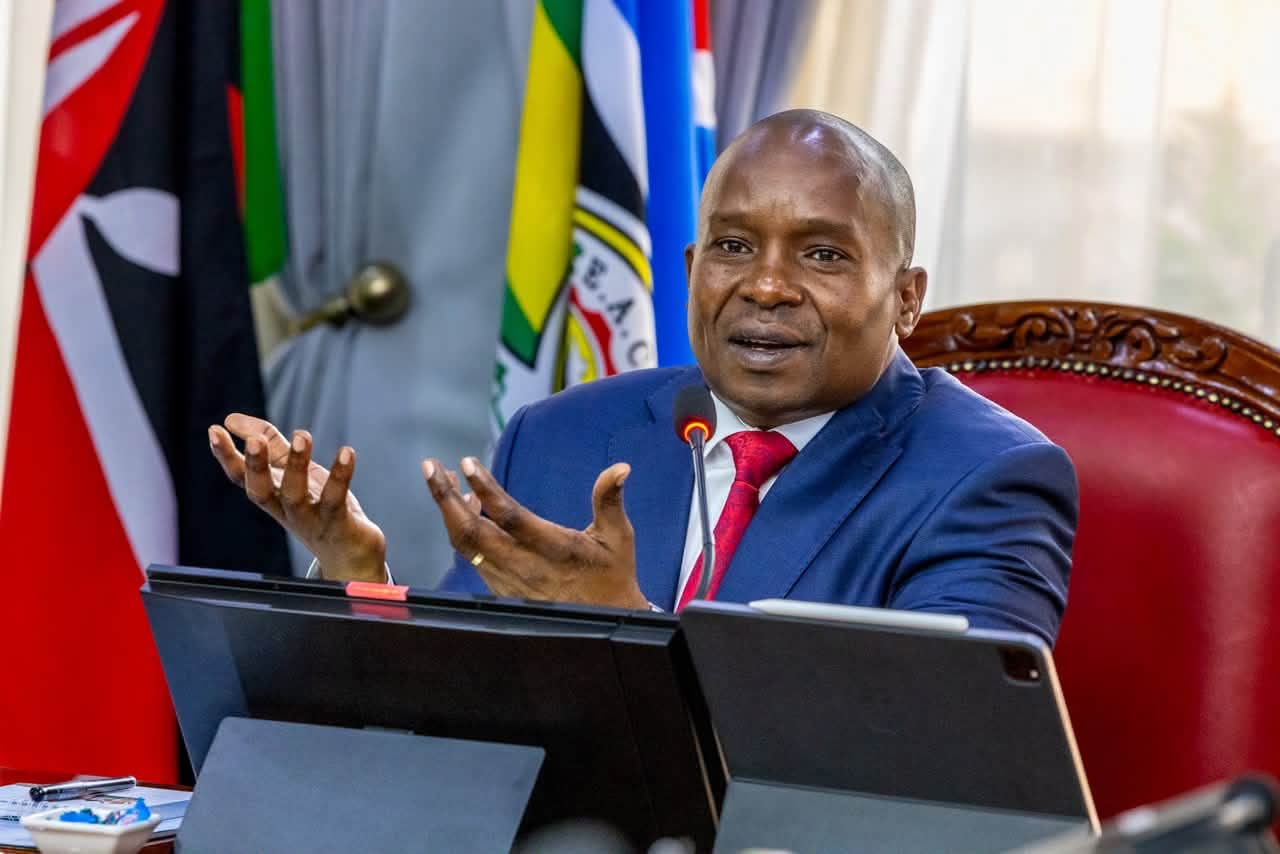
The government has moved to reassure Kenyans that comprehensive measures are already in place to mitigate the effects of the anticipated El Niño rains expected between October and December this year, with Deputy President Kithure Kindiki urging the public to remain calm.
Speaking on Thursday at his Official Residence in Karen, Nairobi, after chairing the inaugural meeting of the Ad Hoc Cabinet Committee on El Niño Preparedness and Response, Prof. Kindiki said the government has activated an elaborate national preparedness framework following forecasts by Kenyan and international meteorological experts indicating a high probability of above-normal rainfall during the October–December short rains season.

The Deputy President emphasized that the government is working closely with all ministries, departments, agencies and other state institutions to ensure Kenya is fully prepared before the onset of the rains.
“We assure the country that there is no need to panic. We are engaging all the ministries, departments, agencies and all state organs to ensure that in the event of the rains, the country is prepared and we are not caught by surprise,” said Prof. Kindiki.
He noted that President William Ruto assigned him during Tuesday’s Cabinet meeting to lead the multi-agency committee that will coordinate the country’s preparedness and response efforts ahead of the anticipated weather phenomenon.
The committee will oversee planning and implementation of interventions aimed at minimizing disruptions to public services, transport networks, public health and economic activities while safeguarding lives and property.
Prof. Kindiki said lessons learned from previous El Niño events have informed the government’s proactive approach, adding that preventive measures are being undertaken well in advance.
“We will take action to make sure that there is no disruption of civic order, disruption of movement of goods and services and public health concerns. We will also take preventive action in areas prone to mudslides, landslides and floods to prevent loss of human lives and any other disruptive occurrences associated with El Niño rains,” he stated.
Meteorological experts have warned that an El Niño season could trigger widespread flooding, landslides and crop destruction, posing significant risks to food security, infrastructure, public health and supply chains if adequate mitigation measures are not undertaken.
The Deputy President said maintaining the country’s current stable food security situation remains one of the government’s top priorities, with relevant ministries already implementing strategies to cushion agricultural production and ensure uninterrupted food supplies.
A key pillar of the preparedness plan, he explained, is the recently enacted National Disaster Risk Management Act, 2026, which came into force last month and provides a comprehensive legal framework for disaster preparedness, response and coordination between the national and county governments.
According to Prof. Kindiki, the new legislation enables quicker decision-making, improved resource mobilization and more efficient coordination among government agencies during emergencies.
“The National Disaster Risk Management Act provides for early preparations as well as enabling collaboration between the two levels of government in the event of disasters,” he said.
He challenged county governments to activate their own disaster preparedness mechanisms immediately, stressing that close collaboration between both levels of government will be essential in responding effectively to any eventuality.
“In the spirit of a coordinated approach, we are going to partner at this early stage with county governments as required by the new law to make sure there is a seamless preparation phase for any eventuality,” he added.
Among the immediate interventions identified is the unclogging and rehabilitation of drainage systems, particularly within Nairobi, where poor drainage has historically contributed to severe flooding during heavy rains.
The Deputy President disclosed that the Ministry of Roads and Transport is already implementing infrastructure improvements aimed at reducing flood risks in the capital.
“The Ministry of Infrastructure is working on certain interventions in Nairobi to make sure we mitigate the impact on its drainage systems,” he noted.
The committee also reviewed the country’s food security status and received updates from relevant ministries and agencies on contingency plans designed to protect agricultural production, maintain strategic food reserves and ensure continuity of essential services should the heavy rains materialize.
Beyond the anticipated El Niño season, the Deputy President also assured Kenyans that the country remains on high alert against the Ebola outbreak currently being contained in the neighbouring Democratic Republic of the Congo.
He emphasized that although Kenya has not recorded any Ebola case, surveillance systems, simulation exercises and contingency plans have been strengthened to prevent any possible importation of the disease.
“Our country has been actively prepared for the longest time and there is no cause for alarm because there is no case reported, but our preparations, simulation and contingency measures are fully in place,” Prof. Kindiki said.
The government’s dual preparedness for both the anticipated El Niño rains and the regional Ebola threat underscores a broader strategy of proactive disaster risk management aimed at protecting lives, sustaining economic activity and ensuring uninterrupted delivery of essential public services.
Officials expressed confidence that through early planning, coordinated action and close collaboration between national and county governments, Kenya will be better positioned to manage any adverse effects associated with the expected heavy rains while maintaining public health and national stability.