










The first graduation ceremony at Gichugu Technical and Vocational College has placed skills, industry partnerships and the recognition of informal expertise at the centre of Kenya’s drive to make technical training more responsive to the economy.
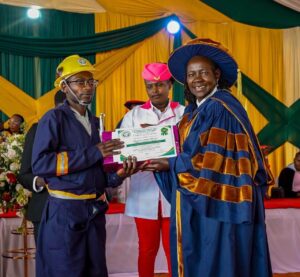
Principal Secretary for Technical and Vocational Education and Training (TVET) Dr Esther Thaara Muoria witnessed the inaugural graduation, where 405 trainees were presented with qualifications, including 260 candidates certified through Recognition of Prior Learning (RPL).


The milestone marks a significant step for the relatively young institution in Gichugu, Kirinyaga County, as it seeks to position itself as a centre for practical skills, enterprise development and access to employment.
The large RPL cohort also underlines the growing importance of a government programme designed to bridge the gap between skills acquired outside formal classrooms and nationally recognised qualifications.
Under RPL, workers and artisans who have acquired competencies through employment, apprenticeships, informal training or years of practical experience can have their skills assessed and formally certified. Gichugu has already been implementing the programme, with experienced workers undergoing assessment to obtain qualifications that can improve their access to employment and further training.
Dr Muoria said the graduation demonstrated what could be achieved when TVET institutions respond directly to the needs of learners, industry and the wider economy.
She challenged the college to ensure that its workshops, machinery and other facilities do not become idle investments but are continuously used to train students and support productive activities.
The PS said equipment acquired by TVET institutions should translate into practical competencies, productivity and opportunities for graduates.
She cited the need for trainees to use machines and tools to undertake real production work, including manufacturing items such as bolts and bushes, while responding to actual requirements in the industrial sector.
The emphasis reflects a broader shift in the TVET sector from training primarily for certification to developing competencies that can be applied in workplaces, businesses and communities.

Education authorities have increasingly stressed that the success of TVET institutions should be measured not only by enrolment and graduation figures, but also by whether graduates acquire skills demanded by industry and are able to create enterprises, improve productivity and solve practical problems.
For Gichugu, the focus on industry linkages is already emerging as a key component of its development.
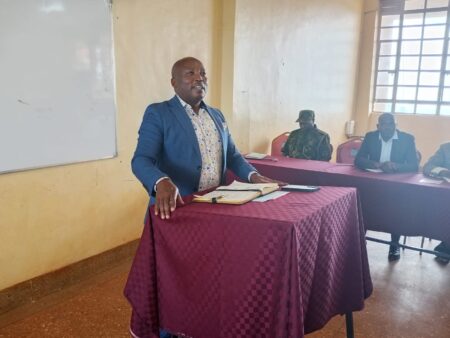
During the ceremony, Ms Leah Ireri, Deputy Director of Human Resource Management at the Nyayo Tea Zones Development Corporation, represented the corporation’s chief executive officer and highlighted the importance of the relationship between the institution and industry.
Such partnerships are increasingly viewed as critical in ensuring that what students learn in workshops is relevant to the demands of employers and production environments.
For young institutions such as Gichugu TVC, the challenge is to turn infrastructure and training programmes into tangible opportunities for graduates.
The college, which is registered and licensed by the TVET Authority as a public technical and vocational college in Kirinyaga, is among the institutions being developed under the country’s wider expansion of technical skills training.
The inaugural graduation therefore comes at a time when the Government is seeking to expand pathways through which Kenyans can acquire, certify and progressively build their skills.


The Kenya Credit Accumulation and Transfer System (KCATS), for instance, is intended to make it easier for learners to accumulate and transfer credits between vocational institutions and universities, allowing progression from artisan and certificate levels towards higher qualifications. Dr Muoria has also linked RPL to this broader lifelong learning framework.
The reforms are intended to make technical education more flexible and inclusive, particularly for workers whose competencies were acquired outside conventional education systems.
For the 260 Gichugu graduates who went through RPL, the certificates represent more than an academic milestone. They provide formal recognition of skills that many had already acquired through years of practical work.
The programme also provides a possible bridge between the informal economy and the formal labour market, where certification can help skilled workers demonstrate their competencies to employers and access further opportunities.
Dr Muoria said the real test of a TVET institution should not simply be the buildings, workshops or machines it possesses, but what those resources enable learners and graduates to make, repair, innovate and produce.
The message places a responsibility on institutions to move beyond infrastructure development and ensure that every investment contributes directly to skills acquisition and economic activity.
As Kenya expands investment in technical and vocational education, Gichugu’s first graduation offers an illustration of the possibilities and the challenge facing the sector.
Graduates must leave colleges with competencies that can be translated into employment, self employment, enterprise creation and improved productivity.
At the same time, institutions must strengthen links with employers and industries so that training remains aligned with changing technological and labour market demands.
For Gichugu TVC, the graduation of 405 trainees is therefore both an achievement and a test of the institution’s next phase.
Its ability to fully utilise equipment, deepen industry partnerships, expand practical training and support graduates into employment and enterprise will determine whether the college can turn its growing infrastructure and programmes into lasting economic opportunities.
The first cohort has crossed the graduation stage. The bigger task now is ensuring that the skills acquired translate into productive work, innovation and livelihoods.