










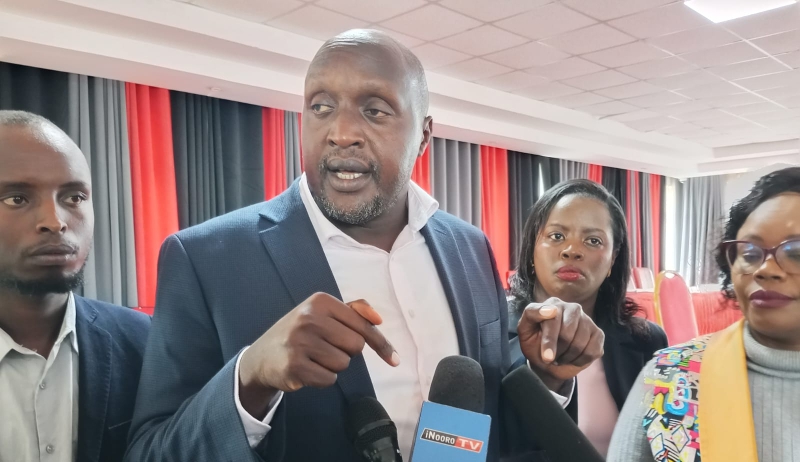
The National Assembly Departmental Committee on Finance and National Planning has embarked on a week-long nationwide public participation exercise across 13 counties to collect views from Kenyans on four significant pieces of legislation currently before Parliament. The bills under consideration are the Finance Bill 2026, the Sovereign Wealth Fund Bill, the Central Bank of Kenya (Amendment) Bill, and the Kenya Revenue Authority (Amendment) Bill.
The exercise officially commenced at Kiambu National Polytechnic (KINAP) in Kiambu Town, where hundreds of residents, professionals, business people, farmers, youth leaders, and other stakeholders gathered to present their views and recommendations on the proposed laws.
The committee is led by Finance and National Planning Committee Chairman and Ainamoi MP, Benjamin Kipkirui, alongside committee members Shadrack Mwiti, Chiforomondo Mangale, George Risa, Umulkheir Kassim, and Gathoni Wamuchomba.
Speaking during the session, Kipkirui emphasized the importance of public participation in shaping legislation that will influence the country’s economic future.
“This is the first official day of our committee’s engagement with citizens across the country regarding four critical bills before Parliament. We want to ensure that Kenyans have an opportunity to understand the proposals and provide their views before the House makes any decisions,” he said.
According to the chairman, the committee will continue its public engagement tour in counties including Makueni, Taita Taveta, Tana River, Nairobi, Kajiado, Vihiga, Siaya, Nyamira, Bomet, Mombasa, and others before compiling a comprehensive report for presentation to Parliament.
A major issue raised by Kipkirui was what he termed widespread misinformation circulating on social media regarding the contents of the Finance Bill 2026.
He noted that many Kenyans had formed opinions based on inaccurate information and urged citizens to verify facts directly from official documents and public participation forums.
The committee chair cited examples of claims that the Finance Bill seeks to alter land ownership regulations and increase taxes on rental properties. He clarified that the bill contains no provisions relating to land ownership and that proposals affecting rental income largely target foreign investors rather than local property owners.
Kipkirui cautioned that social media platforms have increasingly become channels for the rapid spread of misinformation, making civic education more important than ever.
He called on Kenyans to attend public participation forums instead of relying solely on online discussions, saying informed engagement would help ensure better legislation and national development.
Despite the significance of the bills under discussion, committee members expressed concern over the relatively low turnout witnessed in Kiambu.
Kipkirui revealed that although Kiambu County has a population exceeding one million people, only about 300 to 400 residents attended the forum.
He acknowledged that public participation is voluntary but emphasized the need for greater civic awareness and mobilization by government administrators and local leaders.
The chairman noted that civic education remains a challenge due to limited resources, adding that many Kenyans still lack a clear understanding of how Parliament functions and how laws are enacted.
Nevertheless, he commended Kiambu residents for focusing their submissions on the specific bills before Parliament, describing the engagement as one of the most informed public participation exercises the committee has encountered.
One of the most detailed submissions came from Kiambu resident and advocate of the High Court, Phyllis Wangui, who warned against proposals that could increase the cost of digital financial transactions.
Drawing from her experience in the financial services sector, Wangui argued that introducing VAT on payment processing services could negatively affect Kenya’s digital economy.
She cited examples from countries such as Tanzania, Ghana, and Uganda, where increased taxation on digital transactions reportedly led to an immediate decline in transaction volumes.
Wangui urged lawmakers to carefully assess the long-term impact of such taxes, warning that they could slow innovation, discourage digital entrepreneurship, and undermine Kenya’s reputation as a regional leader in financial technology.
“Youth employment and business growth increasingly depend on digital platforms. We should be cautious not to reverse the gains Kenya has made in digital innovation,” she said.
Agriculture featured prominently during the discussions, with participants expressing concern about the cost of animal feeds and other agricultural inputs.
Wangui questioned proposed amendments affecting VAT treatment of animal feed raw materials, arguing that farmers are already struggling with high production costs.
She urged Parliament to retain zero-rating for agricultural inputs to ensure lower prices for farmers, particularly poultry and dairy producers who continue to face rising operational expenses.
Responding to the concerns, Githunguri MP Gathoni Wamuchomba said her understanding of the proposal was that exempting rather than zero-rating certain inputs could reduce compliance costs for manufacturers and ultimately lower the price of animal feeds.
Wamuchomba maintained that as a representative of an agricultural constituency, she would not support any measure that increased costs for farmers.
Participants also called for stronger incentives to support local investors and small businesses.
She observed that while the Finance Bill contains provisions aimed at attracting foreign investors, it offers limited relief for local entrepreneurs facing high operating costs.
She proposed targeted tax incentives for small and medium-sized enterprises (SMEs), particularly in sectors such as petroleum, retail trade, and manufacturing.
Business owners argued that lowering compliance costs and reducing regulatory burdens would stimulate investment, create jobs, and expand the country’s tax base in the long run.
The proposed Sovereign Wealth Fund Bill generated significant debate, particularly among young people and financial experts attending the forum.
Questions were raised regarding governance structures, safeguards against political interference, investment decision-making processes, and the management of future generations’ savings.
Wamuchomba described the proposed fund as a potential turning point for Kenya’s economy if implemented effectively.
She explained that the fund would consist of three components: a Stabilization Fund, a Strategic Infrastructure Investment Fund, and a Future Generations Fund.
According to the MP, revenues from natural resources, royalties, privatization proceeds, and other designated sources would be invested to benefit both current and future generations.
She emphasized that withdrawals from the fund would be regulated under existing public finance laws to prevent misuse and ensure accountability.
Committee Chair Kipkirui further explained that the bill seeks to shield the fund from pressures associated with the Consolidated Fund, allowing the resources to be preserved and reinvested for long-term national development.
Youth representatives also actively participated in the discussions.
Ian Ngumi, a youth leader and former student leader at KINAP, questioned proposals relating to duty-free allowances for travellers and provisions granting enhanced powers to the Kenya Revenue Authority (KRA) to recover tax arrears through financial institutions and employers.
Ngumi sought assurances that public funds collected through taxation would be used transparently and effectively.
He also appealed for stronger support for education, noting that many students continue to struggle with school fees amid challenging economic conditions.
At the conclusion of the forum, committee members assured participants that all submissions would be documented and considered before Parliament debates the bills.
Kipkirui reiterated that public participation remains a constitutional requirement and a critical pillar of democratic governance.
He encouraged Kenyans across the country to take advantage of the remaining public participation sessions to contribute their views, saying informed citizen engagement would help shape legislation that reflects the interests and aspirations of the people.
The committee is expected to complete its nationwide consultations in the coming days before compiling a report that will guide parliamentary deliberations on the Finance Bill 2026 and the other proposed legislation.