
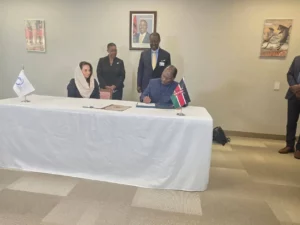






Nearly 5,000 secondary school scholars drawn from disadvantaged and refugee communities have undergone an intensive leadership and career-readiness programme aimed at preparing them for life beyond the classroom.
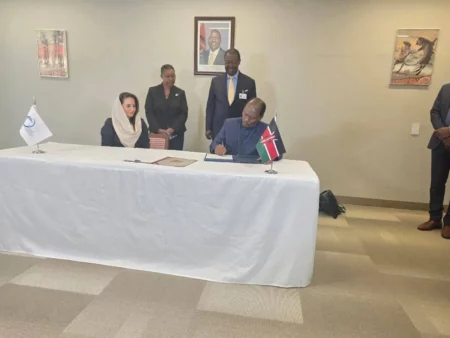
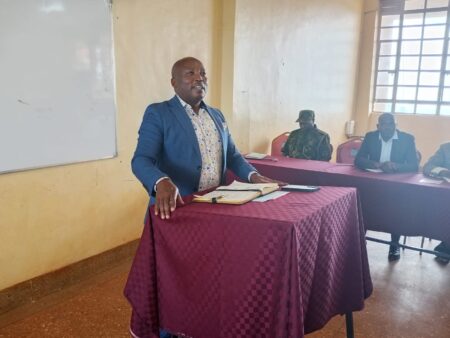
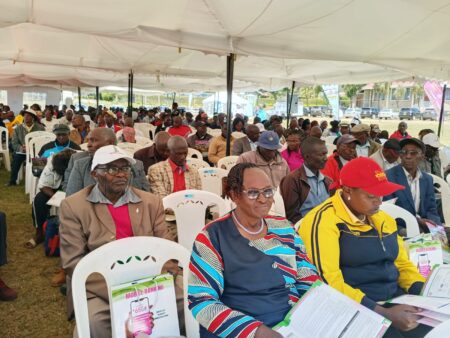
A total of 4,949 Wings to Fly and Elimu Scholarship scholars participated in the Equity Group Foundation (EGF) 17th Annual Education and Leadership Congress held in Dadaab, Kakuma and Nairobi from August 10 to 14.
The five-day Congress brought together 1,996 Wings to Fly scholars in Forms Three and Four and 2,953 Form Three refugee scholars under the Elimu Scholarship Programme.

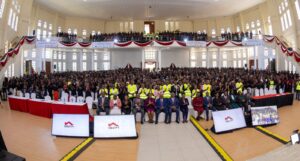
Held under the theme “Lead, Solve, Sustain: Turning Challenges into Solutions,” the Congress placed leadership, life skills, resilience and career preparedness at the centre of discussions, challenging young people to look beyond academic achievement and develop the skills required to navigate an increasingly competitive world.
The programme sought to nurture a generation capable of identifying challenges in their communities, developing practical solutions and using their talents responsibly to create lasting change.
Through plenary sessions, mentorship forums and leadership development activities, scholars examined ethical leadership and value systems while interacting with leaders from government, academia, the non-profit sector and industry.
The sessions also provided practical guidance on education and career pathways, with representatives from the Ministry of Education, the Kenya Universities and Colleges Central Placement Service (KUCCPS), professionals, gender champions, industry leaders and alumni of the scholarship programmes engaging the students.
A major focus was helping the scholars understand how to navigate Kenya’s education system and make informed decisions about their future.
The participants were taken through university readiness, campus life, career preparation, self-awareness and identity, as well as mental resilience and the importance of developing healthy coping mechanisms when confronted by adversity.
For refugee scholars, the programme placed particular emphasis on overcoming the challenges associated with displacement while embracing diversity and inclusion.
The Congress also used the experiences of successful scholarship alumni to demonstrate how education, discipline, resilience and purposeful decision-making can transform individual lives and communities.
The alumni shared their personal journeys, providing the scholars with practical lessons on transitioning from secondary school to higher education and eventually into the workplace.
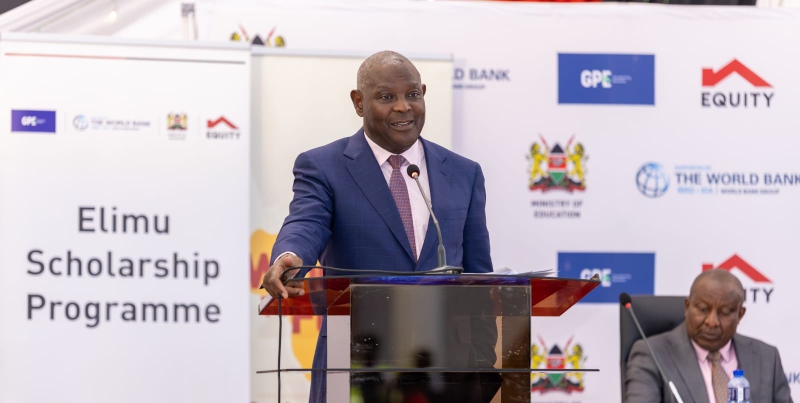
Equity Group Foundation Executive Chairman and Equity Group Holdings Plc Managing Director and Chief Executive Officer Dr James Mwangi said the foundation’s objective was to ensure that young people from different circumstances received an opportunity to realise their potential.
“At Equity Group Foundation, we are truly excited to have supported this cohort of more than 60,000 scholars,” Dr Mwangi said.
He said the 17-year journey had demonstrated the importance of walking with young people beyond providing financial support for their education.
According to Dr Mwangi, rapid advances in science and technology are changing the nature of work and creating new opportunities that require young people to acquire relevant skills.
He challenged the scholars to move from being passive consumers of technology to becoming innovators capable of using digital tools to address social and economic challenges.
“An opportunity can open a door, but it is the choices you make, the skills you develop and the problems you choose to solve that ultimately determine what you do with that opportunity,” he said.
Dr Mwangi said the foundation’s responsibility extended beyond preparing scholars for academic and professional success.
“Our responsibility is not only to prepare scholars to succeed, but to inspire them to lead with integrity, solve problems with courage and creativity, and sustain the impact they create,” he said.
He challenged the beneficiaries to leave their schools, communities and country better than they found them.
The Congress comes at a time when employers and institutions of higher learning are increasingly placing emphasis on skills beyond academic qualifications, including problem-solving, communication, adaptability, digital competence, teamwork and ethical leadership.
For the scholars, the forum provided an opportunity to begin developing those competencies before making the transition from secondary school to university and eventually the world of work.
The leadership programme is also part of EGF’s wider scholarship investment, which has supported thousands of young people from economically disadvantaged backgrounds and refugee communities.
The foundation’s emphasis on leadership development seeks to ensure that scholarship beneficiaries become contributors to their communities rather than merely recipients of educational support.
The 2026 Congress was held barely a week after 121 Equity Leaders Program (ELP) scholars from Kenya, Uganda, Rwanda and the Democratic Republic of Congo secured admission to leading universities across the world.
The scholars received comprehensive financial scholarships valued at KSh2.79 billion ($21.64 million) for the four-year duration of their studies.
The latest university placements further underline the growing emphasis by the Equity education programmes on creating pathways from secondary education to global higher education and, ultimately, professional careers.
With technology, artificial intelligence and changing labour-market demands reshaping careers, the Congress sought to prepare the next generation not only to compete for opportunities but also to create them.
The message to the scholars was clear: academic success may open the door, but character, leadership, resilience, practical skills and the ability to solve real-world problems will determine how far they go.