








The urgent need to ensure that Africa’s rapidly expanding digital economy leaves no one behind dominated discussions at the 7th Inclusive Africa Conference held in Nairobi, where government leaders, technology companies, development partners, disability rights advocates, and innovators gathered to advance digital accessibility across the continent.
The conference, organized by inABLE, brought together stakeholders from across Africa to explore how technology, digital services, and emerging innovations such as Artificial Intelligence can be designed and deployed in ways that promote inclusion for persons with disabilities.
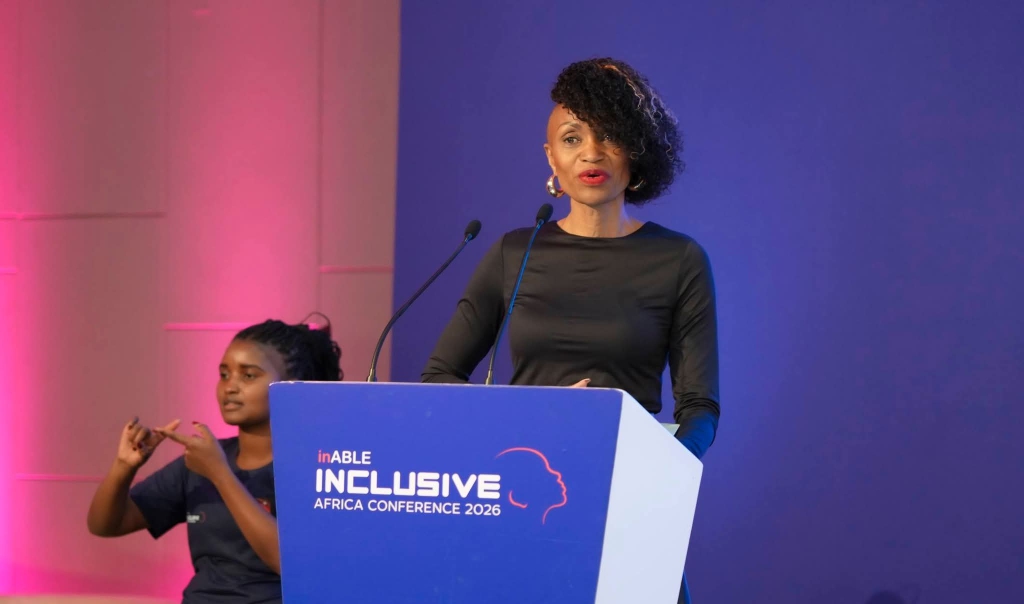
Delivering the keynote address, inABLE Founder and Executive Director Irene Kirika challenged governments, businesses, and technology developers to confront a critical question facing Africa’s digital transformation: whether the continent is building a digital economy that serves everyone or leaving behind more than 80 million Africans living with disabilities.

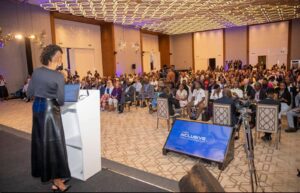
Kirika welcomed delegates to the conference and expressed gratitude to development partners and corporate supporters, including the Mastercard Foundation, Google, Microsoft, Mastercard, GIZ, Meta, Uber, Salesforce, Safaricom, NCBA, Kenya Airways, UNDP, and numerous organizations across Africa that have supported the digital inclusion agenda.
She also acknowledged the role played by Organizations of Persons with Disabilities (OPDs), noting that the progress made by inABLE and its partners has been built upon decades of advocacy by disability rights groups across the continent.
A highlight of her address was the recognition of Cabinet Secretary for Information, Communications and the Digital Economy William Kabogo for his longstanding advocacy for persons with disabilities throughout his political career. Kirika praised Kabogo’s leadership during the recent Connected Africa Summit, where a ministerial roundtable on the development of Africa’s Digital Accessibility Standard was convened.
“The political will exists across this continent,” she said, noting that governments are increasingly recognizing accessibility as a critical pillar of digital development.
Kirika announced that inABLE had been recognized on the Forbes Accessibility 100 List for the second consecutive year, describing the recognition as validation of the organization’s efforts to drive systemic change in digital inclusion.
She further revealed that inABLE, in partnership with the African Organisation for Standardisation (ARSO) and GIZ, is spearheading the development of Africa’s Harmonized Digital Accessibility Standard for ICT Products and Services. The initiative is expected to take approximately two years and aims to establish common accessibility requirements across the continent.
The inABLE Executive Director illustrated the challenges facing persons with disabilities through personal experiences gathered during her work across Africa.
She recounted a visit to the Johannesburg School for Autism in South Africa, where dedicated teachers continue to deliver quality education despite lacking access to digital learning tools. The experience, she said, underscored the need for greater investment in accessible educational technologies.
Kirika also highlighted the barriers faced by visually impaired individuals when accessing financial services. Referencing an accessibility assessment conducted by Technoprise Global on the websites of Africa’s top ten banks, she revealed that every institution examined exhibited critical accessibility shortcomings, including poor keyboard navigation, inadequate color contrast, and inaccessible non-text content.
“That is the scale of the gap we are working to close,” she stated.
She emphasized that digital accessibility is not only a human rights issue but also an economic imperative. According to World Bank estimates cited during the conference, excluding persons with disabilities from economic participation costs countries between three and seven percent of Gross Domestic Product, while the global spending power of persons with disabilities and their families exceeds 18 trillion US dollars annually.
Artificial Intelligence featured prominently in discussions throughout the conference. Kirika noted that while AI presents challenges related to safety, authenticity, and employment, it also offers unprecedented opportunities for enhancing accessibility through innovations such as real-time sign language translation, AI-powered navigation for visually impaired persons, and automated captioning technologies.
However, she warned that many AI products continue to be developed without sufficient consideration for persons with disabilities, creating a risk of new digital barriers and widening inequalities.
“Accessibility must be embedded from the outset in every AI product, every policy, and every procurement decision,” she said.
As part of her closing remarks, Kirika called for increased investment in locally manufactured assistive technologies, noting that most assistive devices used in Africa are currently imported. She urged governments, investors, and innovators to support African-developed solutions that can create jobs while meeting local accessibility needs.
She further stressed the need to equip young persons with disabilities with digital and AI skills and called for stronger collaboration between educational institutions and industry to ensure graduates are prepared for the evolving labor market.
“The business case is clear. Digital accessibility is not a matter of charity or corporate social responsibility; it is a strategic imperative,” she said.
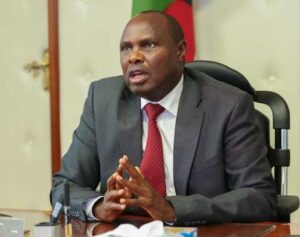
In his keynote address, Cabinet Secretary William Kabogo reaffirmed Kenya’s commitment to ensuring that digital transformation and digital inclusion advance together.
He praised inABLE for establishing one of Africa’s leading platforms dedicated to digital accessibility and inclusion, noting that accessibility can no longer be viewed as a specialized issue but rather as a fundamental requirement for inclusive development.
“Kenya’s position is clear. Digital transformation and digital inclusion must advance together,” Kabogo said. “We cannot speak of a successful digital economy if sections of our population remain unable to access the opportunities that technology creates.”
The Cabinet Secretary highlighted several government initiatives designed to expand digital access. These include the Digital Superhighway Programme, which has deployed more than 30,000 kilometers of public fiber infrastructure connecting schools, hospitals, government institutions, and communities nationwide.
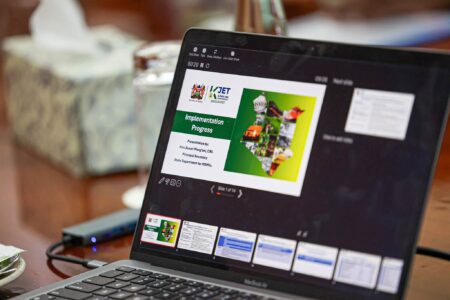
He also pointed to the Jitume Digital Hubs Programme, which has established over 270 operational hubs supported by more than 17,700 devices. Among these facilities are specialized centers serving learners who are blind, deaf, and hard of hearing, including institutions in Machakos and Kasipul.
Kabogo further noted that more than 23,000 government services are currently accessible through the eCitizen platform, emphasizing that accessibility must remain a central design requirement as digital public services continue to expand.
“A public service that a citizen with a disability cannot use is not yet a complete public service,” he remarked.
The Cabinet Secretary lauded the collaboration between the Kenya Bureau of Standards, inABLE, and other stakeholders in developing KS 2952:2022, Kenya’s accessibility standard for ICT products and services, describing it as a milestone in promoting inclusive digital development.
On emerging technologies, Kabogo underscored the importance of ensuring that Artificial Intelligence remains inclusive. He highlighted Kenya’s National Artificial Intelligence Strategy, which incorporates accessibility and equity as guiding principles in AI development and deployment.
Looking beyond Kenya, Kabogo emphasized the importance of continental cooperation in advancing accessibility, particularly under the African Continental Free Trade Area framework.
He welcomed ongoing efforts to establish a harmonized African standard for accessible ICT products and services, arguing that common standards would enable innovators to scale accessible solutions across multiple countries while providing greater certainty for investors and equal opportunities for persons with disabilities.
As the conference opened officially, both leaders delivered a unified message: accessibility must become a standard feature of Africa’s digital transformation journey rather than an afterthought.
The conference continues over three days, bringing together policymakers, technology experts, entrepreneurs, educators, disability advocates, and development partners to explore practical solutions for building a more accessible and inclusive digital future.
Participants expressed optimism that the discussions and partnerships emerging from the conference will accelerate progress toward an Africa where every citizen, regardless of ability, can fully participate in the opportunities created by the digital economy.
“The measure of digital transformation is not the sophistication of the technology we deploy,” Kabogo concluded. “It is whether every citizen can benefit from it.”