










The Government has proposed sweeping amendments to the Kenya National Library Service (KNLS) Bill to transform public libraries into digitally connected knowledge centres, placing them at the heart of Kenya’s digital economy, education and innovation agenda.
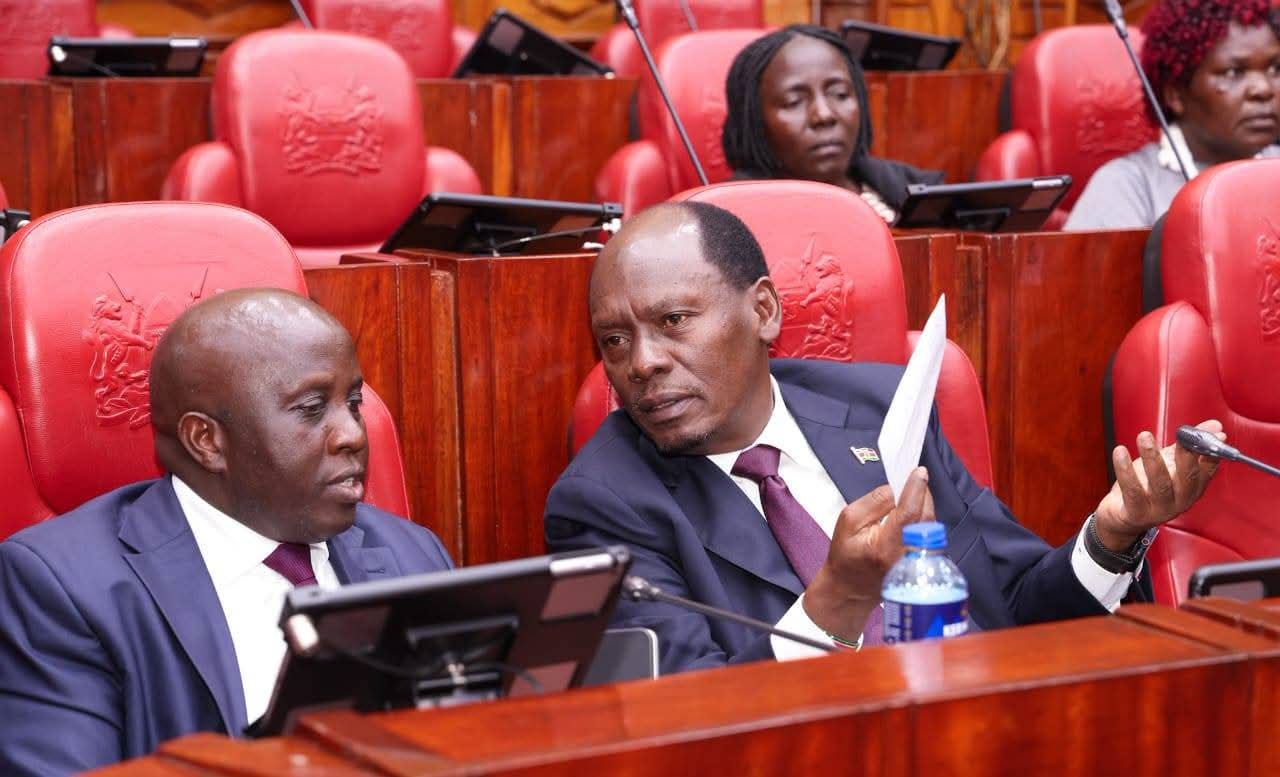
Appearing before the Senate Standing Committee on Labour and Social Welfare, Cabinet Secretary for Information, Communications and the Digital Economy William Kabogo urged lawmakers to strengthen the Kenya National Library Service Bill, 2023, arguing that the proposed legislation must reflect the realities of a rapidly digitising society.
Kabogo said the reforms would reposition the Kenya National Library Service from a traditional library institution into a modern national digital knowledge repository capable of supporting research, innovation, artificial intelligence, lifelong learning and secure public access to information.
“The future of libraries is digital. The law must equip KNLS to become a secure, accessible and technology-driven institution that supports Kenya’s Digital Transformation Agenda,” Kabogo told senators.
His ministry proposed a raft of amendments, including the introduction of electronic legal deposit, establishment of a national digital knowledge repository, digitisation and long-term preservation of public records, artificial intelligence-assisted cataloguing of library resources and stronger accessibility standards for persons with disabilities.
The proposals also seek to integrate KNLS with government digital infrastructure through secure interoperability with platforms such as eCitizen, adopt cloud-first digital services, strengthen cybersecurity and data protection, and establish robust digital governance systems.
Kabogo further recommended expanding the composition of the KNLS Board to include experts in digital technologies, cybersecurity and data governance to guide the institution through an increasingly technology-driven environment.
The Senate hearing came as stakeholders broadly backed the Kenya National Library Service Bill but pressed Parliament to tighten provisions on financing, digital preservation and professional leadership before the legislation is enacted.
The Bill seeks to repeal the Kenya National Library Service Act of 1965 and establish a modern legal framework that aligns library services with the Constitution of Kenya, particularly Article 11(2)(a), which requires the State to promote the country’s literary, scientific and documentary heritage.
Cabinet Secretary for Gender, Culture and Children Services Hanna Wendot Cheptumo told the committee that the existing law no longer reflects the constitutional framework created by the 2010 Constitution or the technological changes that have transformed how information is created, stored and accessed.
She said the proposed legislation would clarify the respective roles of the national and county governments, strengthen preservation of Kenya’s documentary heritage, promote literacy and reposition KNLS as a modern institution capable of expanding equitable access to knowledge across the country.
Public submissions largely supported the reforms but urged senators to include stronger safeguards for preserving indigenous knowledge, historical archives and rare documents, particularly records relating to Kenya’s struggle for independence.
Library professionals also called for systematic digitisation of valuable historical collections and insisted that the Director-General of KNLS should be a qualified library and information science professional to safeguard professional standards within the institution.
Senators, however, focused much of their attention on the practical implementation of the proposed law, questioning how the expanded mandate would be financed and how responsibilities would be shared between the national and county governments.
Members of the committee raised concerns over the possible deterioration or vandalism of library facilities transferred to county governments and emphasised the need for sustained funding, technical support and capacity building to enable counties to effectively manage public libraries.
Lawmakers also scrutinised proposals allowing KNLS to mobilise additional resources through alternative financing mechanisms, with government officials indicating that consultations with the National Treasury were underway to avoid imposing unfunded obligations.
The Senate debate comes after the National Assembly approved the Kenya National Library Service Bill, 2023, with amendments intended to strengthen governance, improve accountability and modernise library services nationwide.
Sponsored by Webuye West MP Dan Wanyama, the Bill establishes a clear division of responsibilities between the two levels of government. Under the proposed law, the national government will formulate library policies and standards, promote literacy, undertake research, publish the Kenya National Bibliography and Kenya Periodicals Directory, establish a national web catalogue and manage a national virtual library.
County governments will be responsible for establishing, managing and maintaining county libraries, promoting reading and writing culture, supporting literacy campaigns, expanding outreach programmes and improving community access to information and learning resources.
The reforms are expected to eliminate duplication of functions, improve coordination between the two levels of government and extend quality library services to underserved communities across the country.
If enacted, the legislation is expected to usher in the most significant overhaul of Kenya’s public library system in more than six decades, transforming libraries into digitally enabled centres for education, research, innovation and lifelong learning while preserving the country’s literary, cultural and documentary heritage for future generations.