






Kiambu County liquor traders have mounted a fresh challenge to the proposed amendments to the county’s Alcoholic Drinks Control law, accusing the administration of introducing punitive licence fees, excessive enforcement powers and provisions that could expose businesses to arbitrary closure.
In a detailed memorandum submitted to the Kiambu County Assembly, the traders said they supported regulation of alcoholic drinks in the interest of public health but opposed what they described as unconstitutional, punitive and procedurally defective provisions in the Kiambu County Alcoholic Drinks Control (Amendment) Bill, 2026.
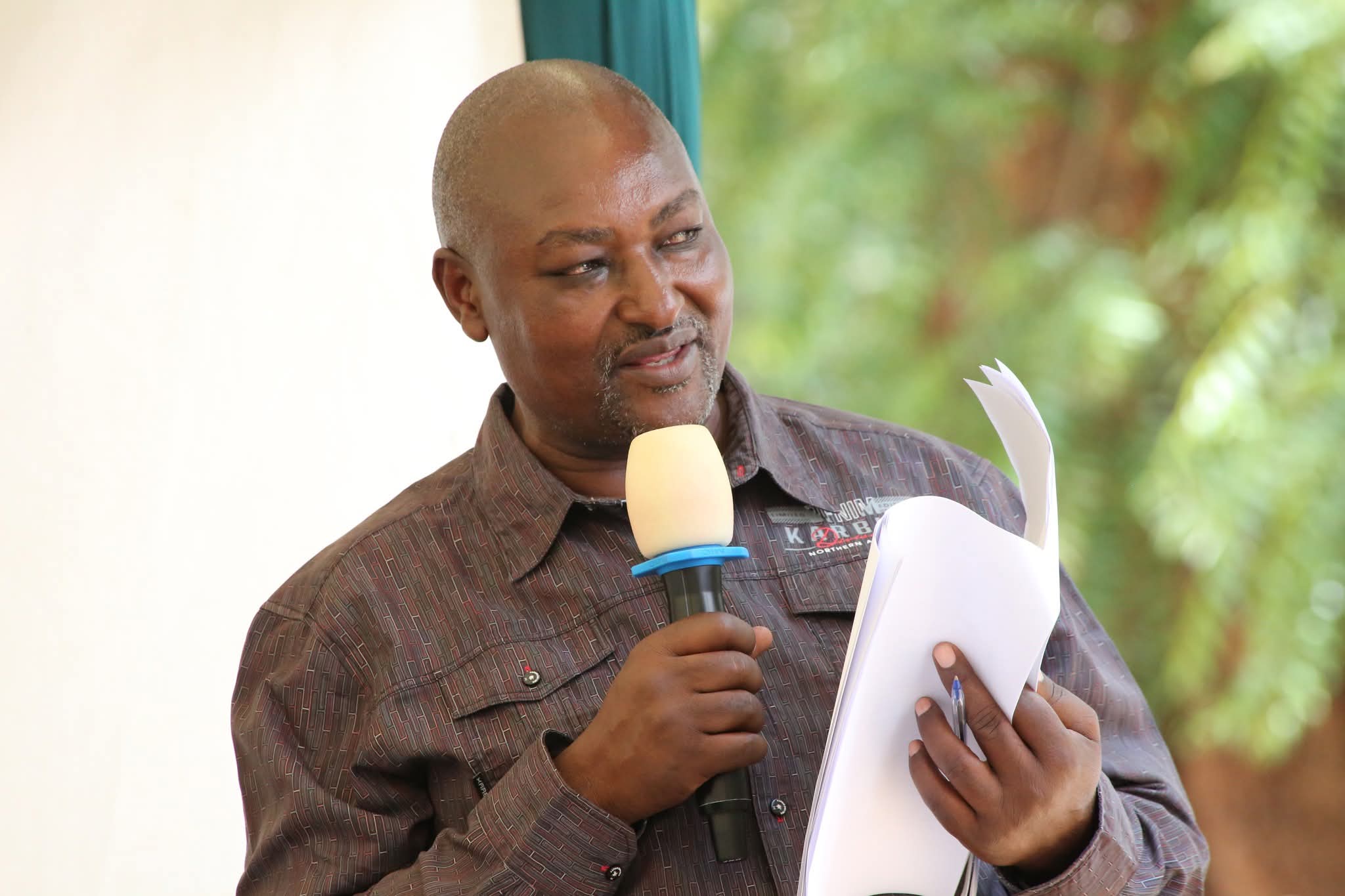
The memorandum, submitted by county liquor traders’ chairperson Richard Kagiri on behalf of traders, consumers, employees and dealers, is to be considered by the joint committee on County Public Service and Administration, Youth, Sports and Social Services and members of the County Assembly.
The traders have urged the Assembly to withdraw the Bill and subject it to fresh public participation across all 12 sub counties before further consideration.
At the heart of their objections is the process through which the Bill was allegedly published and subjected to public participation.
The traders contend that the proposed law was circulated through photocopies and social media but was not properly published as a supplement in the Kenya Gazette and Kiambu County Gazette.
They have challenged the County Assembly to produce the relevant Gazette supplements, including their numbers, dates, volume and pages, as well as evidence of newspaper advertisements giving residents adequate notice of the public participation exercise.
They argue that failure to properly publish the Bill would undermine public participation and the legislative process, citing Articles 196 and 199 of the Constitution and Section 23 of the County Governments Act.
The traders have also demanded that the proposed law be subjected to fresh public participation in Thika, Kiambu, Kiambaa, Githunguri, Kabete, Kikuyu, Limuru, Lari, Gatundu North, Gatundu South, Juja and Ruiru.
A major point of contention is the proposed revision of liquor licence fees.
The traders argue that some of the proposed charges are significantly higher than those provided under the national Alcoholic Drinks Control Act, 2010.
Under the proposed Fifth Schedule, they say, general retail on licences would attract fees of Sh60,000 in towns, Sh40,000 in urban areas and Sh24,000 elsewhere.
Bar and restaurant licences would cost Sh100,000, Sh80,000 and Sh60,000 respectively, while off licence wines and spirits outlets would pay Sh80,000 in towns and Sh60,000 in urban areas, in addition to a proposed Sh50,000 charge for extended operating hours.
The traders say the increases would disproportionately affect businesses operating outside major urban centres.
They singled out rural areas, arguing that a sharp increase in licence fees would threaten the viability of small businesses in areas such as Githunguri and Lari.
They have therefore asked the Assembly to align county charges with the national framework and remove the proposed additional Sh50,000 extension levy.
The traders also object to a provision they say would change the licensing authority’s obligation from “shall” issue a licence to “may” issue one.
They fear the amendment could give officials excessive discretion in determining which businesses receive licences.
The traders have also taken issue with proposed amendments allowing the Director of Alcohol Control to suspend a licence or order closure of premises on his or her own motion or following a recommendation.
They argue that allowing a business to be closed before an investigation and hearing would violate principles of fair administrative action.
The memorandum says the proposed reduction of the threshold for public complaints from at least 20 per cent of residents to a single resident could also expose businesses to malicious or retaliatory complaints.
According to the traders, a competitor, landlord or disgruntled individual could initiate a complaint that results in suspension or closure before the trader is given an opportunity to respond.
They want the 20 per cent threshold retained, with complainants required to demonstrate that they are genuine residents of the affected area.
They are also demanding a mandatory notice and hearing before suspension, together with an independent appeal mechanism.
Another contentious provision concerns zoning and operating hours.
The traders say the Bill would effectively bar off licence wines and spirits outlets from certain rural zones while permitting them in towns and urban areas.
They argue that the proposed restriction could discriminate against rural traders and drive consumers towards illicit alcohol.
The traders have asked the Assembly to allow licensed off licence businesses to operate in all zones under clearly defined regulations.
They have also proposed harmonisation of operating hours for different categories of licensed premises, saying restrictions should be based on evidence and applied fairly.
The proposed creation of a county Alcoholic Drinks Control Enforcement Coordinating Committee has also attracted objections.
The proposed body would bring together senior county officials alongside representatives of national government agencies, including the National Police Service, Kenya Bureau of Standards, NACADA and the County Commissioner’s office.
The traders contend that a county law cannot place national government officers under the command or control of county officials.
They have invoked the constitutional division of functions between the two levels of government and called for national agencies to participate through cooperation and intergovernmental mechanisms rather than as subordinate members of a county enforcement structure.
They want the County Commissioner and police commander to participate as liaison officers rather than members subject to county command.
The proposed powers allowing county enforcement officers to seize or remove trading stock have emerged as another major flashpoint.
The traders fear that the provision could allow county enforcement officers to confiscate alcohol without adequate documentation, inventories or judicial oversight.
They want any seizure to be carried out within established legal procedures, with inventories, receipts, records of seizure and proper storage arrangements.
They have specifically called for the deletion of the provision that would give county enforcement officers powers currently associated with police officers.
The traders argue that business stock is property protected by the Constitution and that arbitrary confiscation could cause substantial losses to entrepreneurs.
The memorandum also raises questions about the status and appointment of municipal managers and liaison officers who could become involved in implementation of the proposed law.
The traders argue that officials exercising statutory powers should have a clear legal mandate and be appointed through the prescribed county public service procedures.
They want the Bill to clearly define an “authorised officer” and limit enforcement powers to officers legally appointed, gazetted and properly deployed for purposes of alcohol control.
They further want the County Assembly to establish the legal status of any officials who may be assigned enforcement responsibilities before allowing them to exercise powers over traders.
The traders have also questioned the proposed representation of liquor businesses on county alcohol control structures.
They allege that some trader representatives could be closely associated with county authorities and therefore unable to independently represent the interests of businesses affected by licence fees, closures and enforcement.
The memorandum proposes that trader representatives should be elected by licensed traders through a transparent process and should not receive remuneration that could compromise their independence.
The traders also want consumer representation included in the oversight structures.
The Bill’s proposed restrictions on traditional alcoholic drinks have also drawn opposition.
The traders argue that blanket restrictions could affect culturally recognised beverages and practices, particularly among communities where traditional drinks form part of cultural ceremonies and social functions.
They have urged the Assembly to distinguish between harmful or illicit alcohol and traditional beverages that can be subjected to appropriate health, safety and quality controls.
The traders also raise concern over overlapping offences under county and national legislation, arguing that businesses should not be subjected to multiple punitive regimes for the same conduct.
Beyond the specific clauses, the memorandum accuses the county of attempting to give the executive wide powers to determine fees, operating hours and enforcement procedures through regulations.
The traders argue that such powers should be clearly defined in the primary legislation and exercised within transparent statutory limits.
They have further demanded adequate representation of women, youth and persons with disabilities in relevant enforcement and oversight structures.
At the centre of the traders’ memorandum is a call for the County Assembly to balance public health objectives with the constitutional protection of businesses and livelihoods.
They maintain that regulation of alcohol is legitimate and necessary but insist that enforcement must be lawful, transparent and subject to due process.
The dispute now places the joint Assembly committee and MCAs at the centre of a potentially significant legislative contest, with the liquor trade warning that the proposed amendments could have far reaching economic consequences for thousands of businesses and workers across Kiambu.
The traders want the Bill subjected to fresh scrutiny, wider public participation and legal review before it proceeds through the legislative process.
They have asked the Assembly to consider their proposals clause by clause and provide a clear response to their constitutional and administrative objections before the Bill advances to the next stage.