



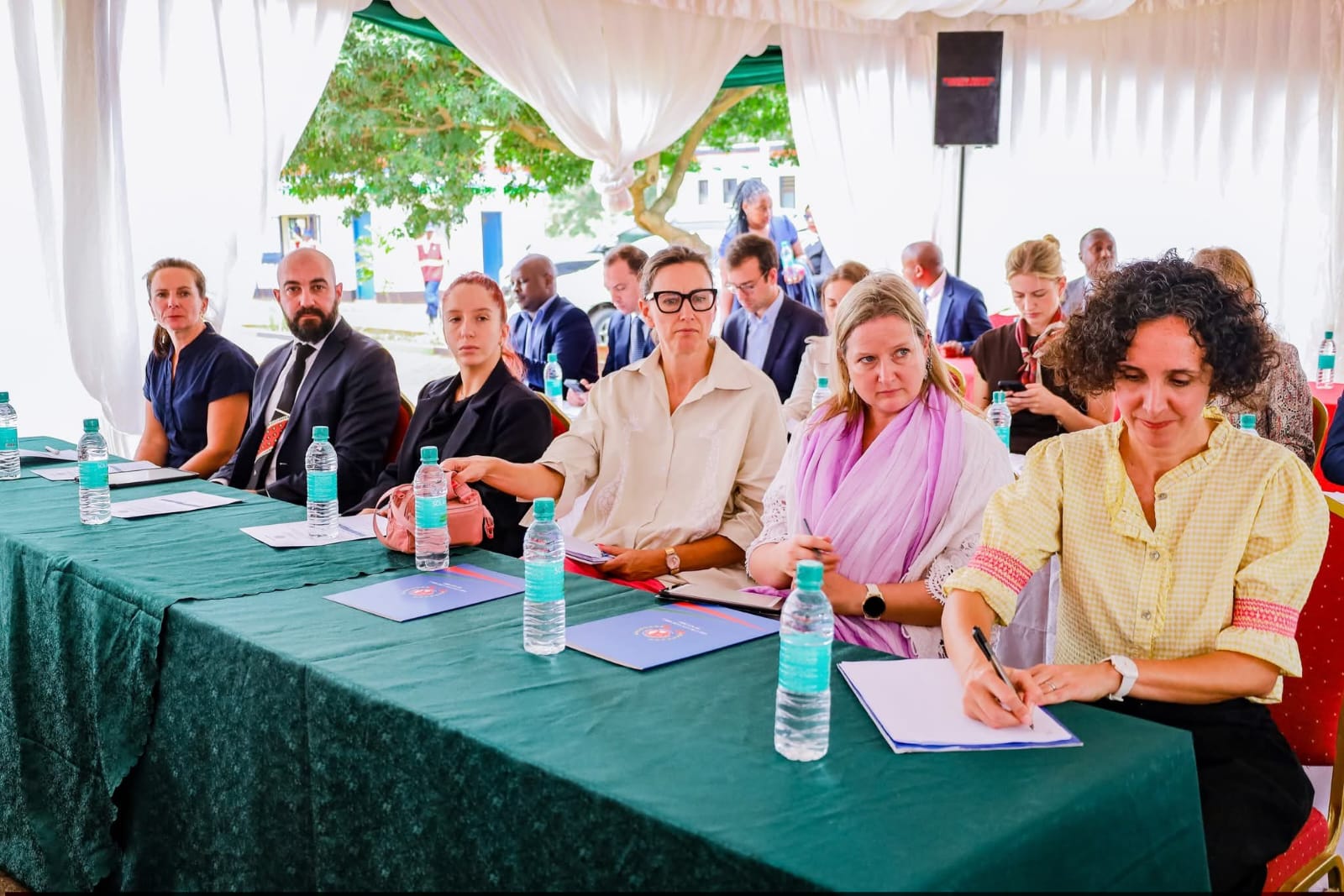
The European Union has called for stronger civic education, public participation and stakeholder engagement as key pillars in strengthening devolution and improving governance at the county level.
The call came during a visit by an EU delegation to the Kiambu County Assembly on Tuesday as part of a learning and knowledge exchange engagement on devolution and the role of county legislatures in governance.
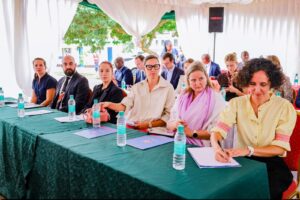
The delegation, led by Christina Barrios, Head of the Political, Press and Information Section of the EU Delegation to Kenya, held talks with the Assembly leadership on ways of deepening cooperation and strengthening the institution’s capacity to deliver on its legislative, representation and oversight mandates.
The meeting also explored possible areas of collaboration under the EU’s call for proposals on devolution and governance, with emphasis on initiatives that can enhance public participation and improve citizens’ understanding of county governance processes.
Kiambu County Assembly Speaker Charles Thiong’o said the engagement provided an opportunity for the two sides to share experiences and examine how partnerships could contribute to stronger county institutions.
He said the Assembly had made progress in legislation and oversight since the current House came into office, with laws passed by the legislature providing a framework for implementation of development programmes in sectors such as education, healthcare and trade.
“The discussions provided an opportunity to explore various ways of partnership, particularly in strengthening civic education, public participation and stakeholder engagement,” Mr Thiong’o said.
He added that effective participation by residents was essential in ensuring that county governments remained responsive to the needs and priorities of citizens.
The Speaker said the Assembly had, for three consecutive years, been recognised among the best performing county assemblies in the country and as a leading county legislature in the region.
The EU delegation was received by Mr Thiong’o, Deputy Speaker John Njiru, Minority Leader Joe Kigara and Clerk of the Assembly John Mutie, alongside committee chairpersons, members of the Assembly leadership and other MCAs.
The visit also included a plenary engagement between the EU representatives and chairpersons of various Assembly committees, providing an opportunity to examine the practical role of committees in legislation, oversight and representation.
Among the committees represented were those dealing with ICT, Trade and Cooperatives, and County Planning and Urbanisation.
The discussions placed particular focus on the role of county assemblies in making devolution work at the grassroots level, including their responsibility to scrutinise county policies, budgets and programmes while providing a platform for residents to participate in decision making.
The engagement comes at a time when county governments and assemblies are increasingly under pressure to demonstrate that devolution is delivering tangible benefits while ensuring public resources are used transparently and accountably.
For county assemblies, public participation remains a constitutional requirement in the legislative and budget making processes. Strengthening civic education can therefore help residents understand how county decisions are made and provide informed views on policies, laws and development priorities.
The EU delegation’s visit is expected to contribute to continued knowledge exchange on governance and devolution, while opening opportunities for partnerships aimed at strengthening county institutions.
The meeting also highlighted the importance of collaboration between international partners and devolved institutions in supporting democratic governance, accountability and citizen participation.
Mr Thiong’o said the Assembly remained open to partnerships that would strengthen its capacity to discharge its constitutional responsibilities and improve engagement with the people of Kiambu.
The visit by the EU delegation brought together political counsellors representing several EU member states, underscoring the bloc’s interest in Kenya’s devolved governance system and the performance of county institutions.