




The Government is set to roll out a major financial support programme targeting thousands of micro and small enterprises, with businesses across the country expected to receive matching grants to expand production, create jobs and add value to locally produced goods.
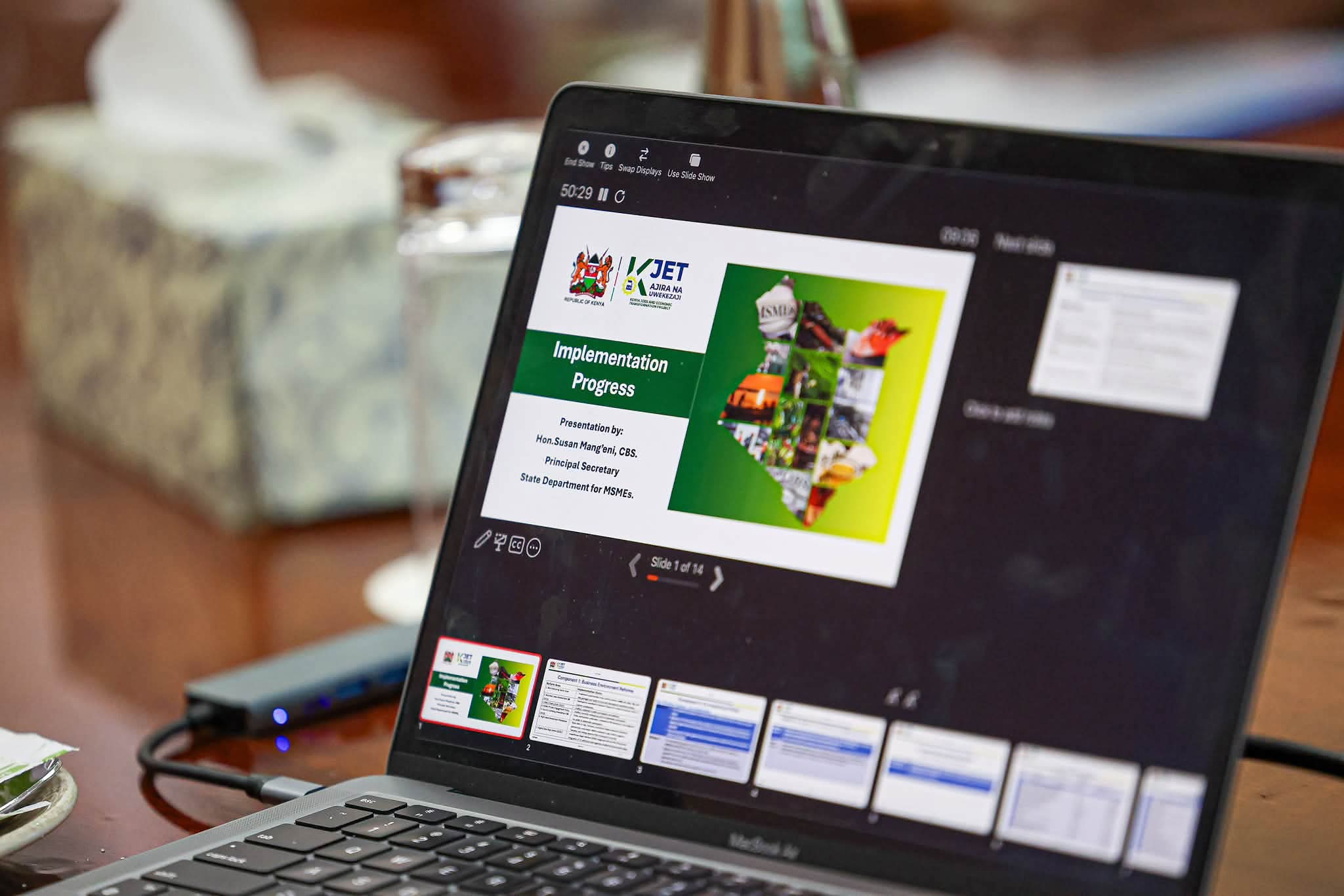
The Kenya Jobs and Economic Transformation (KJET) programme, which is expected to be launched in the coming weeks, will focus on clustering small businesses around strategic value chains as part of the Government’s broader plan to drive economic transformation from the grassroots.
Deputy President Kithure Kindiki said the programme would initially support enterprises requiring up to Sh5 million in capital investment, with beneficiaries expected to raise half of the required amount while the Government provides the other 50 per cent as a non-refundable matching grant.
“This project will reach many small businesses by supporting them with matching grants. The first beneficiaries are those requiring up to Sh5 million in capital investment. The business will raise 50 per cent and this project will support them with the other 50 per cent in matching grants,” Prof Kindiki said.
He emphasised that the funding would not be a loan and would therefore not have to be repaid by beneficiaries.
“It is not a loan; it is not refundable. It is going to be a grant,” the Deputy President said.
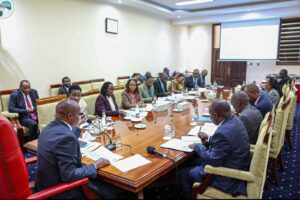
Prof Kindiki spoke at the Official Residence in Karen, Nairobi, where he met Principal Secretaries and heads of Government agencies involved in preparations for the programme.
He directed the agencies to expedite the remaining preparations to ensure KJET is rolled out as planned.
The first phase will target businesses operating within key economic value chains, including dairy, textiles, coffee, tea, rice, leather, edible oils, mining and the blue economy.
The Government says the approach is intended to move beyond individual enterprise support by strengthening entire production and supply chains, enabling small businesses to access equipment, markets and opportunities for value addition.
The programme will also have a bigger financing window for enterprises requiring more capital.
According to Prof Kindiki, businesses requiring investment of up to Sh10 million could receive a similar matching contribution from the Government.
“For example, if it is Sh10 million, we will give them another Sh10 million. The business will get Sh20 million through the matching grant,” he said.
The financing model is expected to give entrepreneurs an opportunity to expand their operations without taking on additional debt at a time when access to affordable credit remains a major challenge for small businesses.
The Deputy President said KJET would deliberately target businesses at the local level, particularly those in rural and underserved areas that have historically struggled to access formal financing.
He said the programme would be implemented in a manner that ensures every region of the country benefits.
Like the NYOTA programme, KJET’s business-support component will be spread across counties, constituencies and wards.
“We will make sure that every part of Kenya is reached. I have directed that, just like NYOTA, the business-support component which we are about to roll out must reach every region of Kenya, every ward in the country, every constituency in the country and every county,” Prof Kindiki said.
The Government plans to implement the programme in cohorts, with the first beneficiaries expected to receive support during the initial phase, followed by larger groups in subsequent rounds.
Officials say the phased approach is intended to allow the Government to monitor implementation, address emerging challenges and expand the programme’s reach.
Prof Kindiki said the Government had deliberately taken time to fine-tune the model before its launch to ensure the funds and other forms of support reach the intended beneficiaries.
“We took a bit of time because we wanted to fine-tune the model through which we will deliver this support to the people of Kenya,” he said.
Beyond direct financial support, KJET will help enterprise clusters acquire common-user equipment that can be used to improve production and undertake value addition.
The Government views this component as an important step towards promoting small-scale manufacturing and industrialisation at the local level.
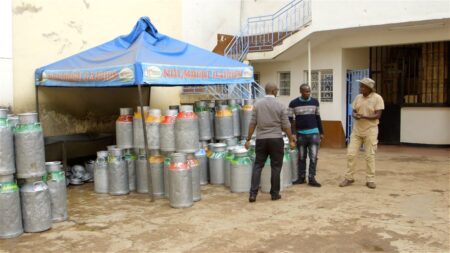
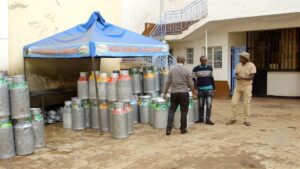
For instance, dairy enterprises could receive equipment to process milk into higher-value products, while businesses operating in fisheries and the wider blue economy could benefit from equipment designed to improve processing and value addition.
Similar interventions will target agriculture, livestock, leather, coffee, tea and other priority value chains.
The strategy is expected to reduce reliance on the sale of raw agricultural and natural products while creating opportunities for entrepreneurs to earn more from locally available resources.
“This is the first baby step towards industrialisation in our country,” Prof Kindiki said.
The programme is being coordinated through a multi-agency approach involving State departments responsible for MSMEs, mining and the blue economy, TVETs, livestock and agriculture, among others.
The Government believes bringing the agencies together will help address challenges facing enterprises from production to processing, skills development and access to markets.
KJET will complement the ongoing National Youth Opportunities Towards Advancement (NYOTA) programme, which has provided grants and other support to young entrepreneurs.
Under NYOTA’s business-support component, beneficiaries receive grants intended to help them start or strengthen enterprises.
The programme also includes On-the-Job Experience, which provides young people with workplace exposure and mentorship, Recognition of Prior Learning to certify skills acquired outside formal training institutions, and support to enable young entrepreneurs to access Government procurement opportunities.
The Government says the experience gained from NYOTA will inform the implementation of KJET, particularly in identifying beneficiaries and ensuring equitable distribution of resources.
Prof Kindiki said the focus on micro and small businesses was driven by their importance to household incomes and employment.
He said many enterprises in the informal economy had for years operated without adequate access to finance despite supporting millions of livelihoods.
“A lot of businesses and enterprises operating in that space have been left to struggle. They have little access to credit and financing, and yet they carry the bulk of our economic activities in terms of the number of people who derive their livelihood at that level,” he said.
The Government’s argument is that strengthening such businesses could have a direct impact on household incomes because money injected into local enterprises circulates within communities through employment, purchasing of supplies and provision of services.
KJET will also have components aimed at improving the broader business environment.
The Government says it is working on legislative and regulatory reforms intended to make it easier for entrepreneurs to establish and operate businesses.
The reforms are expected to address some of the regulatory and administrative hurdles that have traditionally made it difficult for small enterprises to formalise and expand.
Another component will focus on green investment and climate resilience, with the Government expected to announce measures aimed at expanding green financing opportunities for small businesses.
Prof Kindiki said the objective was to ensure KJET becomes more than a financing programme by addressing several challenges that constrain enterprise growth.
The Government’s wider economic transformation strategy places MSMEs at the centre of efforts to expand employment, raise household incomes and increase production.
By organising enterprises around value chains, officials hope to create stronger links between producers, processors, suppliers and markets while encouraging businesses to move from subsistence operations towards commercially viable enterprises.
The Deputy President said equitable distribution of public resources remained central to the programme.
“This government is convinced that the best way to transform our country is through sharing of national resources fairly and equitably, representing all regions of our country, all types of livelihoods and as many value chains and beneficiaries as possible,” he said.
With preparations for the rollout nearing completion, thousands of entrepreneurs are now waiting for details on eligibility, application procedures and the selection criteria for the first KJET cohorts.
The Government says these details will be released as the programme moves into the implementation phase.