






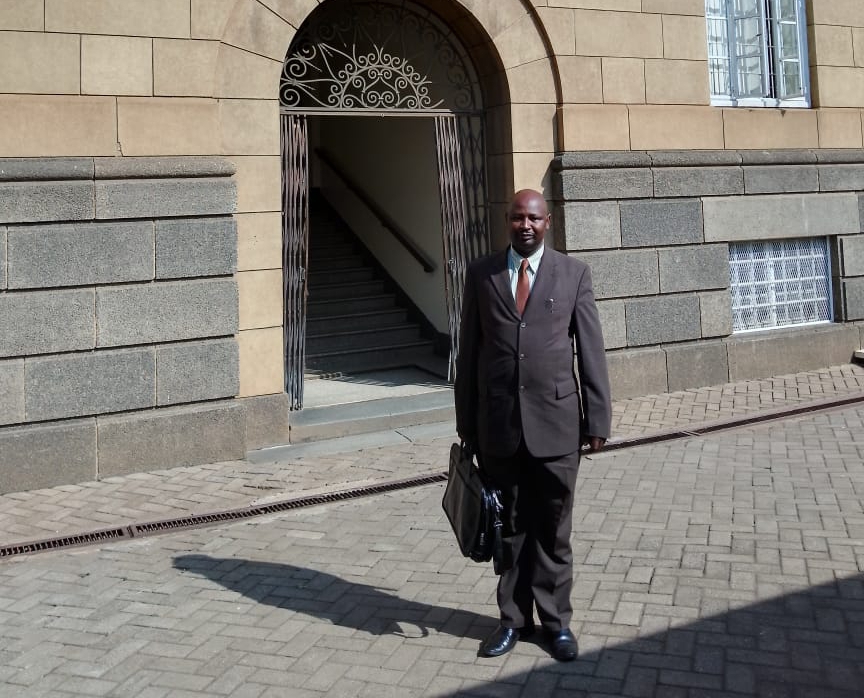
The Court of Appeal in Nairobi has certified as urgent a civil application filed by Limuru resident Stephen Mwangi Kimani seeking permission to lodge an appeal out of time in a case arising from a High Court ruling that struck out his petition related to investigations involving Kiambu Governor Paul Kimani Wamatangi.
According to a notice issued by the Court of Appeal registry, the application dated March 3, 2026 will be heard by a three-judge bench constituted by the President of the Court of Appeal. The hearing will take place through a videolink connecting the court and all counsel on record.
In the directions communicated to the parties, the court ordered the applicant to serve the application on all respondents within two days. The respondents will then have two days upon service to file and serve their replying affidavits, while the applicant will have an additional two days to file a response, if necessary.
The court further directed that written submissions from both parties be filed online and limited to three pages each. The applicant is expected to submit his arguments within three days after the close of pleadings, while the respondents will have three days to respond.
The case stems from a ruling delivered by the High Court in Kiambu in July 2025, where the court struck out a constitutional petition filed by Mwangi on grounds that he lacked the legal standing, or locus standi, to bring the case.
In the petition, Mwangi had sought court orders restraining state agencies from arresting or prosecuting Kiambu Governor Paul Kimani Wamatangi and from allowing the deputy governor to assume office in the event of legal action against the county chief. He also sought conservatory orders barring investigations and proceedings related to an anti-corruption case at the Milimani Chief Magistrate’s Court.
However, in her ruling, Justice Dorah Chepkwony held that Mwangi had not demonstrated how his constitutional rights had been violated by investigations involving the governor. The court noted that the alleged actions by investigative agencies were directed at the governor personally, making him the proper party to institute any legal challenge.
The judge ruled that Mwangi, despite describing himself as a voter and resident of Kiambu County, had not established sufficient grounds to bring the suit on behalf of the governor or to show direct harm arising from the investigations.
Consequently, the court upheld a preliminary objection raised by the respondents and struck out the suit with costs.
Dissatisfied with the ruling, Mwangi filed a notice of appeal and later sought leave from the Court of Appeal to file the appeal out of time. In his application, he argues that the delay was caused by the time taken by the High Court registry to prepare and certify proceedings and the judgment.
Mwangi maintains that the intended appeal raises significant constitutional questions, including the scope of public interest litigation, the balance between procedural technicalities and substantive justice, and the accountability of state agencies in exercising investigative and prosecutorial powers.
He also argues that denying him an opportunity to appeal would undermine constitutional guarantees on access to justice and fair hearing.
The respondents in the case include the Attorney General, the Director of Public Prosecutions, the Ethics and Anti-Corruption Commission, the National Police Service and the Chief Magistrate’s Court at Milimani.
The Court of Appeal’s upcoming hearing will determine whether Mwangi should be granted leave to proceed with the appeal despite filing outside the prescribed timelines. If the court allows the application, the substantive appeal challenging the High Court decision could proceed to full hearing.