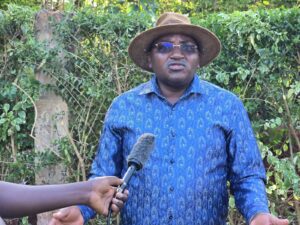

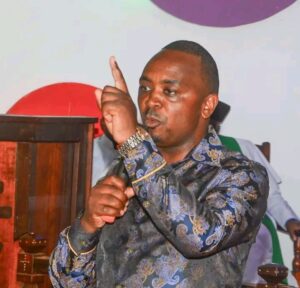




Former Kiambu Member of Parliament Jude Njomo has revisited the long-standing challenge of transitioning primary school graduates to secondary education, drawing from his personal experience as a legislator and a former student within the constituency’s education system.
Njomo noted that the struggle to place candidates who complete their primary school examinations into secondary schools is not a new phenomenon. When he was first elected to Parliament in 2013, Kiambu Constituency had four extra-county boarding schools: St. Anne’s Lioki High School, Kanunga High School, Loreto Kiambu Girls High School, and Kiambu High School. In addition, there were several district secondary schools, including Kiambu Township Secondary School, Ndumberi Girls (boarding), Tinganga Secondary School, Riabai High School (boys’ boarding), and Riara Secondary School.
Despite the availability of these institutions and strong performance by many primary school graduates, the transition rate to secondary school stood at a worrying 48 per cent. Njomo described this as a serious concern for any leader, given the social and economic consequences of leaving more than half of learners without a clear educational pathway.
He traced part of the problem to historical changes in the status and structure of schools. Many of the extra-county institutions were initially district day secondary schools. In an effort to improve academic performance, parents and school boards gradually converted some streams into boarding facilities. Njomo recalled that when he was a student at Kanunga High School, each class had three streams, including a “Harambee Stream” reserved for local students who were not placed in district, provincial, or national schools. This stream was more expensive, as parents financed classroom construction and supplemented other costs.
Initially, all streams operated as day classes, with only a few students occasionally joining boarding. According to Njomo, this arrangement worked well until new headteachers introduced compulsory boarding for all students, often through what he termed persuasive tactics. While the move improved overall school performance and led to the upgrading of some institutions to provincial, now extra-county, status, it inadvertently disadvantaged local parents and learners.
Under the Nyayo philosophy of “love, peace and unity,” the Ministry of Education introduced admission rules for provincial schools that limited local intake while reserving slots for students from other regions. Locally, this was perceived as confirmation of long-held rumours that communities would be sidelined in favour of others. As a result, classrooms built through local parents’ contributions were allocated to students from other provinces, while Kiambu learners were often placed in less-equipped schools far from home.
Although national integration was a noble goal, Njomo argued that the lack of reciprocity demoralised local communities and contributed to declining education standards. Many pupils began to view education as ending at Class Eight. By 2013, the low transition rate meant that thousands of young people ended up idle in shopping centres, engaging in the consumption of illicit brews, working as casual labourers in coffee farms, or picking up informal skills.
In response, Njomo said his leadership, working closely with the Constituency Development Fund (CDF) committee, implemented a strategic intervention to address the crisis. Recognising the difficulty of reversing national policies, they prioritised the establishment of new day secondary schools to absorb local students. Six schools were developed: St. Peter Ndumberi Secondary School, St. Joseph Riabai Secondary School, Kiu River Secondary School, Kasarani Secondary School, HGM Tinganga Secondary School, and St. Anne and Joakim Kangoya Secondary School.
The impact was immediate and significant. Transition rates rose to over 90 per cent, demonstrating that targeted local investment could effectively address access challenges.
Njomo further pointed out that between 2013 and 2022, a total of KES 435 billion was disbursed to Kenya’s 290 constituencies through the CDF, with each constituency receiving about KES 150 million, and marginalised areas benefiting from even higher allocations. He argued that if every constituency prioritised education, these funds would be sufficient to provide adequate learning facilities for all students.
He questioned why constituencies that invest heavily and prudently in education should be compelled to admit students from areas that prioritised other projects or failed to manage their funds accountably.
Summing up his position, Njomo underscored the need for communities to educate their children locally, stressing that equitable and responsible investment in education at the constituency level remains key to improving transition rates and safeguarding the future of Kenya’s