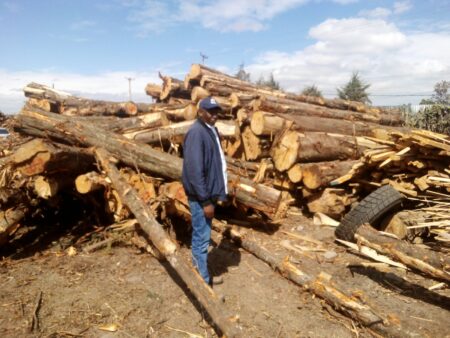

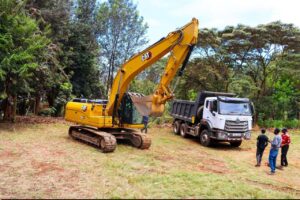








Saw miller’s from Kiambu and Nyandarua counties on Monday asked the government to enlighten people about environmental conservation.
They said as it is, the politicians are accusing them easily of destroying natural forests.
Under the umbrella of Timber Manufacturers Association, the traders explained that, the Kenya Forest Service have a clear Strategic Management Plan which sets aside 6 percent of the forest for commercial tree planting while 94 percent as natural forests.

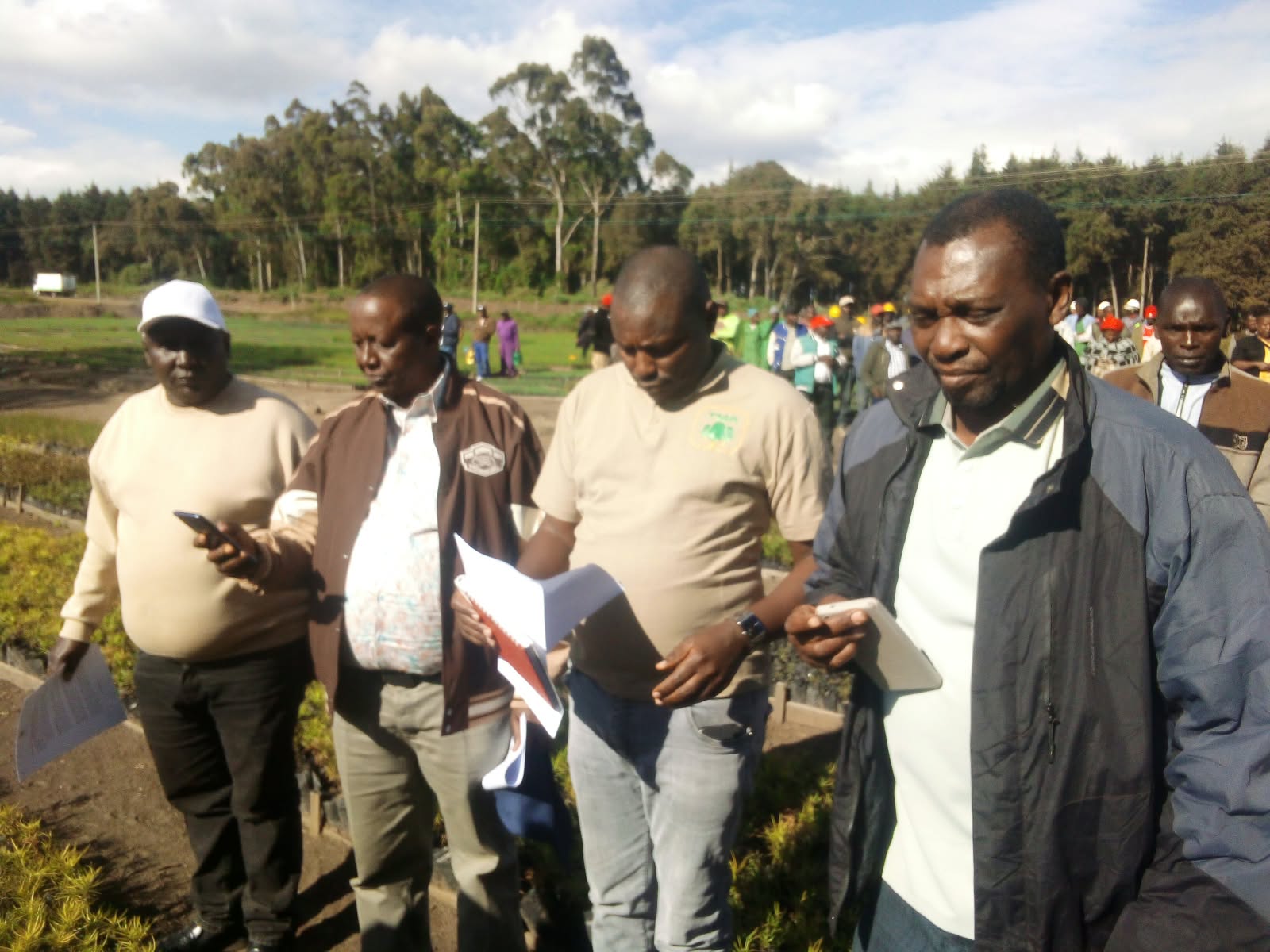
Led by Kiambu TMA chairman Wainaina Mburu popularly known as “Boy’s”, trees grown for commercial purposes are planted on plantation regions which is covered by the 6 percent.
He said the 94 percent is left for natural forests where water towers occupy, and no one is allowed to cut down any tree there.
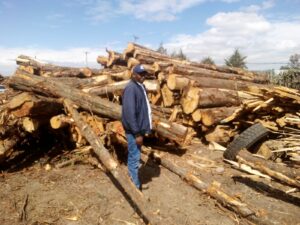
Plantation sections are planted exotic trees such as Cyprus, Pine and Bluegum, and gets ready for harvest after about 30 to 35 years.
“After several years, those trees are ripe for harvesting. If they pass the time for them being harvested, they start decaying and finally they fall. When an overgrown tree is sold and cut, it cannot give you good timber’s, it becomes a waste” he explains.
“Many are times when the government announces for tenders to clear the plantation regions and saw millers reject them since the trees are overgrown and no one wants to buy them. They will not give you good results” he said.
He was speaking during a press conference at Kinale forest in Lari sub county in Kiambu, where over 90 members of Timber Manufacturers Association had met.
Nyandarua TMA chairman Jacob Gachanja asked the opposition politicians not to be criticising the government together with entrepreneurs operating legal ventures since they have invested a lot of money in them.
He said driving a narrative that they were cutting down and selling trees uncontrollably from forests was wrong.
“Once we get those tenders, we are supervised by KFS officers, so as to ensure we have done it well. We have never heard a saw miller who have gone against the tenders directive” he said.
Another member of the TMA Fredrick Kiguru said the trade of commercial forests happens in many countries in Africa, Europe, America and Asia, since furniture is needed in nearly all homestead.
“Furniture is used in every homestead. To manage it, we must plan ahead. The KFS strategy is the best for this country. We have seen harvesting and even planting on those harvested regions” Kiguru said.
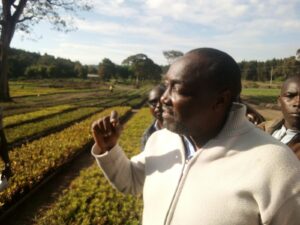
Njinu Warwathe is the secretary to Community Forest Association at Kinale forest said the community and the TMA have planted seedbeds that can sustain tree planting for two years.
Warwathe added that, once trees are harvested, the KFS allocates the locals with pieces of lands where they cultivate food crops under the Plantation Establishment and Livelihood Systems (Pelis).
“While we are growing food crops, the KFS plants trees in those plots. As we cultivate for our food crops, we cultivate for those trees planted too” he said.
“Those trees grow well since they benefit with fertilisers and pesticides we use towards our food crops. We are allocated other plots once planted trees are tall” he said.
Another CFA member Cyrus Wanjohi applauded President William Ruto for starting a program that will see 15 billion trees planted by 2032, since the region which is already cut will be planted soonest.
“The KFS officers are very keen. Once a plantation is cleared, they distributes those forests to CFA members who prepares them to plant food crops. Once they plant their first food crops, the government commences to plant trees” Wanjohi said.