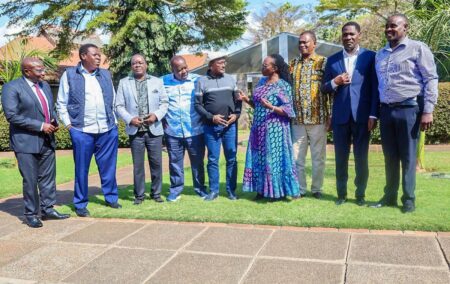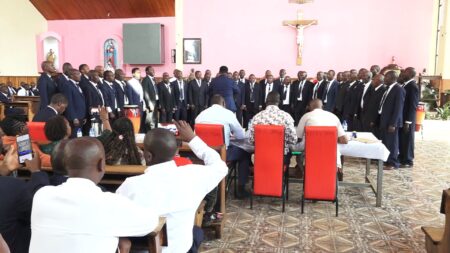








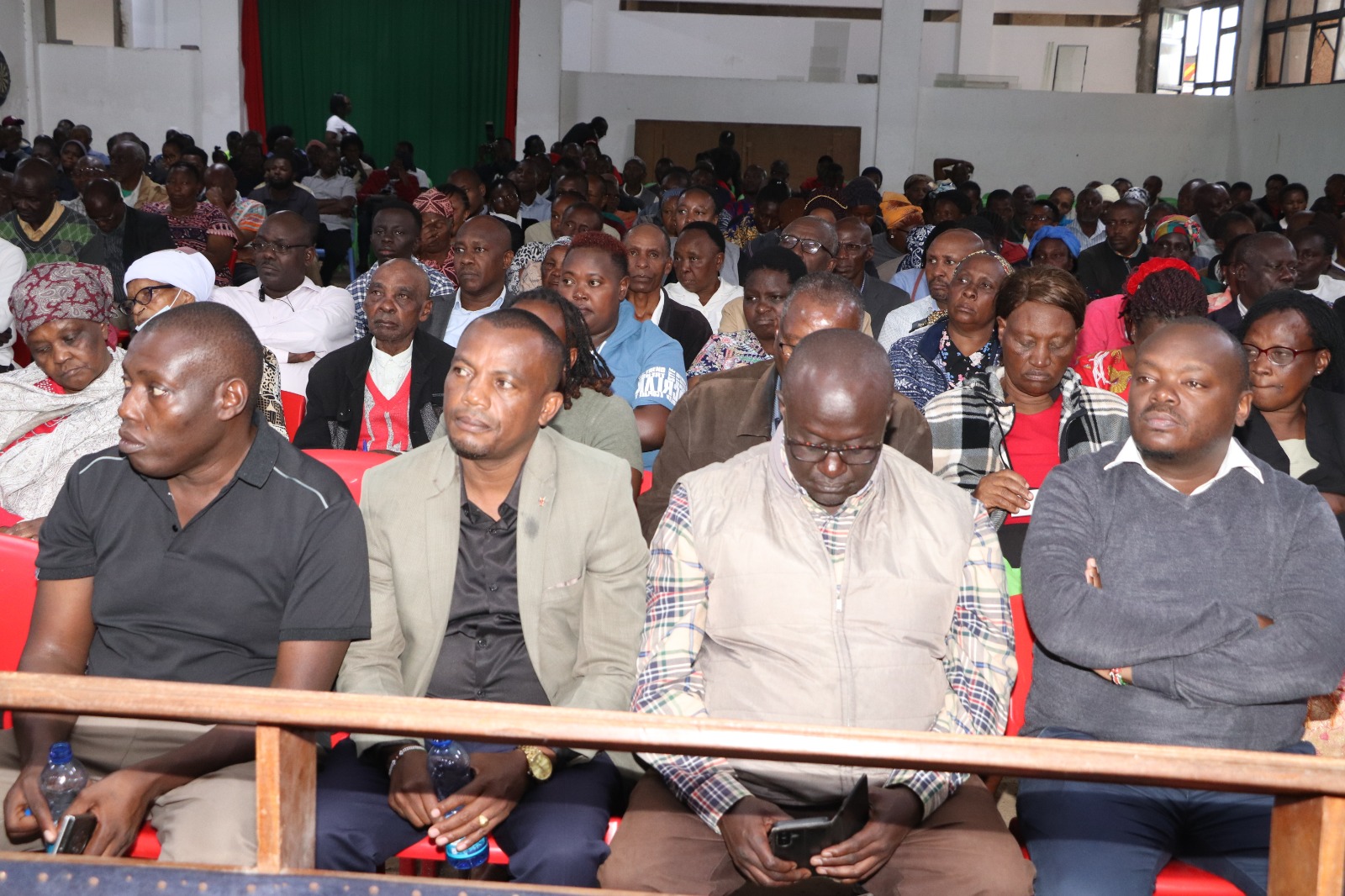
Residents, elected leaders and stakeholders converged at ACK St. James Cathedral Church in Kiambu Town for a public consultation meeting convened by the Water Services Regulatory Board (WASREB) to collect views on a proposal by the Kiambu Water and Sewerage Company (KIWASCO) to revise water tariffs.
The forum, held in line with legal requirements governing public participation in tariff reviews, brought together county officials, Members of the County Assembly (MCAs), water sector managers and residents to deliberate on the proposed adjustment, which KIWASCO says is necessary to sustain water services, expand infrastructure and meet the growing demand for clean and reliable water.
While participants acknowledged that a tariff increase could result in slightly higher water bills, many insisted that any adjustment must be matched by improved water supply, expanded sewerage services and better customer service.

Kiambu Township MCA Francis Koina said the consultation was aimed at ensuring residents participated in determining tariffs that would remain affordable while enabling the utility to deliver quality services.
He noted that KIWASCO currently charges among the lowest water tariffs in the county and said the proposed adjustment had been moderated following stakeholder consultations.
“The objective today was to bring together stakeholders to review the tariffs currently in place. Kiambu Water has some of the lowest tariffs, and it was only fair that wananchi be consulted so that any increase is acceptable while ensuring we continue delivering clean drinking water,” said Koina.
He added that discussions had yielded consensus, with only a modest adjustment being considered, saying the revised charges would still leave KIWASCO among the lowest-cost water providers in Kiambu County.
Koina thanked the KIWASCO board, the county’s water department, WASREB and other stakeholders for engaging residents before making a final decision.
Beyond tariffs, he said the long-term goal was to improve water availability across Kiambu through investments in infrastructure, including the proposed Ruiru Dam project.
“There is a plan for the Ruiru Dam that will significantly reduce water shortages in Kiambu. We also need our own sewer treatment facilities because currently much of our sewerage is treated in Nairobi, meaning we incur additional costs,” he said.
The MCA also raised concerns over private water companies allegedly obtaining operating licences without adequate consultation with county authorities.
He maintained that while the county was not opposed to private investors in the water sector, licensing must strictly follow the law since water is a devolved function.
“We are not against private companies providing water services, but they must follow county laws and regulations. Licensing should involve proper consultation with the county government and stakeholders to ensure residents receive safe and regulated water,” he said.

Chania Ward MCA Joseph Mwangi Kibuu, who chairs the Kiambu County Assembly Water Committee, warned that the emergence of private water companies was creating unfair competition for county-owned utilities.
He observed that some firms buy water in bulk from public utilities before reselling it directly to consumers at competitive rates, reducing the revenue available to public water companies.
“These private companies buy water from county service providers and then become service providers themselves. This affects the sustainability of our public utilities because they cannot compete fairly under such circumstances,” he said.
Kibuu noted that the existing tariff structure had remained largely unchanged for nearly a decade despite inflation, rising operational costs and rapid population growth.
“The tariffs being used today were set nearly ten years ago. Since then, the population has increased significantly, making it increasingly expensive to provide quality services using the same revenue base,” he said.
He assured residents that the County Assembly was working on policy and budgetary interventions to strengthen public water companies while introducing measures to regulate private operators.
Limuru East MCA Macharia Wambui defended the public participation exercise, saying the Constitution requires citizens to be consulted whenever public tariffs are reviewed.
He explained that the last tariff review was undertaken in 2020, adding that changing economic conditions had made it necessary to revisit the pricing structure.
“There has been inflation and many changes since 2020. Kiambu Water requires adequate resources to expand infrastructure and serve the rapidly growing population. That is why this review has become necessary,” he said.
Wambui clarified that although residents would experience a slight increase in their monthly water bills, the proposed adjustment would not be substantial.
He said participants had made it clear that any increase must translate into improved water availability in homes.
“The public agreed that if tariffs are adjusted, then KIWASCO must ensure adequate and reliable water supply. That was one of the strongest messages from today’s meeting,” he added.
Riabai Ward MCA Hezron Gachui praised KIWASCO for improving water distribution over the past few years, saying the utility had significantly expanded pipeline networks and sewer connections.
“When we first came into office, the situation was very different. Today, new pipelines have reached many villages and more households are connected to water. That is a major improvement,” he said.
However, he urged the company to accelerate sewer connections in underserved areas including Wainoto, Kerigiti and other rapidly growing neighbourhoods.
Gachui also commended KIWASCO for constructing drainage infrastructure in Kirigiti after residents experienced delays in getting assistance from road agencies.
He pledged the support of MCAs in passing legislation that would strengthen water services in the county.
“We shall support this board because we have seen the progress it has made. If there is any legislation required to improve water services, we are ready to pass it,” he said.
He also urged residents to support the proposed tariff review, arguing that continued investment was necessary to improve water access and reduce reliance on Nairobi’s water systems.

Ting’ang’a Ward MCA Mwaura Napoleon, while supporting improvements in water services, challenged KIWASCO to address persistent shortages affecting his ward before implementing higher charges.
He lamented that despite hosting major water infrastructure, several areas in Ting’ang’a, particularly Kamiti Location, still lack reliable water supply.
“It is unacceptable that we host major water infrastructure yet our people have no water. Kamiti residents rely on salty groundwater, which poses health risks and damages household equipment,” he said.
He appealed to the water utility to establish an offtake point in Kamiti to improve distribution and reduce residents’ dependence on saline borehole water.
At the same time, he urged the company to keep tariff increases affordable for ordinary households.
The consultation forms part of WASREB’s regulatory process before any proposed tariff adjustments can be approved. Views collected during the public hearing will be considered before a final determination is made on the proposed KIWASCO tariff review.
Throughout the meeting, stakeholders generally agreed that while an increase in tariffs may be necessary to sustain operations and finance infrastructure development, consumers expect improved water reliability, expanded sewerage coverage, better regulation of private water providers and greater accountability from the county water utility.