








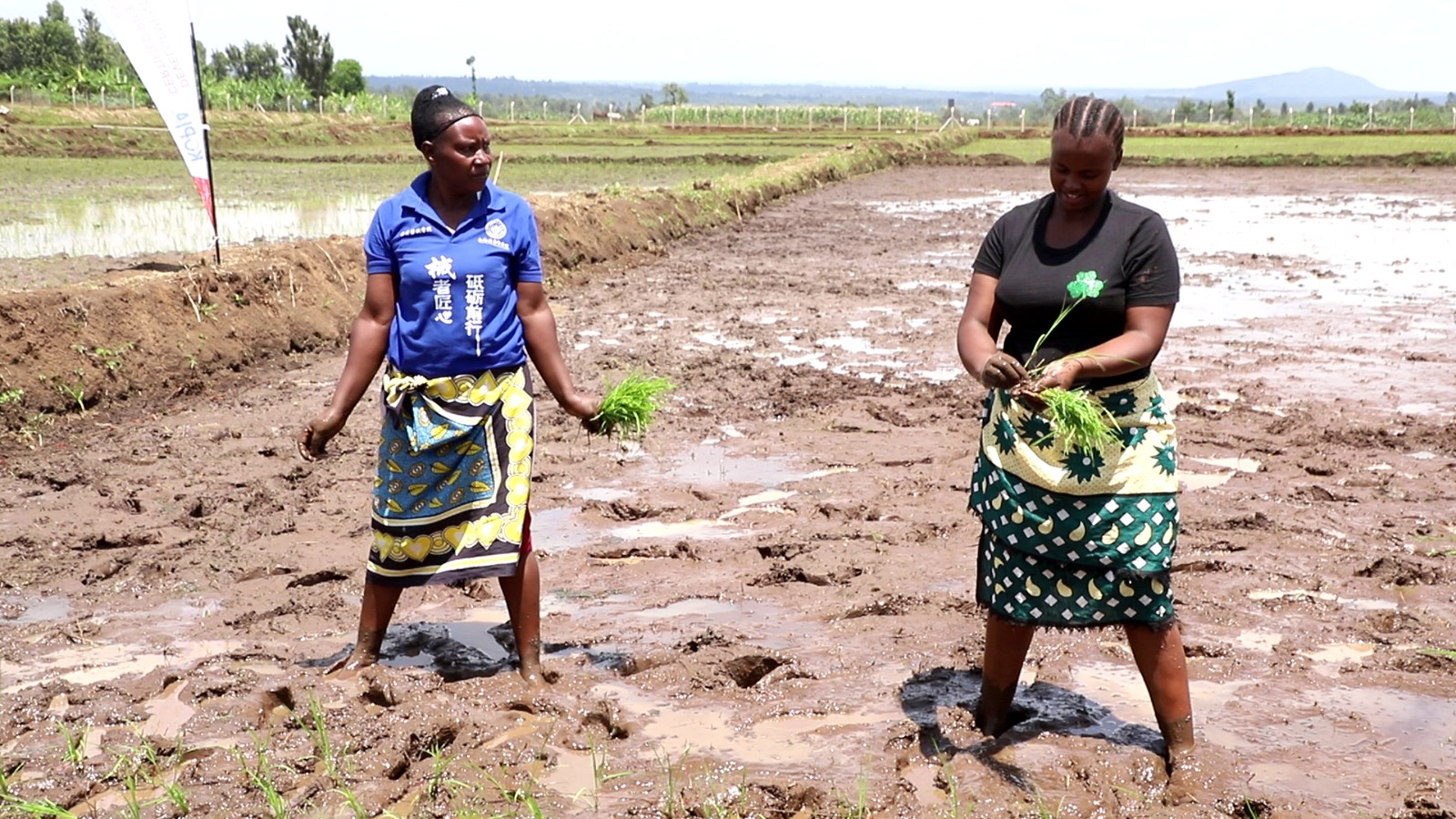
For rice farmers in Mwea, Kirinyaga County, the promise of a better harvest could soon become a reality as a new initiative seeks to put affordable, high-quality certified seeds within their reach while helping them overcome some of the challenges that have continued to undermine production.
The initiative, which has completed its first phase, is expected to give farmers access to improved planting materials, boost yields and strengthen Kenya’s capacity to produce enough rice for local consumption.

The project comes at a time when Kenya continues to grapple with a huge rice production deficit, with local farmers producing only 23 per cent of the country’s annual consumption while the remaining 77 per cent is sourced through imports.
The heavy dependence on imported rice exposes the country to external market pressures, fluctuating international prices and increased expenditure on food imports.
Through the initiative, farmers are now accessing subsidised certified seeds, a move expected to lower production costs, improve crop performance and encourage more farmers to venture into commercial rice production.
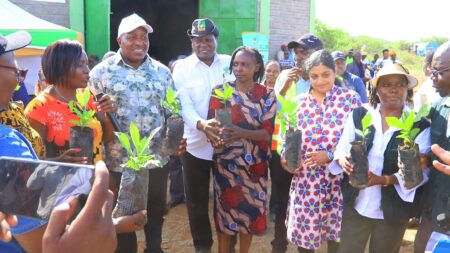
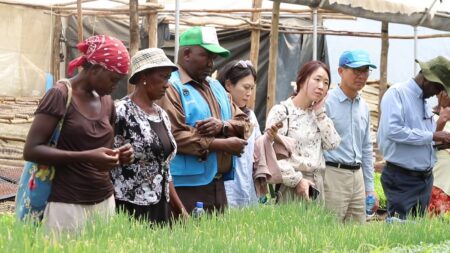
Transplanting has already commenced on a 7.2-hectare piece of land following the completion of the initial phase, with plans to progressively expand the facility and increase its capacity.
According to Dr Ji Gang Kim, the director of the Korea Partnership for Innovation of Agriculture (KOPIA), the facility is expected to process up to 40 tonnes of seeds daily and increase the country’s certified rice seed availability to approximately 700 metric tonnes annually.
The development is expected to address the persistent shortage of quality planting materials, which has remained one of the obstacles to increasing local rice production.
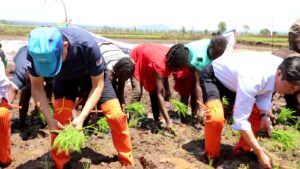
Unlike conventional rice production, the project places emphasis on evaluating, multiplying and distributing high-yielding, disease-resistant and climate-resilient varieties that can withstand changing weather conditions.
Among the varieties being prioritised is Komboka, which is highly preferred by farmers and suited to modern farming systems, alongside Ukafasi 39, ISRIS 6 and ISRIS 7, which have demonstrated potential yields of up to 7.5 tonnes per hectare under suitable conditions.
KALRO officer Benjamin Kivuva said increasing access to quality planting materials was critical in closing the country’s rice production gap and reducing dependence on imports.
“The biggest challenge facing rice production in the country has been the availability of quality planting materials. By increasing access to certified seeds, we are giving farmers an opportunity to improve their yields and produce more rice locally. This will gradually reduce the volumes of rice we import to meet domestic demand,” he said.
His colleague Ruth Musila noted that certified seeds would also help farmers minimise losses associated with poor-quality and seed-borne diseases, which often increase production costs.
“One of the advantages of using certified seeds is that they help farmers minimise losses associated with seed-borne diseases and poor-quality planting materials. They give farmers better crop establishment and reduce unnecessary costs associated with replacing failed crops,” she said.
Musila added that improving productivity per hectare was essential if Kenya was to bridge the gap between local production and consumption.
“If farmers can harvest more using quality seeds and improved farming practices, we will be able to increase local supplies and bridge the gap between production and consumption,” she said.
For farmers, the initiative is expected to offer relief from the high cost of production and losses associated with unreliable planting materials.
Lucy Njeri, a rice farmer, said access to affordable certified seeds would give farmers an opportunity to improve their harvests while reducing the financial risks associated with rice farming.
“Sometimes you spend a lot of money preparing your land, buying fertiliser and paying workers, only to lose part of your crop because of poor-quality seeds, diseases and pests. Access to certified seeds gives us hope of better harvests and reduced losses,” she said.
Njeri said improved yields would also encourage farmers to expand their acreage, ultimately increasing the volume of rice available in the local market.
“If we can access affordable seeds that produce better yields, we will be encouraged to expand rice farming. Producing more rice locally will not only improve our earnings but also help the country reduce its reliance on imported rice,” she said.
The farmers lauded the K-Rice Belt Project, a South Korean government-supported agricultural development initiative designed to help African countries increase rice production, improve food security and reduce dependence on imported rice through investment in seed production, agricultural infrastructure, technology transfer and farmer capacity building.
The project’s biggest component is the development of a 65-hectare rice seed production complex at Kirogo Research Farm in Mwea, Kirinyaga County.
The complex is intended to provide land dedicated to the multiplication of high-quality rice seeds rather than relying entirely on scattered and often informal seed production by individual farmers.
The first 7.2 hectares have reached the initial production stage, with transplanting already underway.