










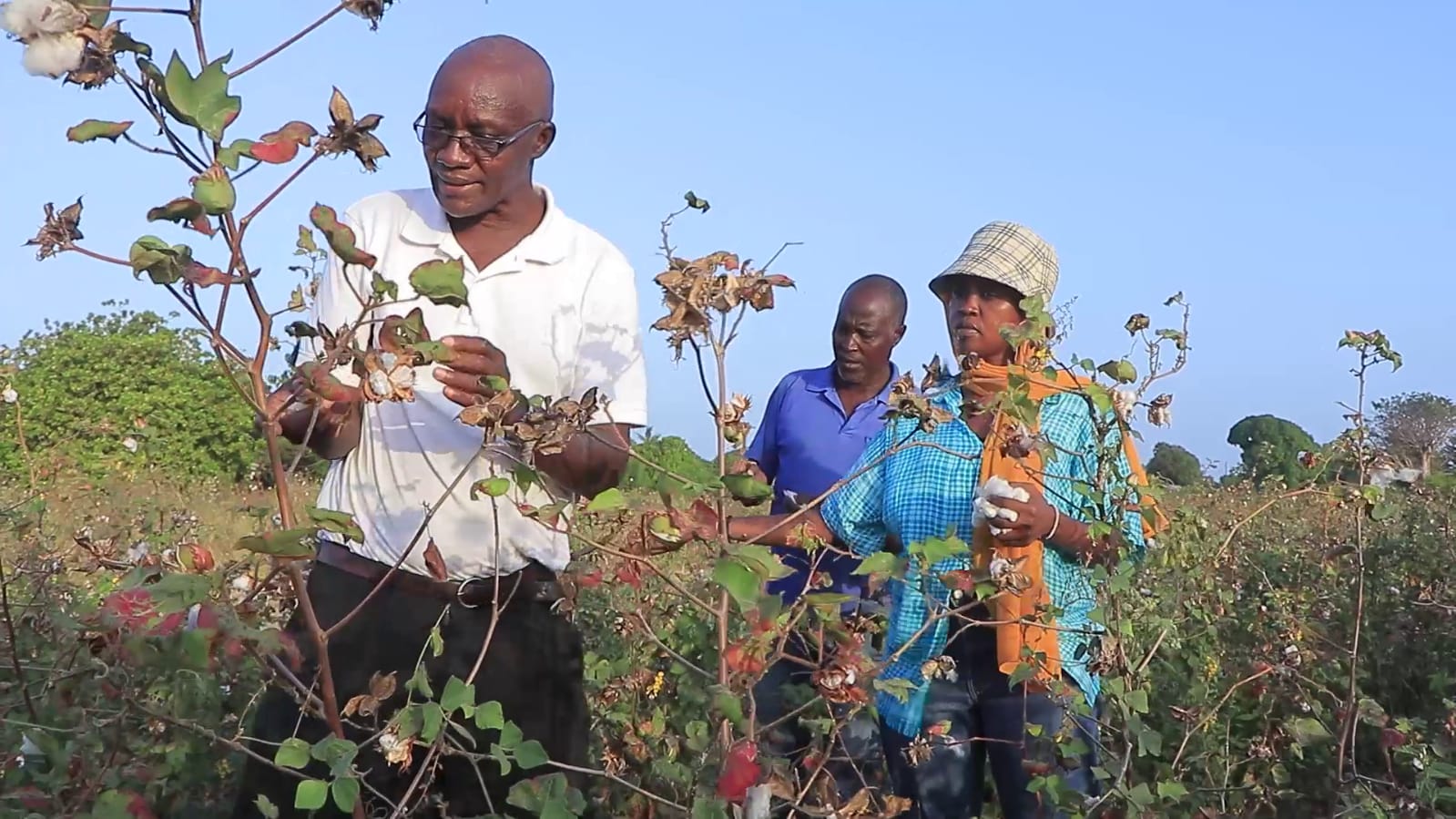
The skyline of Mpeketoni is transforming, and with it, the fortunes of thousands of farmers. A multi-million shilling cotton ginnery, a landmark joint venture between the National Government, the County Government of Lamu, and private investor Thika Cloth Mills (TCM), is nearing completion, signaling a major victory for Kenya’s industrialization agenda.
According to the project contractor, Duncan Mungai, the facility is now 95 per cent complete. The final phase—installation of state-of-the-art ginning machinery—is scheduled to commence next month in February.
“Once operational, the ginnery is expected to employ hundreds of local residents, the majority of them youth,” Mungai said, noting that the facility will serve as the heartbeat of the region’s value-addition efforts.
For years, the cotton sub-sector in Lamu was stifled by geography and volatility. Hesmond Olweny, Cotton Development Officer at Thika Cloth Mills, explained that Mpeketoni was strategically selected to solve a logistical nightmare that had plagued the region for decades.


Previously, raw cotton had to be hauled hundreds of kilometers to processing plants in Meru, Makueni, and Kitui. These routes often traversed volatile areas prone to Al-Shabaab attacks, placing both the cargo and the lives of transporters at high risk.
“With this ginnery in place, that burden will be eliminated,” Olweny explained. “We are bringing the factory to the farm.”
Beyond the bricks and mortar, the project is triggering a social revolution. While many parts of Kenya struggle with aging farmer populations and land fragmentation, Mpeketoni is witnessing a rare phenomenon: elders are willingly handing over land to the younger generation.
Migwi Mwangi, Chairman of the Lamu Farmers Cooperative Society, attributes this shift to a surge in market confidence. Key incentives include:
- Price Hikes: Cotton prices have risen from Ksh 52 to Ksh 72 per kilogram.
- Guaranteed Markets: Thika Cloth Mills provides a direct off-take agreement.
- Value Addition: Local processing ensures more wealth stays within the county.
“The cotton industry has restored sanity in our communities. Parents are now confident handing over land to their children because they can see tangible returns,” Mwangi said.
For the local youth, the ginnery represents more than just employment; it represents a second chance. Youth leader and farmer Jennifer Wambui noted a visible decline in social vices since the project’s inception.
“Many young people have abandoned alcohol and drug abuse to focus on cotton farming,” Wambui said. “Cotton is no longer seen as an ‘old man’s crop’ but a viable economic activity that gives the youth purpose.”
The scale of the revival is reflected in the numbers. Njuguna Kangangi, Chairman of the Lake Kenyatta Farmers Cooperative Society, revealed that Lamu now boasts four active cooperative societies with over 10,000 farmers, positioning it as the leading cotton-producing county in the country.
The Lake Kenyatta Cooperative Society alone has integrated over 1,000 young farmers into its ranks, many of whom now hold leadership positions.
Joseph Kamgangi, the society’s chairman, noted that the adoption of high-yield BT Cotton has been a catalyst for this rapid growth.
“With the energy, innovation, and commitment of the youth, cotton farming has picked up very fast. BT cotton, in particular, is performing much better than other varieties,” Kamgangi added.
As the final bolts are tightened at the Mpeketoni facility, Lamu stands as a blueprint for rural development. By blending public-private partnerships with youth-centric policies, the county is doing more than just ginning cotton—it is weaving a new socio-economic fabric for Kenya.