









The National Assembly Departmental Committee on Finance and National Planning has concluded another phase of its week-long public participation exercise across 13 counties, gathering views from Kenyans on four key legislative proposals: the Sovereign Wealth Fund Bill, the Central Bank (Amendment) Bill, the Kenya Revenue Authority (Amendment) Bill, and the Finance Bill 2026.
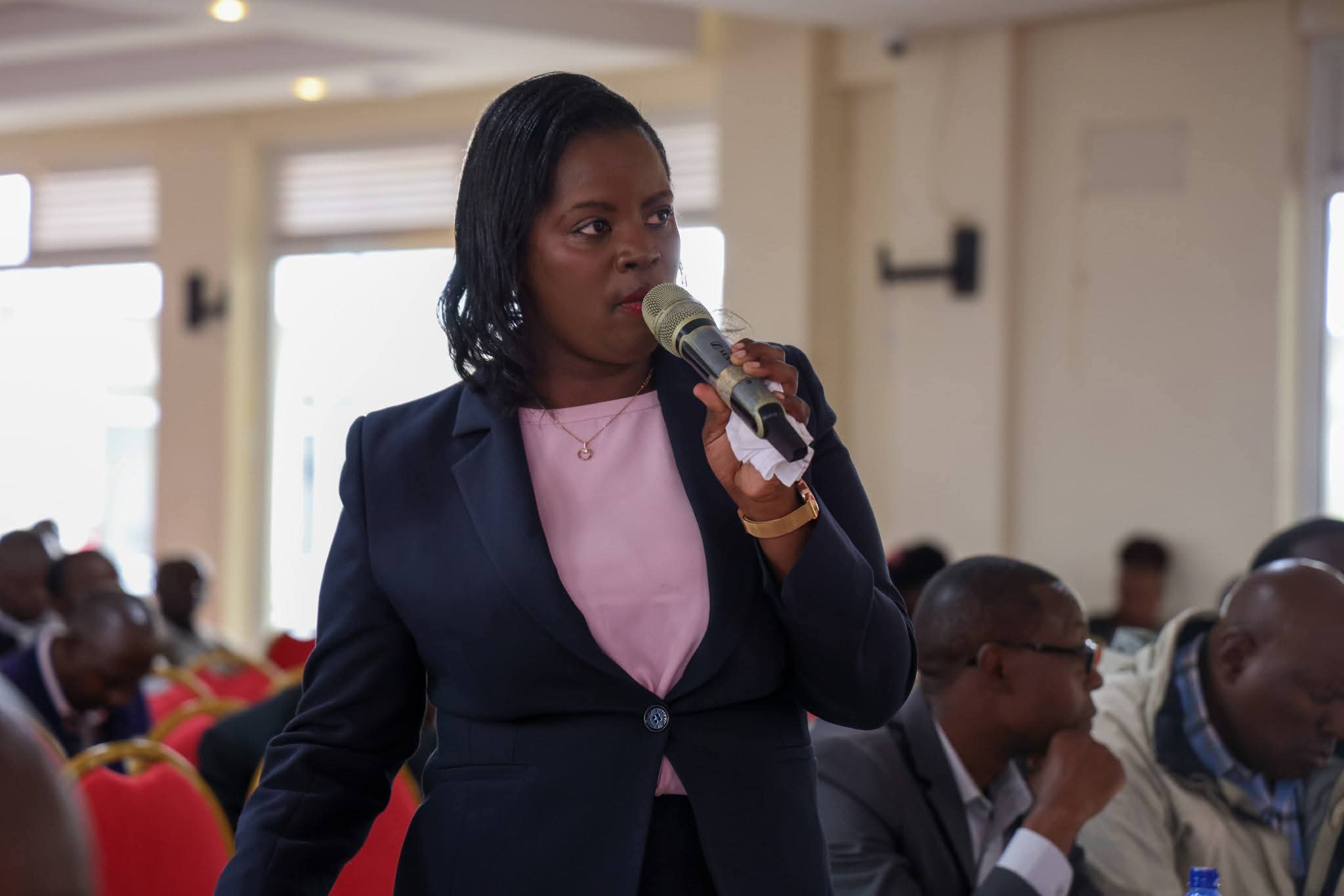
At the Kiambu National Polytechnic (KINAP), residents, business leaders, farmers, and stakeholders turned up to present their views before the parliamentary committee. Among those who made submissions was Kiambu County Woman Representative aspirant and Advocate of the High Court of Kenya, Phyllis Wangui, who raised concerns over several tax proposals contained in the Finance Bill 2026 and their potential impact on ordinary Kenyans.
Wangui cautioned Parliament against imposing additional taxes on digital and financial transactions, arguing that such measures could undermine Kenya’s position as a leader in digital innovation and financial inclusion.
Drawing comparisons with countries such as Tanzania, Ghana, and Uganda, she noted that increased taxation on digital transactions had previously resulted in significant declines in transaction volumes.
“Kenya has been a market leader in digital transactions and innovation. Young people are creating jobs and conducting business through digital platforms. Any increase in transaction costs could slow down the progress we have made and discourage digital adoption,” she told the committee.
She urged lawmakers to carefully assess the proposed 16 percent Value Added Tax on financial transactions, warning that the burden would likely be passed on to consumers through higher transaction costs.
The advocate also highlighted concerns affecting farmers, particularly those involved in poultry and dairy farming. Referring to proposed amendments touching on animal feed inputs, Wangui argued that changing the current zero-rated tax status to a VAT-exempt regime could inadvertently increase production costs.
She noted that Kiambu County remains heavily dependent on agriculture and that farmers are already struggling with the high cost of inputs.
“Animal feeds remain one of the biggest challenges facing poultry and livestock farmers. Any tax changes should be aimed at reducing costs, not increasing them. Maintaining zero-rating would provide greater relief to farmers,” she said.
Wangui further questioned proposals requiring approvals from the Cabinet Secretary before certain exemptions can be granted, describing the process as bureaucratic and likely to delay benefits intended for farmers.
Beyond agriculture, she challenged policymakers to introduce more deliberate incentives for local investors and small and medium-sized enterprises (SMEs), arguing that recent Finance Bills have focused more on attracting foreign investors than supporting domestic businesses.
She pointed to rising operational costs, expensive business permits, and increasing fuel prices as major challenges facing entrepreneurs across the country.
“While government seeks to expand the tax base and increase revenue collection, it must also create conditions that allow businesses to survive and grow. SMEs need targeted relief measures to remain competitive,” Wangui said.
She also proposed the introduction of tax refund incentives for international tourists, similar to systems implemented in destinations such as Dubai. According to her, allowing visitors to claim tax refunds on certain purchases could boost tourism spending and increase revenues for local businesses that depend on the sector.
As discussions progressed, Wangui raised concerns over the public participation process itself, citing confusion caused by multiple versions of the Finance Bill circulating among members of the public.
She argued that the government and National Treasury have a responsibility to provide clear, simplified, and up-to-date information on proposed tax measures.
“There is a lot of mistrust because many people are not sure which version of the Finance Bill is under discussion. The government must publish the most current version and present it in a simplified format that ordinary citizens can easily understand,” she said.
She called for the development of a “Mwananchi Finance Bill,” similar to the simplified citizens’ budget often released by the National Treasury, to make complex tax proposals more accessible to the public.
According to Wangui, confusion surrounding proposals affecting mobile phone taxes, financial transactions, animal feeds, and agricultural inputs has fueled anxiety among citizens who fear higher costs of living and doing business.
She further criticized the decision to combine discussions on the Sovereign Wealth Fund Bill with the Finance Bill, arguing that the proposed sovereign fund raises separate and far-reaching issues concerning public finance management, accountability, auditing, and the administration of public resources.
“The Sovereign Wealth Fund Bill is a significant proposal that deserves independent public participation. It raises fundamental questions about management of public resources and should be discussed separately to allow citizens sufficient time to understand and contribute meaningfully,” she said.
The Finance and National Planning Committee assured participants that all views submitted during the nationwide public participation exercise would be considered before the bills are tabled for debate and possible amendments in Parliament.
The committee’s public hearings come amid heightened public interest in the Finance Bill 2026, with stakeholders across various sectors closely monitoring proposals that could affect taxation, business operations, agriculture, digital transactions, and government revenue collection.
As consultations continue, legislators face the challenge of balancing the government’s revenue needs with public concerns over the rising cost of living, business sustainability, agricultural productivity, and economic growth.