


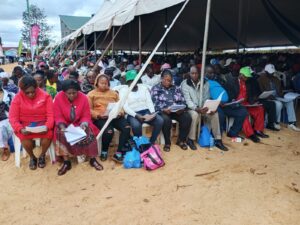






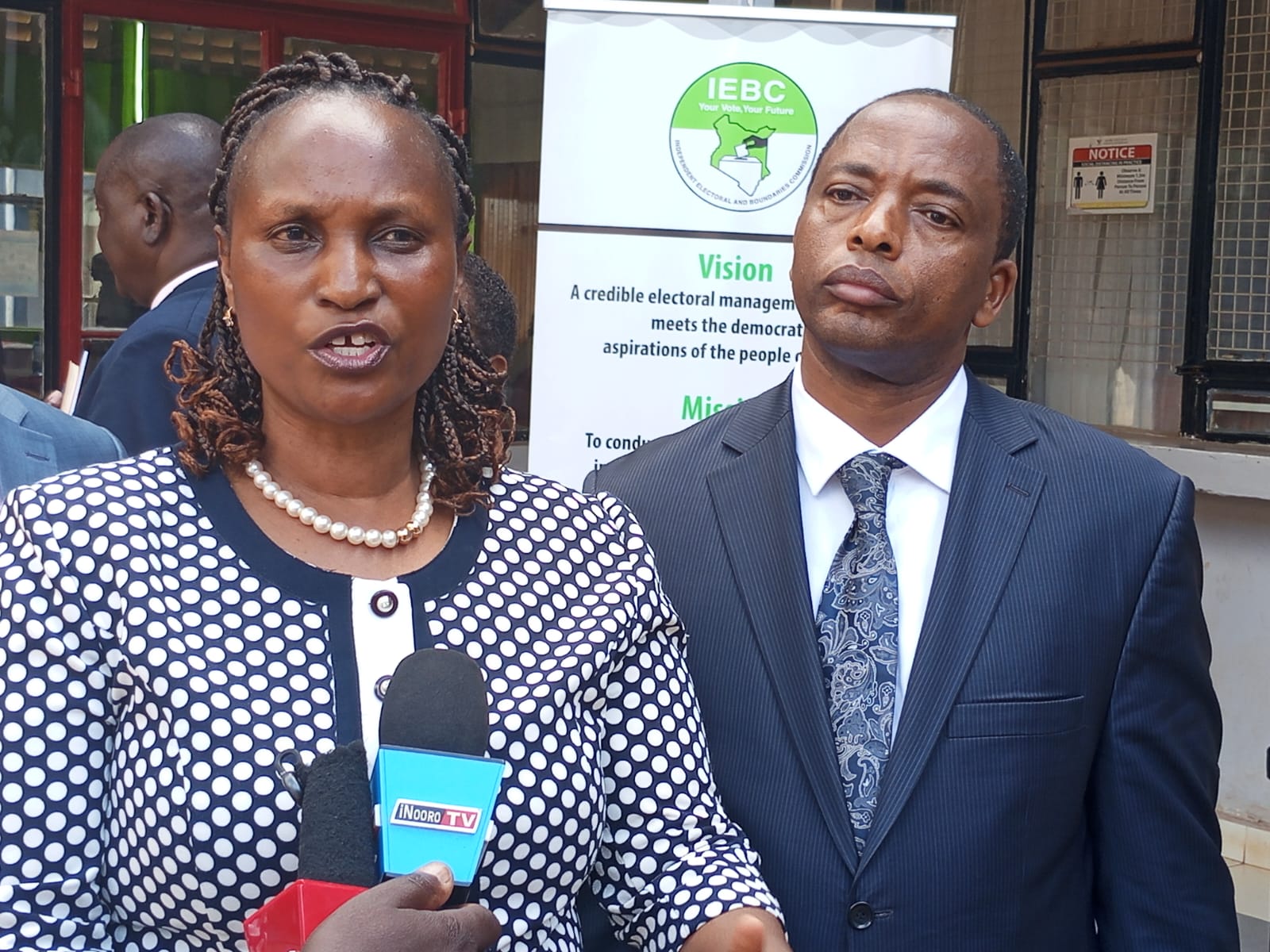
The Independent Electoral and Boundaries Commission (IEBC) has intensified its push to boost voter registration across the country, with a high-level stakeholders’ engagement forum held at Kiambu National Polytechnic (KINAP) bringing together over 50 participants from diverse sectors.
The forum, led by Ann Nderitu and Kiambu County IEBC Election Manager Aron Mutuiri, convened security officials, political leaders, civil society representatives, clergy, student leaders, disability rights groups, and grassroots organisations, underscoring a whole-of-society approach to electoral preparedness.
Representatives from the county government, including those standing in for Governor Kimani Wamatangi, as well as Members of County Assembly (MCAs), Members of Parliament, and community-based organisations, attended the forum aimed at strengthening public awareness and participation in the Enhanced Continuous Voter Registration (E.C.V.R) exercise.
Speaking during the forum, Commissioner Nderitu emphasized the Commission’s commitment to taking voter registration services closer to the people to ensure inclusivity and accessibility.
“We are deepening democracy by going to where Kenyans are and ensuring that every eligible citizen is registered,” she said, noting that the Commission had deployed registration kits nationwide to support the enhanced exercise.
Nderitu clarified that individuals whose biometric data has never been captured are not in the voter register and must register afresh. She also urged citizens to verify their registration details through IEBC platforms to avoid discrepancies.
According to IEBC data, Kiambu County had registered approximately 34,000 new voters within the first week of the exercise, with a target of over 145,000. The Commissioner called on eligible voters to turn out in large numbers to meet and surpass the target.
Addressing concerns about polling station allocation, Nderitu reassured residents that all registered voters would eventually be assigned polling stations after the registration phase concludes.
“There should be no cause for alarm. Once registration closes, the Commission will reorganize the data and assign polling stations that meet the required threshold,” she explained.
She further highlighted ongoing efforts to trace individuals whose national identification cards remain uncollected, noting that such documents are critical for voter registration.
Representing the County Commissioner, Kiambu Sub-County Deputy County Commissioner Titus Macharia reaffirmed the national government’s commitment to ensuring peaceful and secure elections.
“Elections in Kenya are highly emotive and can easily escalate into security concerns. That is why we consider elections a national security issue as outlined in Article 238 of the Constitution,” he said.
Macharia called on political leaders to exercise restraint and avoid incitement, urging stakeholders to promote peaceful participation.
“We must not allow political competition to degenerate into violence. The security sector is ready to support all players to ensure Kenyans exercise their democratic rights safely,” he added.
Participants also discussed the need to rebuild public trust in electoral processes, with calls for IEBC to enhance transparency and communication, particularly in addressing voter concerns about registration details and polling station information.
Macharia noted that historical electoral disputes have contributed to skepticism among citizens, stressing the importance of clear and timely communication from the Commission.
The forum underscored the critical role of civic education in enhancing voter awareness. Community educators were urged to actively engage citizens on the importance of voting and the value of informed participation.
Nderitu highlighted that elections are a collective responsibility involving voters, mobilisers, political actors, and electoral officials.
“The first election manager is the voter. Without voters, there is no election. We must all work together to safeguard our democracy and ensure credible, verifiable elections,” she said.
Looking ahead, the IEBC expressed confidence in delivering a more credible electoral process in the 2027 General Election, building on lessons learned from previous polls.
“We cannot go backward. The 2027 elections must and will be better than those of 2022. Our focus is to continuously improve and strengthen the electoral process,” Nderitu affirmed.
She cautioned against divisive rhetoric and urged leaders and citizens alike to prioritize national unity and stability.
Local leaders, including Hospital Ward MCA John Njiru, welcomed the forum but raised concerns over gaps in civic education and communication.
Njiru noted that many citizens remain confused about voter registration procedures, particularly regarding polling stations and eligibility criteria.
“We are the ones on the ground answering questions, yet we were not adequately prepared. Civic education must be strengthened,” he said.
He called on IEBC to involve local leaders more actively in voter education efforts to ensure accurate information reaches grassroots communities.
Participants at the forum agreed that successful elections require collaboration among all stakeholders, including voters, political actors, civil society, and government institutions.
The engagement forum served as a platform to align efforts, address emerging concerns, and build consensus on the way forward.