









Kenya has called for stronger ethical standards, greater transparency and cross border cooperation in public communication, warning that the rapid growth of artificial intelligence and digital misinformation is reshaping how governments engage with citizens.
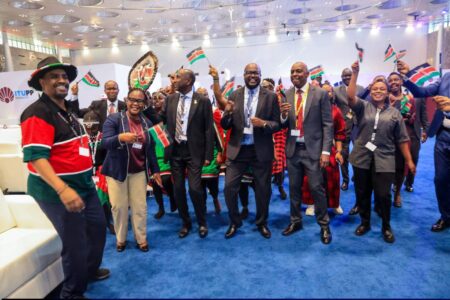
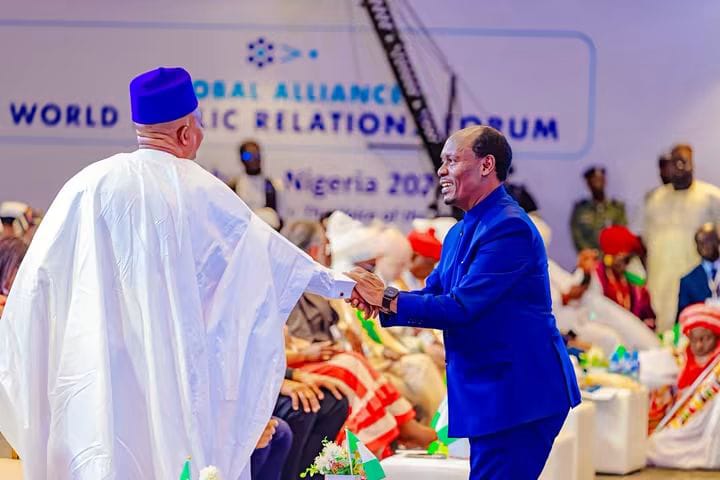
Cabinet Secretary for Information, Communications and the Digital Economy William Kabogo, representing President William Ruto, delivered the President’s address at the 2026 World Public Relations Forum in Abuja, Nigeria, where African leaders and communication professionals gathered to discuss the future of responsible communication.


The forum, held under the theme ‘Responsible Communication: The Voice of the World’, provided a platform for discussions on public trust, professional accountability, technological disruption and the changing relationship between governments and citizens.
In his address, President Ruto underscored that public confidence in institutions cannot be secured through publicity campaigns alone, but must be built through honesty, transparency, consistency and accountability.
He highlighted Kenya’s National Communication Policy as a framework for strengthening public engagement by requiring government institutions to provide timely, accurate and accessible information.
The policy also seeks to ensure that communication is incorporated into the planning and implementation of major government projects rather than treated as an afterthought when institutions need to explain their decisions to the public.
Ruto said the growing influence of artificial intelligence, manipulated content and deepfakes had made it increasingly important for institutions to establish credible and easily verifiable official communication channels.
He urged governments and public institutions to respond promptly to misinformation while maintaining the willingness to acknowledge and correct their own mistakes.
The President also proposed two continental initiatives aimed at strengthening Africa’s capacity to manage the rapidly changing information environment.
These include an African Responsible Communication Fellowship to nurture emerging professionals and an African Information Integrity Network to facilitate the exchange of information verification techniques and best practices across national borders.
The proposals are intended to promote professional development, improve the quality of public information and strengthen cooperation among African communication institutions.
The forum also provided an opportunity for Kenya to deepen its diplomatic and economic engagement with Nigeria, particularly in technology, trade, investment and the creative economy.
Ruto noted that Nigerians have, since July 2025, been allowed to travel to Kenya for stays of up to 60 days without obtaining an Electronic Travel Authorisation (ETA), expressing hope that Nigeria would consider extending a similar arrangement to Kenyan travellers.
He said stronger people to people connections and closer cooperation between the two countries would unlock opportunities for businesses, professionals and citizens.
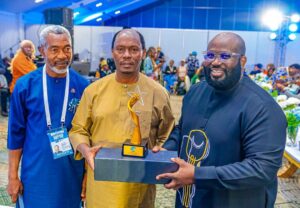
Kabogo also received the Global Alliance for Public Relations and Communication Management Lifetime Achievement Award on behalf of President Ruto during the forum’s awards dinner.
The recognition, presented as the Global Alliance marked its 25th anniversary, acknowledged the President’s commitment to public communication as an important component of good governance and his support for the communications profession in Kenya and across Africa.
Ruto was honoured alongside Nigerian President Bola Ahmed Tinubu and Zambian President Hakainde Hichilema.
The award placed public communication and its contribution to democratic governance, institutional accountability and public engagement at the centre of the international gathering.
Kabogo subsequently paid a courtesy visit to the Kenya High Commission in Abuja, where he was received by High Commissioner to Nigeria Isaac Keen Parashina and officials of the diplomatic mission.


During the meeting, Parashina briefed the Cabinet Secretary on the state of bilateral relations and ongoing efforts to revive the Kenya Nigeria Joint Commission for Cooperation.
Discussions also explored opportunities for expanding collaboration in trade, investment, technology and the creative economy.
Kabogo thanked the High Commission for supporting Kenya’s delegation during the forum and acknowledged its role in assisting Kenyans living, studying and conducting business in Nigeria and the wider region.
He said the Ministry would continue working with the diplomatic mission to strengthen cooperation in information and communications technology, the digital economy and public communication.
The Cabinet Secretary also participated in the African Ministers of Information roundtable and proceedings marking Toni Muzi Falconi Day, where he conveyed President Ruto’s greetings and challenged communication professionals to play a more influential role in public decision making.
He urged practitioners to advise leaders before major policy decisions are made, arguing that communication should be an integral part of governance rather than a tool deployed after decisions have already been taken.

He further called for enforceable professional ethical standards, easily verifiable official information channels and greater inclusion of citizens, particularly young people, in public conversations.
The Abuja engagements underscored Kenya’s push to position responsible communication, digital innovation and information integrity as central pillars of effective governance and stronger African cooperation.