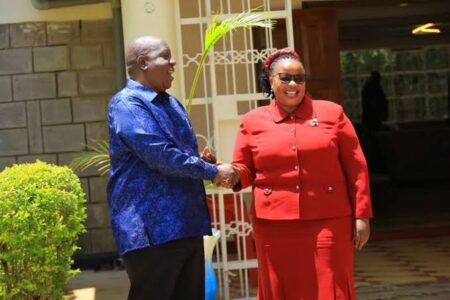







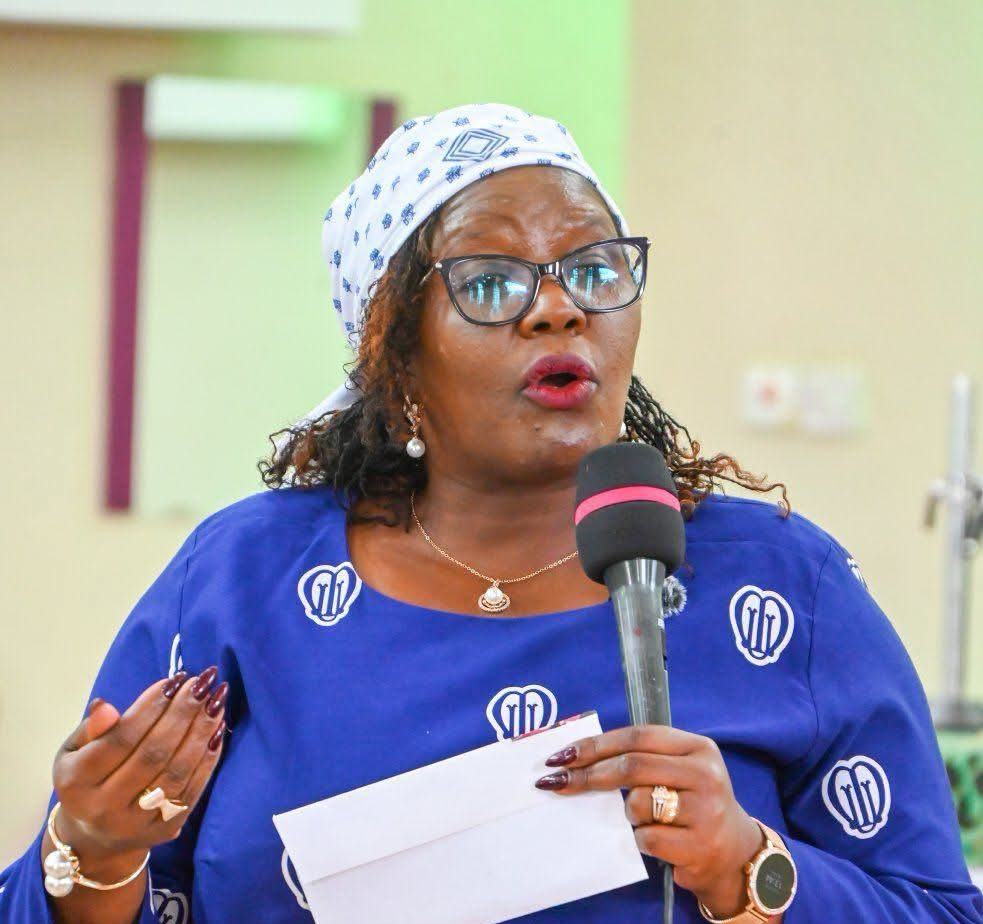
Kiambu Woman Representative Anne Wamuratha has called on politicians across the political divide to abandon personal attacks and keep families, spouses and in-laws out of political battles, saying the country risks losing its social fabric to increasingly toxic rhetoric.
Wamuratha, speaking on the current political discourse, urged leaders in both government and opposition to embrace issue-based politics and focus their campaigns on policies, governance, accountability and their record in public office.
The legislator said political differences should not be allowed to spill into private homes or drag people who are not involved in politics into public confrontations.
“I am coming to plead with our politicians. Let us agree to be civilised. Let us agree to do issue-based politics. Let us stop the politics of other people’s homes and the politics of in-laws,” she said.
Her remarks appeared directed at the growing use of family and marital relationships in political exchanges, particularly where leaders invoke spouses, in-laws, dowry and traditional family relationships to attack their opponents.
Wamuratha said being an elected leader should not give politicians licence to expose or ridicule the families of their opponents.
She noted that politicians may voluntarily enter the public arena, but their spouses and children do not automatically become political actors.
“If I am in politics, my family is not in politics. I don’t drag them into politics. When political battles are fought, let us talk about the issues,” she said.
The Kiambu legislator specifically appealed to former Deputy President Rigathi Gachagua to avoid references to families and women who have married into other communities, saying such remarks risk creating unnecessary tension and misunderstanding.
With Kenya’s political temperatures rising ahead of the 2027 General Election, Wamuratha warned that bringing marital relationships and family disputes into political rallies could deepen divisions and create problems for people who have no role in political contests.
She said Kiambu is a cosmopolitan county whose residents have married across ethnic and national boundaries, making it particularly important for leaders to avoid rhetoric that could fuel tribal hostility.
“Our daughters have been married by people from everywhere, even from abroad. We have daughters in many nations,” she said, urging politicians to respect families regardless of their political affiliations.
Wamuratha said once a woman is married and establishes a family, political leaders should not casually suggest that she should be “returned” to her parental home as part of a political argument.
She argued that such rhetoric fails to recognise the realities of marriage, family and children.
The legislator also invoked traditional Gikuyu customs concerning in-laws, saying sensitive family matters should not become material for political rallies and public confrontations.
She said politicians should instead challenge their opponents over their policies, performance and decisions in office.
“If you want to fight me politically, discuss the things entrusted to me as the Woman Representative of Kiambu County. Discuss my representation of the people of Kiambu in Parliament. Discuss my oversight and what is happening in the county,” she said.
Wamuratha said this would give voters an opportunity to compare leaders based on what they have done and what they intend to do, rather than on personal attacks.
She warned that unchecked political insults could have serious consequences for families and individuals who are dragged into disputes against their will.
“Those people are human beings, and they can die. They are being dragged into politics where they are not involved,” she said.
The legislator also appealed to Kenyans, particularly communities in the central region, to reject political rhetoric that promotes hatred and tribalism.
She said elections are temporary contests and should not permanently destroy relationships among citizens.
According to Wamuratha, voters should be free to support different candidates without being subjected to personal attacks for their political choices.
She urged politicians to accept divergent opinions and concentrate on persuading voters through their ideas.
“You can say one thing and I can say another. Let us stop belittling each other. Let us have politics of discussing issues,” she said.
The legislator, who described herself as a professional counsellor, said the emotional and social consequences of political attacks on families should not be underestimated.
She called on leaders from different political parties to demonstrate restraint and ensure that campaign rhetoric does not become a source of family conflict or ethnic hostility.
Her appeal comes as political alignments and rivalries ahead of the 2027 elections increasingly dominate public discourse, with leaders from competing camps trading accusations and counter-accusations.
Wamuratha said political competition should be anchored on what leaders intend to change, how they plan to improve people’s lives and how they will deliver better services.
“Tell us what you want to change. Tell us how you will do better than the others,” she said.
Wamuratha also used her address to highlight the plight of women living with endometriosis, calling for stronger public awareness and government intervention to improve access to treatment.
She said endometriosis has for years remained poorly understood and under-discussed, partly because reproductive and sexual health issues are often treated as taboo in many African communities.
The condition, she noted, affects women but is frequently surrounded by silence, stigma and misinformation.
Wamuratha said the issue gained greater public attention during discussions surrounding the case of Koki and subsequent debates in Parliament, and argued that the country should now move towards a more comprehensive response.
She said she expects endometriosis to become a major subject of parliamentary debate, with legislators examining measures that could make diagnosis and treatment more accessible and affordable.
The Woman Representative said many women continue to suffer in silence because they fear discussing the condition publicly or cannot afford appropriate medical care.
She called for government-supported interventions to ensure affected women receive treatment and counselling without discrimination or shame.
Wamuratha said the fight against endometriosis should form part of a broader effort to address women’s health challenges and remove the stigma surrounding conditions affecting reproductive health.
But her central message remained political conduct.
As the country heads towards another highly competitive electoral season, she urged politicians to draw a clear line between legitimate political criticism and attacks on private lives.
Her parting appeal was for leaders to debate policies, scrutinise performance and offer voters credible alternatives while leaving spouses, children and in-laws outside the political battlefield.
“Keep off people’s families from politics. Deal d issues. Let us do issue-based politics,” she said.