






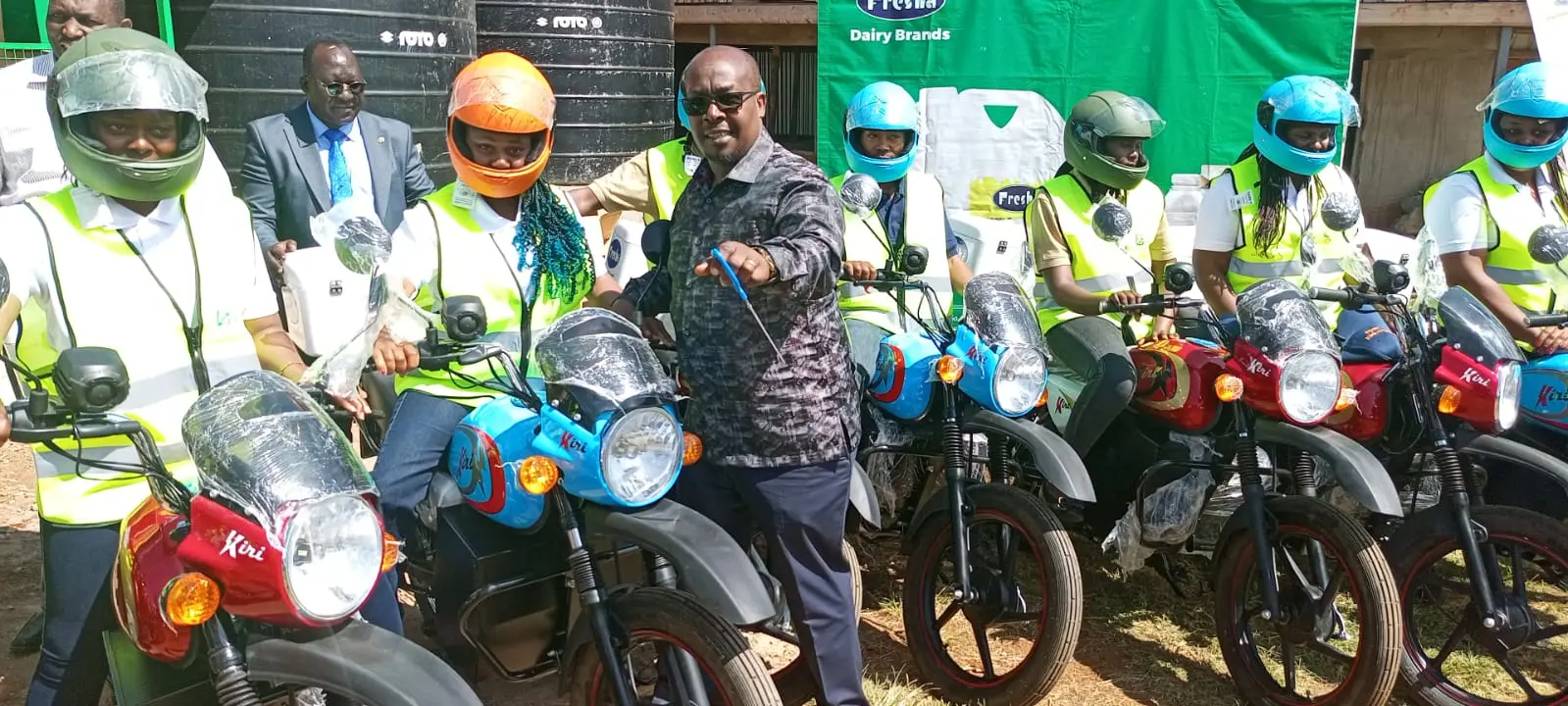
The Githunguri Dairy Farmers Cooperative Society (GDFCS) makers of Fresha products has taken a significant leap toward modernizing its operations and boosting farmer profitability, officially launching a fleet of 19 electric motorbikes for its expanded team of extension officers.
The initiative, part of the “Pathways to Profitable Dairy Farming (Maziwa Faida)” project, is a key partnership between the United Nations Industrial Development Organization (UNIDO), Tetra Pak, and the Embassy of Sweden in Kenya.
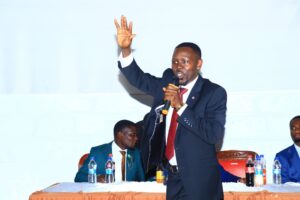
Speaking at the handover event on December 2, 2025, GDFCS Chairman John Ndichu expressed that the move was an “answered prayer” for the cooperative’s thousands of members.
“This initiative has come out of the requests that we have received from our farmers over time,” Mr. Ndichu stated. “The addition of 35 new extension officers will see the farmer-to-extension officer ratio drop from 700:1 to a much more manageable 350:1.”
This critical reduction means that every Githunguri farmer will now be visited by an extension officer at least once within a 60-day period, translating to approximately three to four visits per farmer annually.
“This is a very, very great improvement from where we are coming from,” Ndichu added, noting that various recent initiatives under the project have already led to a 30,000-litre daily increase in milk collection. “With this now, we expect this increase to move to about 50,000 litres daily.”
The 19 electric motorbikes, coupled with 36 laptops provided to all extension officers, are set to revolutionize service delivery. The motorbikes will significantly improve the officers’ mobility, allowing them to access farmers on a timely basis.
Furthermore, the shift to electric transport promises substantial financial benefits for the cooperative. “We have projected a 50% reduction in operational costs,” the Chairman revealed. “There’s no fuel; it’s just charging, and God is gracious enough to give us enough sunlight to charge the electric bikes using our solar systems.” Mr. Ndichu also mentioned plans to leverage their solar capacity, noting the importance of utilizing the 20-25% capacity of the solar energy system.
Michael Vandenberghe, the Project Manager for Dairy Development for Greater Middle Eastern Africa for Tetra Pak, emphasized the project’s impact on farmer profitability.
“This sponsorship is going to make a huge difference to the profitability of the farmers because these people can move around now and actually assist the farmers in doing better ration formulation and just general advice on their farms,” Mr. Vandenberghe said. He confirmed that the initial funding from the Swedish Embassy, under the “Pathways to Profitable Dairy” project, runs until the end of 2026, with proposals being developed for a further extension.
Maina Karuiru, UNIDO National Project Coordinator, highlighted the sustainability aspect. “By equipping extension officers with clean and efficient transport solutions, we are enabling them to reach more farmers with better services, ultimately improving livelihoods and strengthening the dairy ecosystem.”
Despite the massive positive developments, the high cost of animal feed remains a pressing concern for the cooperative.
Chairman Ndichu reiterated a plea to the government, pointing out that 80% of animal feed raw materials are imported, driving prices up due to importation costs and taxation. “Right now, a bag of dairy mill is going for about Sh3,200, which is very, very high,” he lamented.
He urged the government to review taxes and implement policies that are friendly to farmers and feed manufacturers so that the benefits can be passed on, ensuring farmers can afford the crucial inputs for sustained productivity.