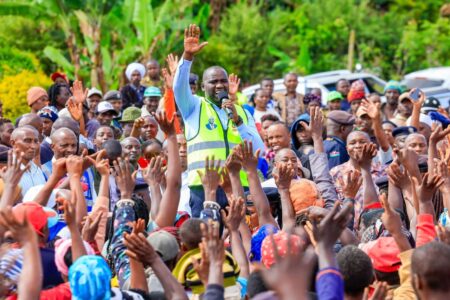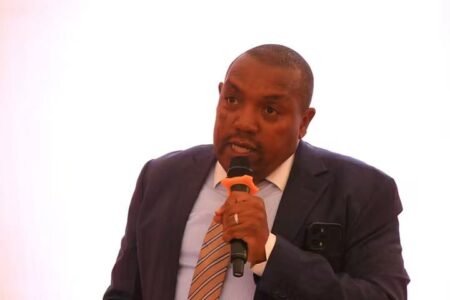








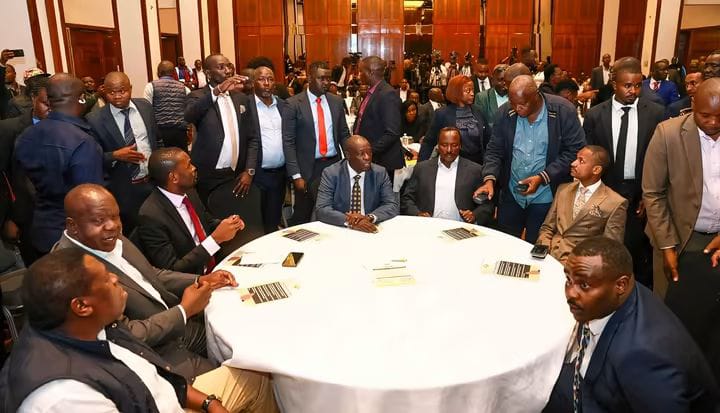
A meeting between the Independent Electoral and Boundaries Commission (IEBC) and political party leaders descended into a political standoff on Thursday after opposition leaders, led by former Deputy President Rigathi Gachagua, walked out, accusing the electoral agency of ignoring their concerns over preparations for the 2027 General Election.
The opposition leaders, who included Wiper leader Kalonzo Musyoka, former Interior Cabinet Secretary Fred Matiang’i, Martha Karua, Eugene Wamalwa and Justin Muturi, demanded a separate engagement with the commission to develop an agenda addressing what they described as fundamental weaknesses in the country’s electoral system.

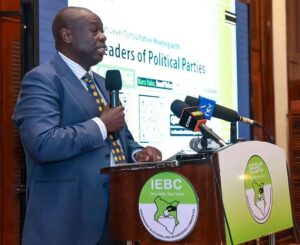
Gachagua, who spoke on behalf of the opposition coalition, said the leaders could not participate in consultations whose agenda had allegedly been prepared without incorporating concerns raised by Kenyans and opposition parties.
He accused the commission of failing to respond to several requests for structured engagement, despite repeated attempts to establish a technical team to address electoral preparedness and reforms.
Gachagua cited a January 28, 2026, meeting with IEBC chairman Erastus Edung Ethekon, followed by letters dated February 12, May 10 and June 24 seeking the establishment of a joint technical team.
He said the opposition had forwarded names of representatives to engage the commission but received no response.
The former Deputy President announced that the opposition had established the People’s Coalition on Electoral Reforms, led by former Chief Justice David Maraga, to engage IEBC on a comprehensive electoral reform agenda.
He asked the commission to allow the technical team to harmonise the issues before another meeting, preferably as early as next week.
“We are willing to work together because this is our country and we want an election that is believable. People must believe in the process,” Gachagua said.
He maintained that the opposition would not legitimise consultations that excluded what he termed the people’s agenda, insisting that electoral reforms must be informed by public concerns.
In a strongly worded statement following the walkout, Gachagua said no electoral decisions or discussions should proceed without involving Kenyans.
He accused IEBC of being unresponsive to requests for clarification on issues that opposition leaders want addressed before the August 10, 2027, elections.

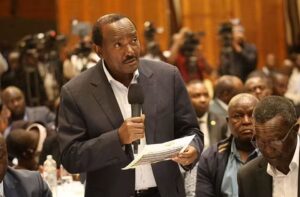
Kalonzo described the engagement as disappointing, arguing that the commission had failed to demonstrate the independence, impartiality and preparedness required of an electoral management body.
“We will not sit in a room and lend our names and faces to the formalisation of a bundled election before the August 2027 General Election,” he said.
Kalonzo insisted that every vote must be counted at the polling station, independently verified and declared in accordance with the actual ballots cast.
Former Defence Cabinet Secretary Matiang’i, who is also positioning himself for the presidency in 2027, said the opposition remained committed to constructive engagement with IEBC but demanded meaningful reforms anchored in the rule of law.
DAP-K party leader Eugene Wamalwa called for independently auditable technological systems, stronger legal safeguards and institutional accountability to protect the credibility of the electoral process.
Karua, leader of the People’s Liberation Party, said the opposition coalition would push for electoral laws that guarantee transparency, accountability and respect for the people’s choice.
Mwananchi Party leader Babu Owino said the coalition was working towards a comprehensive political and electoral reform programme aimed at strengthening democratic institutions.
The walkout came as Ethekon outlined IEBC’s renewed stakeholder engagement programme, saying the commission would hold consultations with political parties, religious leaders, youth, civil society organisations, women groups and the media.
He said youth dialogue forums would begin the following week, while engagements with media practitioners, editors, the Editors Guild and the Media Owners Association would form part of the broader consultations.
Ethekon defended the initiative, saying the commission had nothing to hide and wanted to build public confidence in the electoral process by explaining its preparations, achievements and outstanding milestones.
He assured Kenyans that the 2027 elections would be conducted according to the commission’s election operations plan and constitutional mandate.
“The elections are not the responsibility of IEBC alone. They are the responsibility of every Kenyan, every state institution and every stakeholder,” he said.
The chairman urged political leaders to cooperate with the commission, arguing that credible elections required collective responsibility and confidence across the political divide.
He also invited stakeholders to identify potential risks and shortcomings that the commission might have overlooked, saying continued dialogue would help address emerging challenges.
However, the opposition maintained that engagement could only be meaningful if the commission first incorporated its proposed reforms into the consultation framework.
The standoff exposes the growing political pressure on IEBC to demonstrate its independence, technical preparedness and institutional credibility as the country moves towards the 2027 elections.
With the next General Election less than a year away, the dispute over electoral safeguards is likely to become a defining issue in the country’s political contest.