







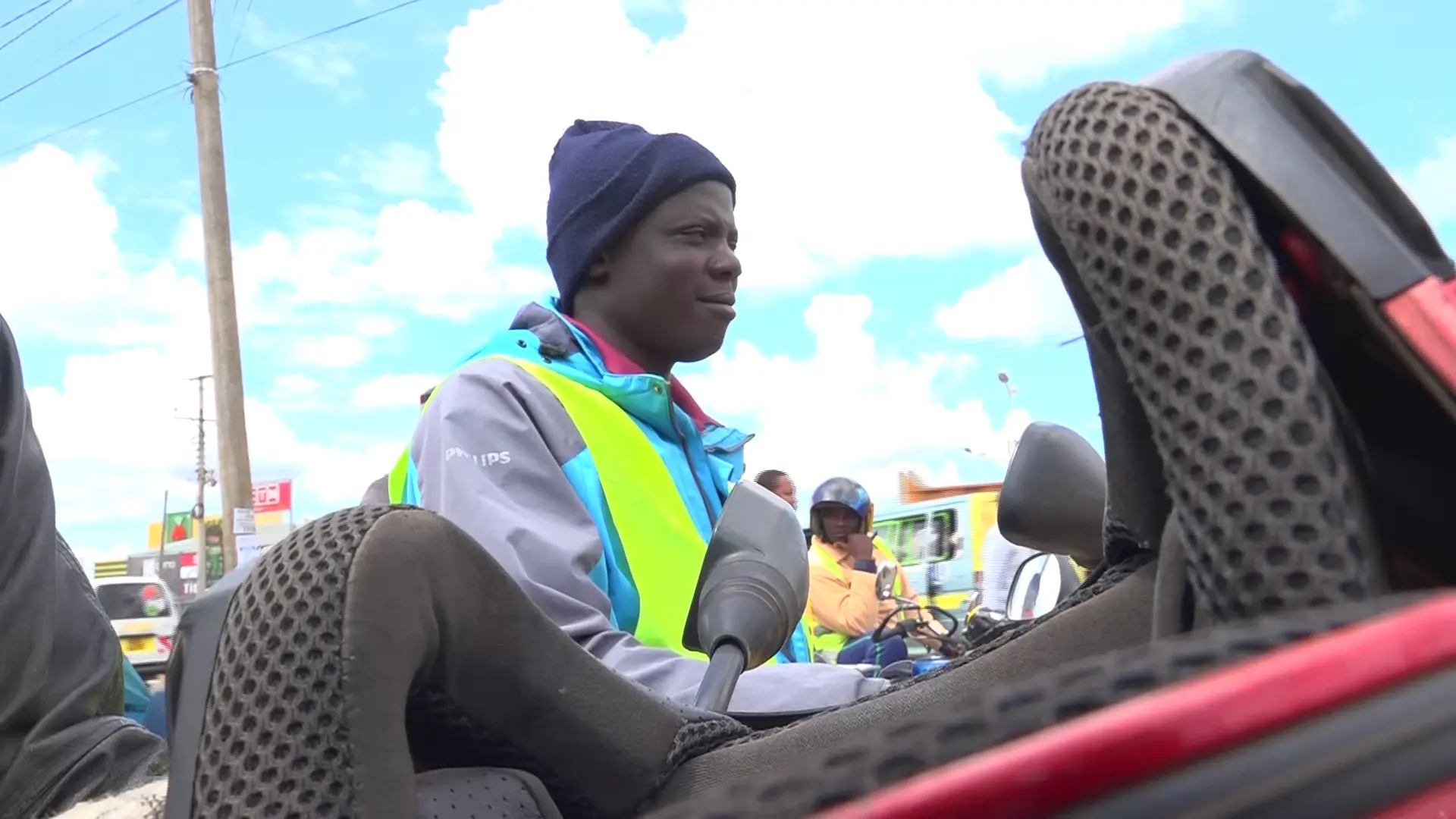
The escalating number of motorcycle-related fatalities and injuries in Kenya is rapidly becoming a significant public health crisis. Locally known as “boda boda” accidents, these carnages have tragically claimed thousands of lives and resulted in permanent disabilities for countless others over recent years.
New data from the National Transport and Safety Authority (NTSA) underscores the severity of the situation. According to a report released on Monday, a total of 4,195 people died on Kenyan roads between January 1 and November 13, 2025—a 2.9% increase compared to 4,077 deaths during the same period last year.

Critically, motorcyclists account for 1,085 of these fatalities, marking a 9.15% rise in rider deaths over the previous year. The acting NTSA Director General, Angela Wanjira, noted that the country recorded 21,042 road crash victims in total. While serious injuries saw a slight drop of 2.8% (8,888 cases), slight injuries spiked by 11.4% (6,959 cases).
Motorbikes have cemented their role as a crucial pillar of the nation’s micro-economy, providing a vital source of income for many, particularly thousands of unemployed youth. However, the data confirms that these essential two-wheelers are proving to be a double-edged sword, generating income but also leading to widespread devastation.
The sheer volume of injuries has forced some public hospitals nationwide to dedicate specialized wards solely for motorcycle accident victims, illustrating the scale of the ongoing crisis.
The consequences for survivors and their families are often socio-economic catastrophes, involving massive hospital bills, loss of income, and entrenched poverty.
Consider George Okello, a 30-year-old rider from Makongeni Estate in Thika, Kiambu County.
On January 13, 2025, he barely survived a terrible hit-and-run crash after dropping off a passenger. The tuk-tuk operator who struck him fled the scene. Thanks to quick-thinking well-wishers, he was rushed to Thika Level Five Hospital and saved.
Despite sustaining severe spine and head injuries, Okello’s life has been irrevocably altered. The father of three, and sole family breadwinner, told journalists he was bedridden for months. The exorbitant costs of treating his severe injuries, some of which were not covered by the Social Health Authority (SHA), resulted in financial ruin. “The accident almost broke my family because we were even forced to sell the little assets we had because the bill was hefty. It left me in a financial dungeon because I even could not pay the motorbike loan,” Okello stated.
Okello has been forced to return to the road, operating in constant pain and limited to daily earnings of between sh 300 to sh 500, a choice dictated by his family’s hard economic situation.
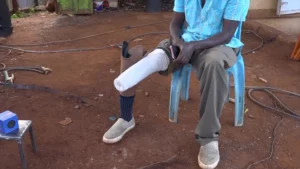
Paul Ngugi is another survivor whose life changed fundamentally two years ago when he lost his left leg in a crash. His situation was exacerbated when a medics’ strike delayed his essential medical attention for two weeks.
Ngugi, who now uses a prosthetic leg, alternates between riding and welding at a workshop in Ngoingwa, Thika, acknowledging the risks he must take to cater to his family’s acute financial needs.
According to Dr. Daniel Somba, Managing Director and Chief Radiologist of MIC Imaging Center in Thika town, motorcycle accidents are rampant in the region, noting that about 90% of the patients he serves daily are victims of two-wheeler mishaps. “In a day we see about 15-20 victims of motorcycle accidents with different degrees of injuries,” Dr. Somba said.
Riders frequently present with serious injuries, including head trauma, fractures, spine damage, and internal injuries, often because they lack proper safety gear like quality helmets.

Dr. Somba stressed the importance of quick diagnosis, noting that centers like his operate 24/7. “For example, if you have head injuries and interventions are not done on the right time you risk long-term problems and even loss of life,” he warned.
The major causes of these carnages, he added, include speeding, flaunting traffic rules, and riding under the influence. Many riders also operate without adequate training or valid licenses.
As the country approaches the high-risk travel season, Dr. Somba urged all road users to adhere strictly to traffic rules and maintain mutual respect on the roads to reduce the mounting toll of accidents and save lives.