











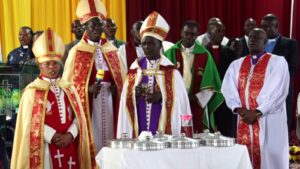
Senior law enforcement officials and religious leaders have issued a stern warning regarding a surging tide of alcohol and drug abuse among young women. During a high-profile gathering in the capital, stakeholders cautioned that this shifting demographic trend threatens to derail the lives of a generation if immediate interventions are not implemented. The concerns were highlighted during a colorful consecration and ordination ceremony at the Administration Police (AP) Protestant and Community Churches, held at the SGB and VIP Protection Unit in Uhuru Camp.
Addressing the congregation, Bishop Richard Chepsergon observed a visible change in urban nightlife and social habits, noting that it has become increasingly common to witness young women, including college students, exiting entertainment venues in states of extreme intoxication. He remarked that in many alcohol outlets today, young women are frequently seen outnumbering men, a stark contrast to the past. He warned that such lifestyle choices carry heavy long-term costs, including the potential destruction of future family stability, personal health, and professional prospects, and he urged young women to pivot toward choices that secure, rather than jeopardize, their futures.

The Principal Deputy to the Deputy Inspector General of the Administration Police Service, Dr. Masoud Mwinyi, identified peer pressure and the erosion of traditional social support systems as primary drivers of the crisis. While the police maintain active patrols and continue to make arrests, Dr. Mwinyi emphasized that incarceration is not a silver bullet. He called for a move beyond simple enforcement, advocating for robust counseling, community-led mentorship, and intensified awareness campaigns within schools to reach at-risk youth before habits become addictions. Dr. Kibet Kipkoech, the AP Chief Chaplain, echoed these sentiments, urging the youth to respect parental advice and avoid the path of later-life regret caused by substance dependency.
The event also marked a significant milestone for the AP chaplaincy as Bishop Chepsergon was elevated to his current rank from Reverend, while George Nduiga was promoted to Reverend. Dr. Mwinyi praised the growing spiritual movement within the police service, noting that officers who embrace faith are often better equipped to manage mental health, foster community harmony, and promote rehabilitation. The chaplaincy urged officers to view offenders not just as criminals to be jailed, but as individuals in need of reform through preaching and guidance. The consensus among the leadership was clear: without a unified front between the state, the church, and the family unit, the growing wave of abuse could leave behind a trail of broken homes and lost potential.