








African innovators developing solutions for persons with disabilities took the spotlight at the Inclusive Africa Conference (IAC) 2026, unveiling a range of assistive technologies designed to tackle accessibility barriers across the continent.
The innovators, drawn from Kenya, Ethiopia, South Africa, Botswana, Zimbabwe, and the Democratic Republic of Congo, presented their inventions during the conference’s Assistive Technology (AT) Innovation Village at the JW Marriott Hotel in Nairobi. The ten finalists were selected from more than 100 applications submitted from different African countries.
The exhibition coincided with World Assistive Technology Day and attracted more than 300 delegates attending physically and over 3,700 participants joining virtually. The audience included policymakers, development partners, investors, technology firms, disability rights organizations, and government representatives.
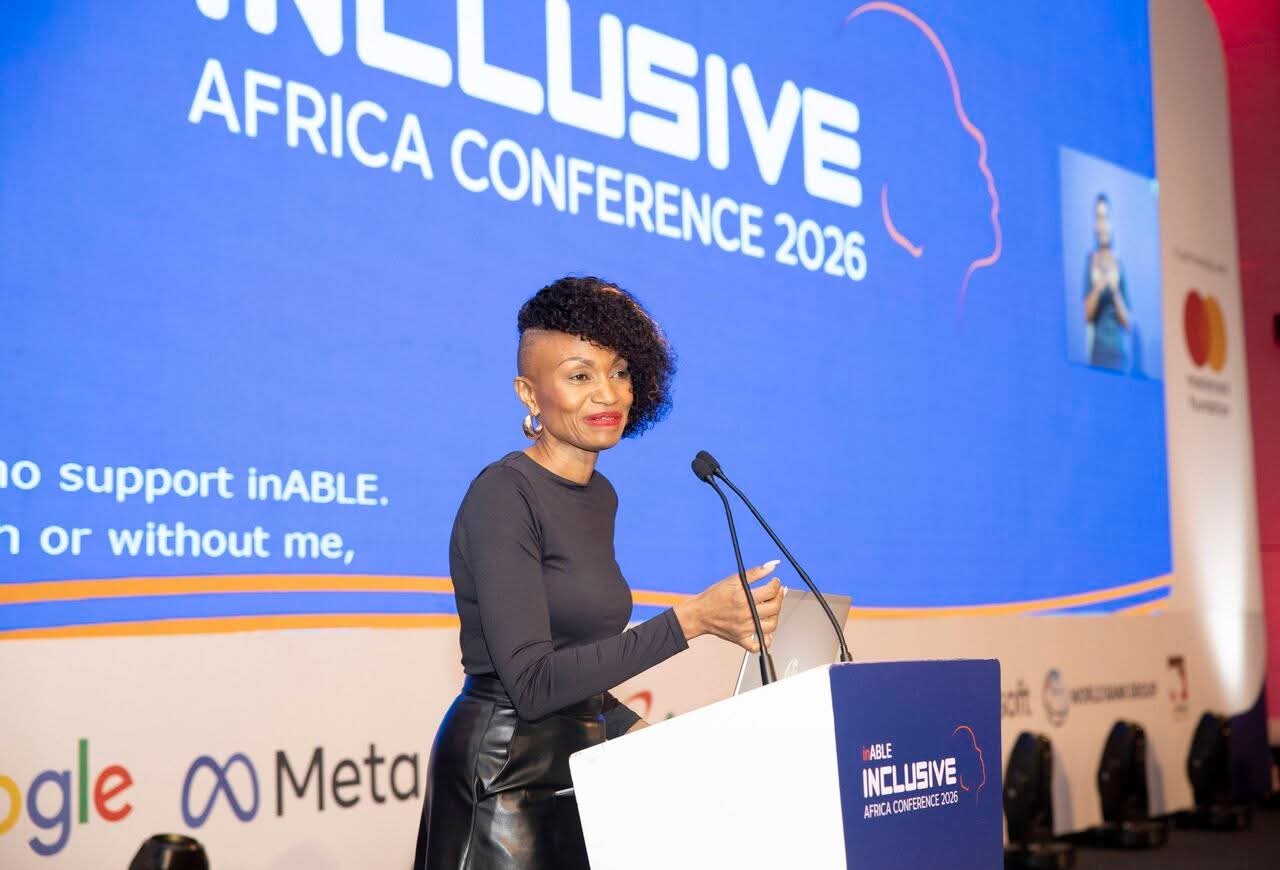
Delivering the keynote address, inABLE Founder and Executive Director Irene Mbari-Kirika said Africa has the talent and creativity needed to solve its own accessibility challenges and urged stakeholders to support locally developed innovations.
She noted that many of the solutions on display were specifically designed to address African realities, languages, and environments, adding that what innovators need most is access to funding, procurement opportunities, and supportive policy frameworks to help them expand their reach.
Mbari-Kirika also thanked development partners and technology companies that have supported the conference and the broader digital inclusion agenda, including Mastercard Foundation, Google, Microsoft, Meta, Safaricom, Kenya Airways, Salesforce, NCBA, Uber, GIZ, and UNDP.
She commended organizations representing persons with disabilities for their longstanding advocacy efforts, saying their work laid the foundation for advances currently being witnessed in digital accessibility across the continent.
The inABLE chief further acknowledged Information, Communications and the Digital Economy Cabinet Secretary William Kabogo for championing inclusion initiatives and supporting discussions aimed at creating Africa-wide digital accessibility standards.
She revealed that inABLE had earned a place on the Forbes Accessibility 100 List for the second consecutive year, describing the recognition as motivation to continue pushing for structural reforms that promote inclusion.
A major highlight of the conference was the ongoing development of Africa’s Harmonized Digital Accessibility Standard for ICT Products and Services, a continental initiative being undertaken by inABLE in partnership with the African Organisation for Standardisation and GIZ. The standard is expected to guide the design and delivery of accessible digital products and services across Africa.
Among the featured innovators was Ethiopia’s Bamboo Labs, which manufactures customized wheelchairs using reinforced bamboo. Founded by Abel Hailegiorgis, the company aims to provide affordable and durable mobility solutions while promoting local manufacturing. The firm has already collaborated with Kijabe Hospital in Kenya and plans to expand further within the region.
Kenyan startup Sightra introduced an intelligent navigation platform that combines GPS technology with live camera vision to assist people with visual impairments in moving independently and safely in both indoor and outdoor environments.
Another Kenyan innovation, Ishara Learning, demonstrated a platform that delivers digital skills training in Kenya Sign Language. The initiative seeks to bridge the gap faced by Deaf learners who often struggle to access digital education content in a language they fully understand.
ZeroBionic showcased inclusive robotics and STEM education tools that enable visually impaired students to participate in science and technology learning through Braille integration, tactile robotics kits, speech-based interaction, and accessible coding platforms.
The Blind Classroom, also from Kenya, presented an AI-powered learning platform that supports visually impaired learners through voice commands, audio-based lessons, and accessible navigation tools. The solution has already been implemented in several schools and reached hundreds of learners.
South Africa’s Senso unveiled a smart wearable wristband that alerts users with hearing impairments to important sounds in their surroundings, enhancing awareness and independence in everyday life.
Zimbabwe’s PadPerch displayed a device that allows smartphones and tablets to function as reading and magnification tools for people with low vision, while Botswana’s Revision Africa demonstrated an artificial intelligence-powered learning assistant capable of reading printed materials, identifying images, and supporting visually impaired learners through personalized assistance.
Addressing delegates, Mbari-Kirika stressed that Africa’s rapidly growing digital economy must be inclusive if it is to deliver benefits for everyone.
She observed that more than 80 million Africans living with disabilities risk being left behind if accessibility considerations are not integrated into technology, education, employment, and public services.
Drawing attention to persistent digital barriers, she cited studies showing that many online banking platforms across Africa still fail to meet basic accessibility requirements, making it difficult for persons with disabilities to independently access financial services.
According to her, exclusion of persons with disabilities carries significant economic consequences, with global studies estimating that countries lose between three and seven percent of their gross domestic product when people with disabilities are excluded from economic participation.
Mbari-Kirika also highlighted the transformative potential of artificial intelligence in advancing inclusion through innovations such as automatic captioning, sign language translation, intelligent navigation systems, and personalized learning technologies.
However, she cautioned that unless accessibility is considered from the design stage, AI could inadvertently create new forms of exclusion.
“Accessibility should be embedded into every AI system, policy framework, and procurement process from the beginning,” she said.
The conference concluded with calls for stronger partnerships between governments, investors, innovators, educational institutions, and development organizations to accelerate the growth of Africa’s assistive technology sector.
Mbari-Kirika emphasized the importance of supporting local production of assistive technologies to reduce dependence on imports while creating employment opportunities across the continent.
She also urged stakeholders to invest in digital and artificial intelligence skills training for young people with disabilities and to strengthen links between education systems and labor market needs.
She noted that digital accessibility should not be viewed merely as a social responsibility issue but as a strategic economic opportunity capable of unlocking innovation, expanding markets, and improving quality of life for millions of Africans.
Held under the theme “Accelerating Digital Accessibility and AI Solutions for Africa’s Future,” the Inclusive Africa Conference 2026 brought together leaders from government, industry, civil society, and disability organizations to advance discussions on technology-driven inclusion and accessible digital transformation.
Organized by inABLE in partnership with Mastercard Foundation, the annual conference continues to position Africa at the forefront of conversations around accessibility, innovation, and the future of inclusive technology.